
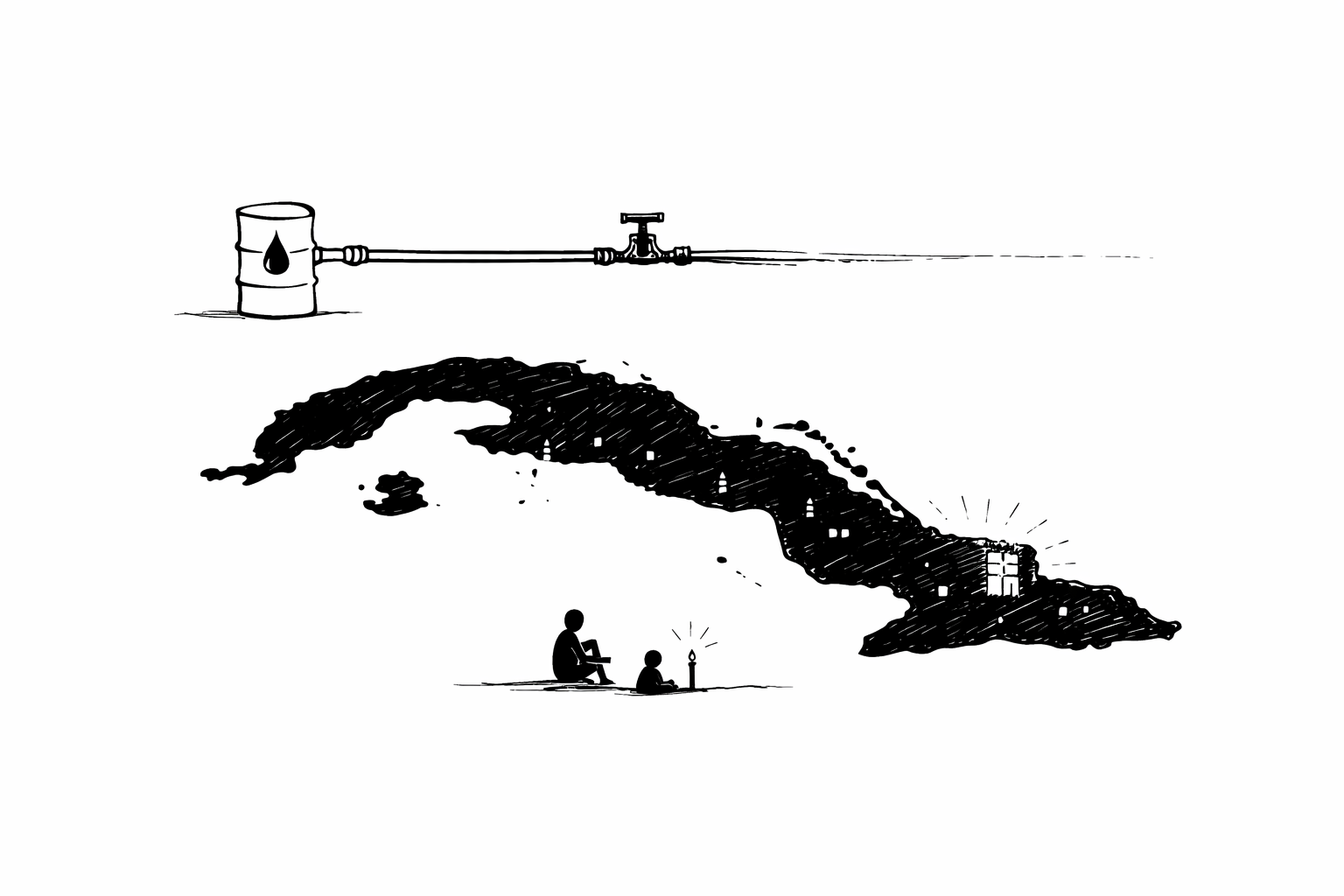
The lights going out across Cuba are not simply the result of infrastructure failure — they are the visible outcome of a system being deliberately constricted. The island has experienced repeated nationwide blackouts, including multiple total grid collapses in March alone, driven by a tightened U.S. oil blockade that has sharply reduced Cuba’s ability to import fuel. The cascading failures span electricity, transportation, food distribution, and healthcare. This is what economic warfare looks like in practice — not a single policy, but a series of constraints that compound until everyday life becomes unstable.
The contradiction is difficult to ignore. At the same time the U.S. tightens pressure on Cuba, it has eased sanctions on Russia and Venezuela to stabilize global energy markets amid the Iran conflict. That duality reveals a selective logic: access is not determined by humanitarian concern but by geopolitical alignment. Some countries are reintegrated into the system when strategically necessary. Others are further isolated.
Cuba is a majority Black and Afro-Latino nation, which means the burden falls disproportionately on Black Caribbean communities. Rolling blackouts interrupt medical care, limit access to clean water, disrupt food storage, and halt public transportation. For diaspora communities — especially here in Houston — this is not a distant geopolitical issue. It is phone calls that don’t go through and family members navigating days without power. And as When the Economy Slows, Some Communities Feel It First makes clear, rising energy costs and economic pressure don’t land evenly — Black households navigating tighter financial margins feel the earliest and sharpest effects, whether the source of that pressure is domestic policy or geopolitical conflict thousands of miles away.
As Aid Cuts Didn’t Collapse HIV Treatment — But the System Behind It Shifted examined, policy decisions routinely shift the burden of survival onto individuals and communities in the Global South. Cuba’s system has not collapsed — but it is being held together by improvisation rather than stability.
The question is not whether it can hold. It is what it means for a global order where access to energy and basic infrastructure can be tightened or released based on shifting political priorities — and who absorbs the cost when it is.