
NEWS DESK | SOCIAL STORYTELLERS COLLECTIVE
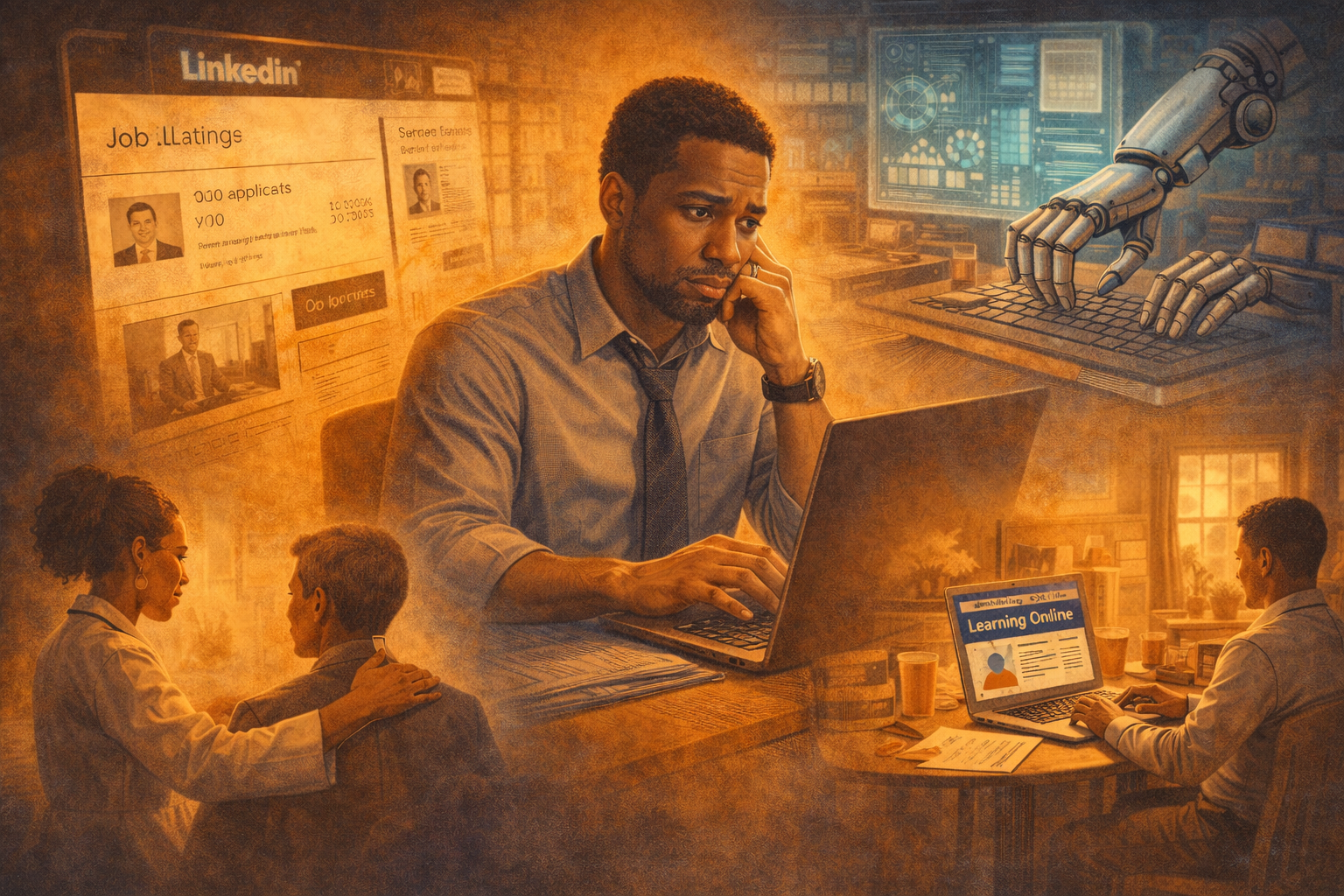
Spend a few minutes browsing job listings today and a quiet anxiety begins to surface. Open a role on LinkedIn and it is not uncommon to see more than a hundred applicants already in line for the same position. For jobseekers, that number alone can feel deflating before the application is even submitted. The competition is real, and the modern job market often feels more crowded and uncertain than it did in previous decades.
Part of that uncertainty comes from how quickly technology is reshaping entire industries. Artificial intelligence is beginning to automate tasks that once required full teams — streamlining workflows in marketing, customer service, administration, and even parts of healthcare and law. At the same time, recent labor data suggests hiring has slowed. Economists generally view monthly job gains of around 150,000 to 200,000 as a healthy pace for a growing economy, yet recent reports have come in below that threshold. When hiring slows while technology accelerates, it raises legitimate questions about which careers will remain viable and whether some degree programs are preparing students for roles that may soon evolve or disappear.
Yet the same technology that disrupts also creates opportunity. AI can automate repetitive tasks, analyze large volumes of data, and help organizations operate more efficiently. But even the most advanced systems cannot replicate what happens in genuinely human moments — the nurse who makes eye contact during a difficult diagnosis, the advisor who listens carefully before responding, the colleague who reads a room and adjusts accordingly. Empathy, emotional intelligence, and the ability to navigate complex human dynamics are not features that can be optimized. They are the qualities that make work meaningful, and they remain largely out of reach for automation.
For jobseekers navigating this environment, it is worth remembering that rejection is not always a reflection of ability. Many hiring decisions are shaped by factors that applicants never see — internal candidates, existing relationships, or organizational restructuring that has nothing to do with the person applying. The pool is simply larger now, and the process is less transparent than it has ever been. In the meantime, many professionals are turning to bridge roles, contract work, and temporary opportunities to maintain stability while continuing their search. Others are investing in new skills through platforms like Coursera or LinkedIn Learning, using the transition period as a chance to strengthen their expertise rather than simply wait it out.
Seasons of uncertainty have always been part of economic life. What often matters most is how people respond during the in-between — continuing to learn, staying adaptable, and remaining open to paths that may not have existed before. Even in a rapidly evolving economy, the qualities that make someone a strong colleague, caregiver, teacher, or leader remain deeply human. That has not changed, and it is unlikely to.
As the job market continues to shift, what skills or qualities do you believe will remain most valuable in a world increasingly shaped by technology?