
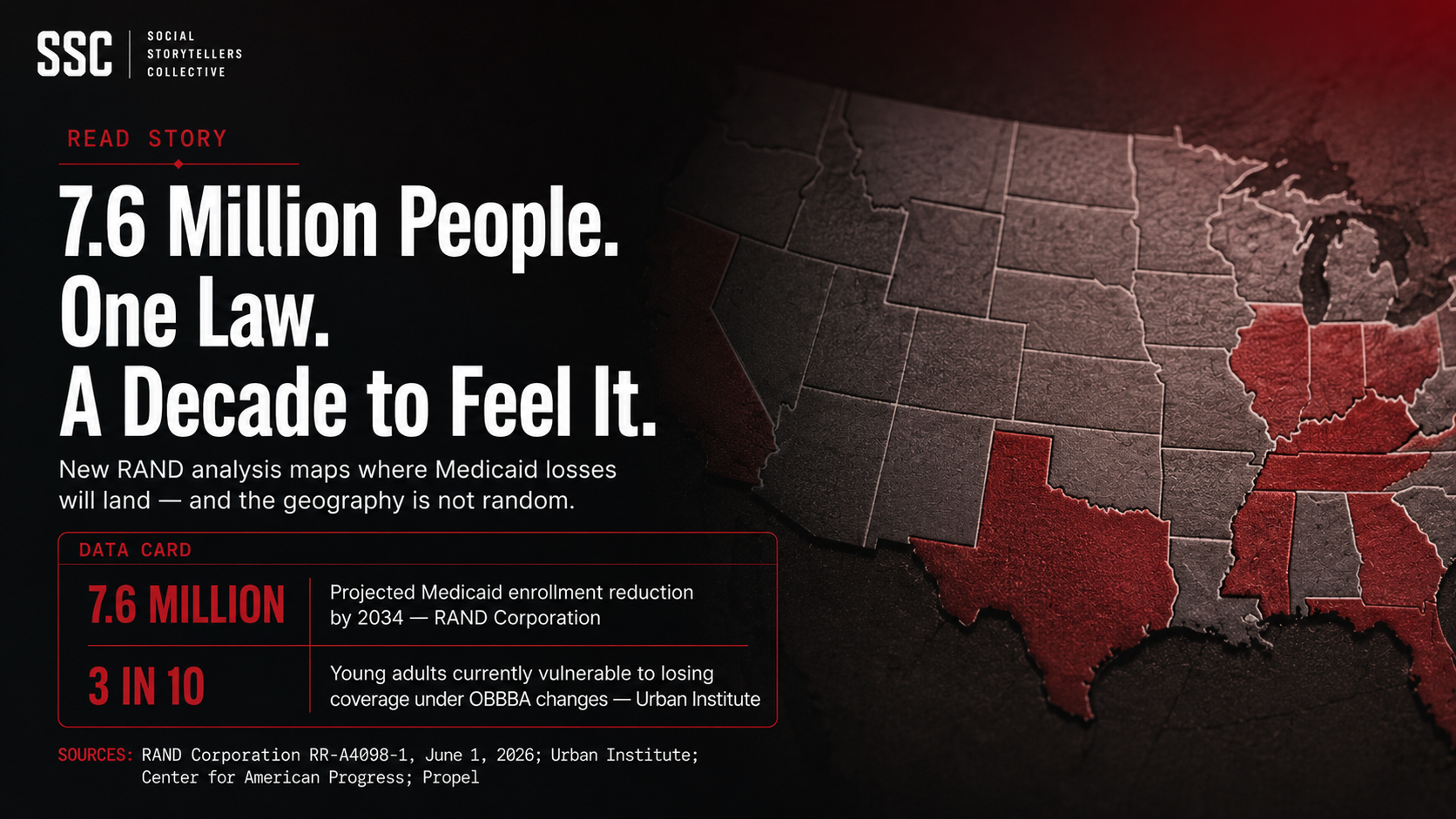
A new RAND Corporation analysis released June 1 gives the most granular picture yet of what the One Big Beautiful Bill Act will do to Medicaid enrollment over the next decade. Researchers built state-by-state projections through 2034 and found that 7.6 million fewer people will be enrolled by the end of that period — a number the Congressional Budget Office had previously estimated at 10.5 million when combining all program eliminations. In both projections, the losses are concentrated in states with large low-income Black and Brown populations that depend on Medicaid expansion, home-based care, and community behavioral health as primary points of access to the healthcare system.
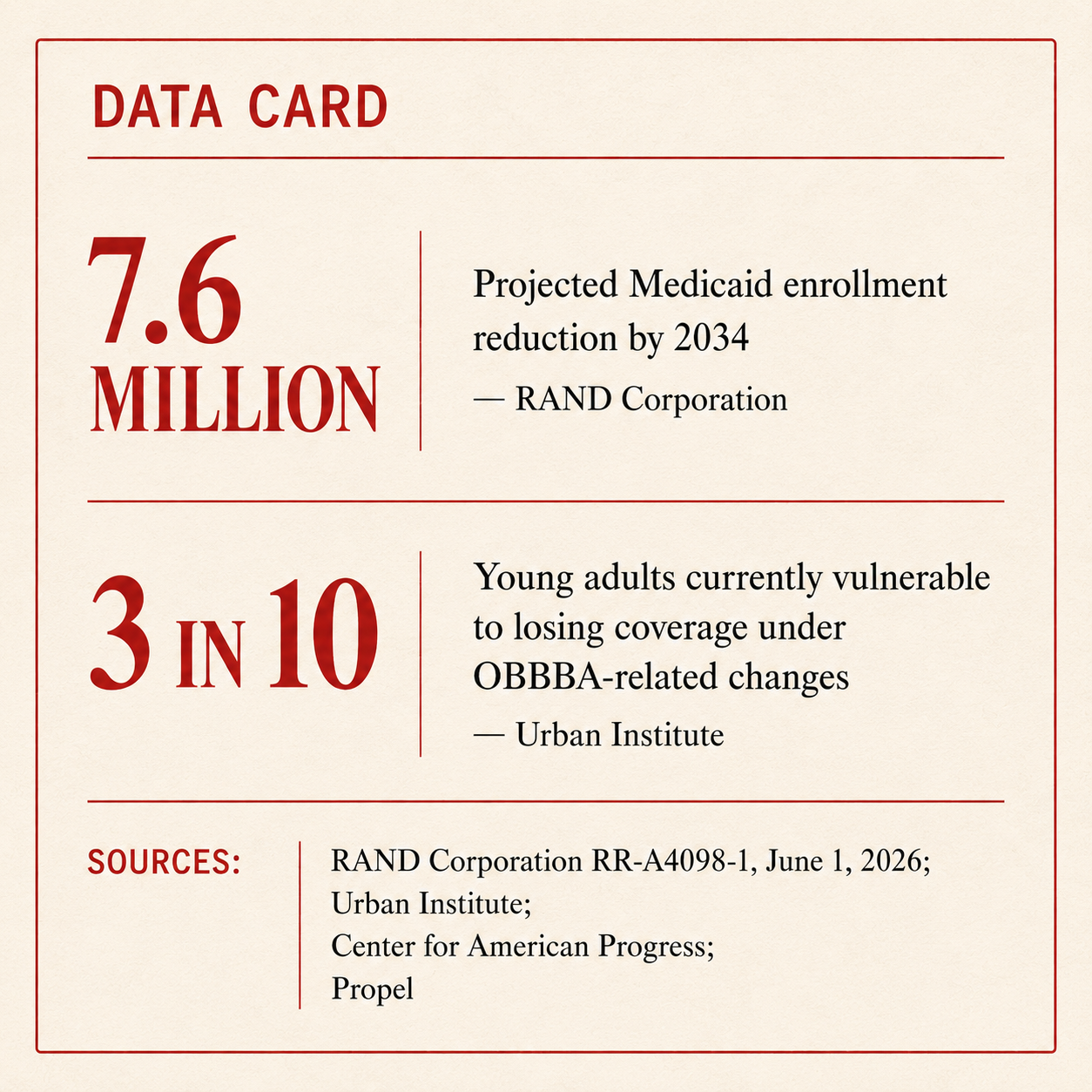
The mechanism is not only eligibility cuts. Starting October 2026, Medicaid work requirements — 80 hours per month for adults aged 19 to 64 — can be implemented by states ahead of the January 2027 federal deadline. Beginning the same month, immigrant eligibility rules tighten significantly, removing coverage from refugees, asylum-seekers, domestic violence survivors, and trafficking victims who have not yet achieved lawful permanent residence. The Urban Institute finds that 3 in 10 young adults are currently vulnerable to losing coverage under these changes. The policy apparatus to enforce reporting requirements does not yet exist at full scale — which means the first wave of losses will hit people who were technically eligible but could not navigate the new documentation burden. The paperwork is the policy.