
Part of The Access Shift — an ongoing series examining how access is being quietly reshaped across American life.
NEWS DESK | SOCIAL STORYTELLERS COLLECTIVE
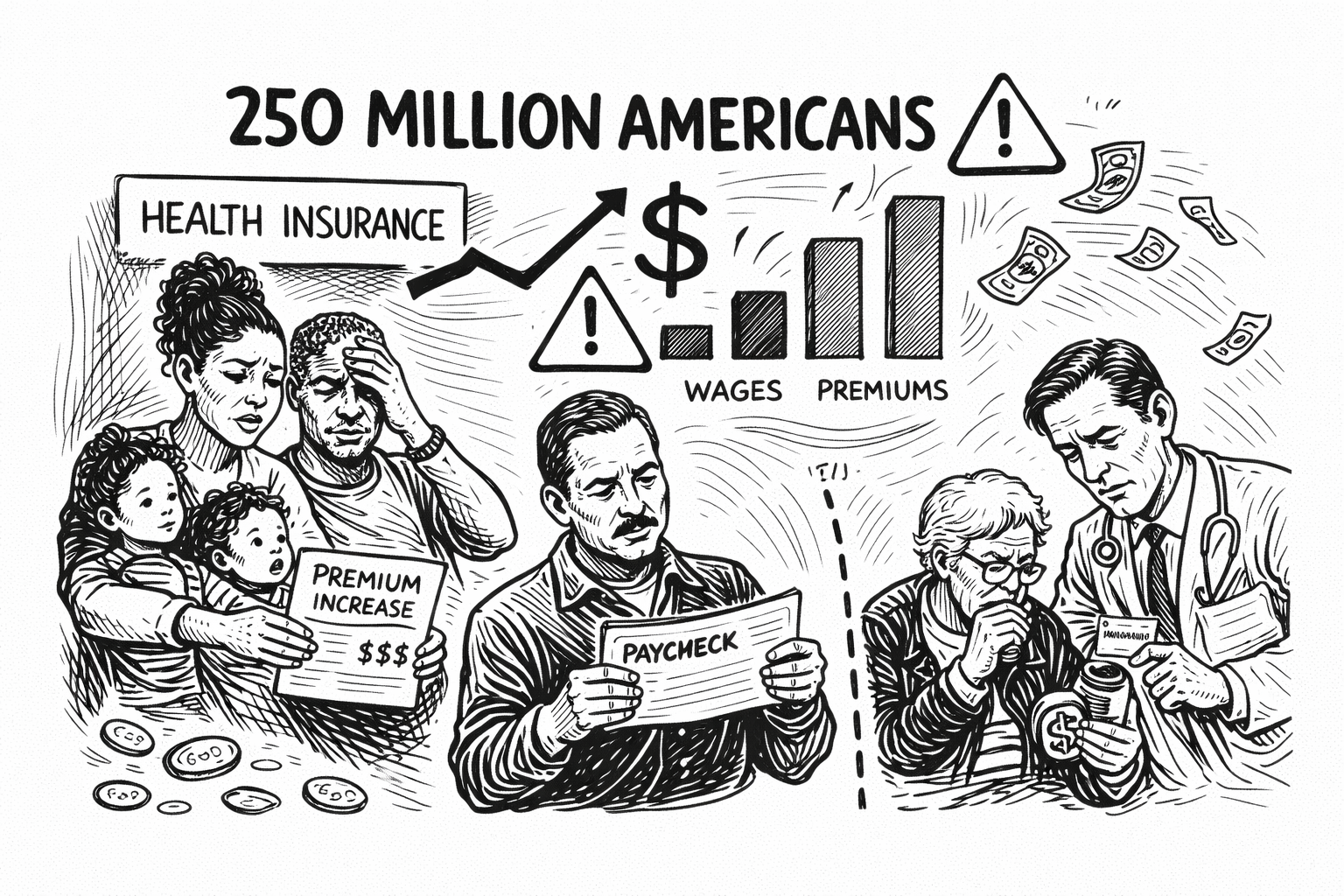
The affordability crisis in American healthcare is not coming. For most people, it is already here. In 2026, 250 million Americans face health insurance premium increases that exceed inflation, wage growth, and Social Security adjustments — price hikes with few historical parallels.
Nearly three in ten Americans — 29% — report delaying or going without medical care in the past year. That number rises to 32% among Black Americans, 33% among women, and 37% among Hispanic Americans. Among adults 18 to 29, nearly half skipped medical care due to cost. One in four people delayed or skipped a doctor-prescribed medication because of finances — with women twice as likely as men to report doing so.
These decisions are not happening in isolation. They are happening alongside rising grocery bills, elevated housing costs, and stagnant wages — the compression SSC examined in The Price Didn’t Go Back Down and The Paycheck-to-Paycheck Economy. Seventy percent of non-college-educated Americans already carry significant debt including student loans, medical debt, and credit card balances. Skipping a prescription is not a choice made in a vacuum. It is a calculation made inside a system where every expense is already competing with another one. Black and Hispanic Americans are delaying care at higher rates than the national average — not because of different health needs, but because of different levels of economic cushion. As SSC has tracked in HIV Treatment Didn’t Collapse – But What’s. Holding It Up Should Concern You, cuts to healthcare access do not distribute their consequences equally. They follow the same fault lines as every other form of inequality.
Why This Matters
When nearly a third of Black Americans are skipping care — not because of a single policy failure but because of the accumulated weight of premium increases, wage stagnation, and a system optimized for those who can already afford it — the question is no longer about the cost of healthcare. It is about who the system was designed to keep healthy, and who it was designed to leave behind.