
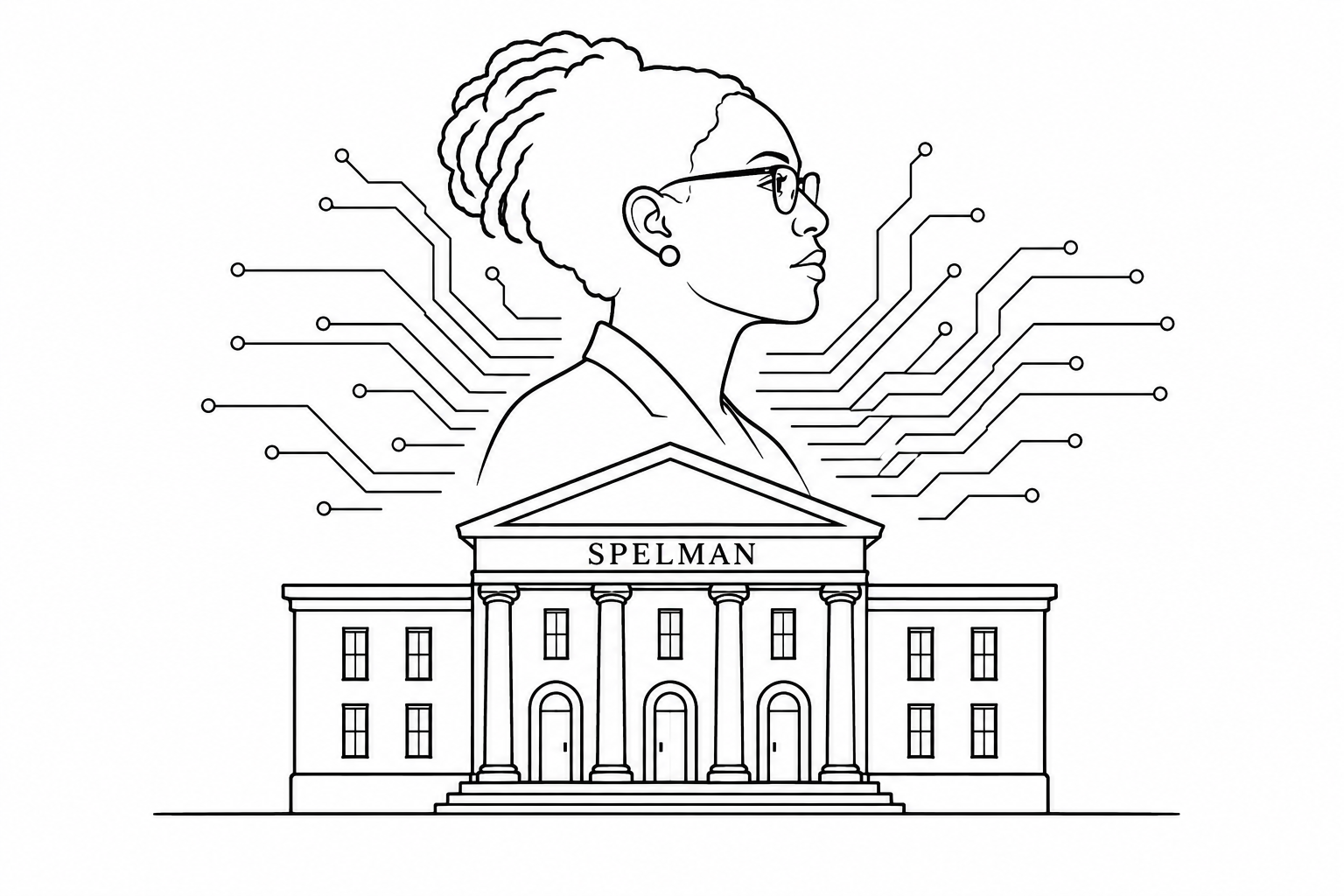
Spelman College announced Tuesday that it has selected renowned roboticist, entrepreneur, and former NASA engineer Dr. Ayanna Howard as its 12th president, effective August 1. The College described Howard as the leader needed to prepare Black women for a rapidly changing world. That explanation is accurate, but it also understates what the appointment reveals about higher education itself.
Colleges have always adapted to economic change. Land-grant universities emerged alongside industrialization. Business schools expanded with the rise of corporate America. Computer science departments grew as the digital economy took shape. Artificial intelligence represents the next transition, but this one is happening at a speed that leaves institutions little time to adjust. The schools that recognize the shift earliest will help determine who leads the next economy instead of merely supplying workers to it.
That makes Howard’s background particularly telling. She is not simply an academic administrator. She has built robots, worked at NASA’s Jet Propulsion Laboratory, co-founded a company developing technologies for children with special needs, and helped establish Black in Robotics to expand representation in the field. Those experiences suggest Spelman was looking beyond traditional presidential credentials. It was looking for someone who understands that technology is increasingly a question of power, access, and governance.
The conversation around AI often centers on whether it will eliminate jobs. That’s a real concern, but another competition is unfolding at the same time: who gets to design the systems making those decisions. The people writing algorithms, setting ethical standards, allocating investment, and shaping public policy will exercise enormous influence over the next generation of economic opportunity. Education is becoming part of that competition.
For HBCUs, the stakes are especially high. Their history has been one of expanding access to institutions that excluded Black Americans. The challenge now is different. Access to technology matters, but access to leadership matters more. If the AI economy concentrates decision-making inside a small group of companies and universities, inequality will be reproduced long before software reaches the public.
Spelman has spent decades establishing itself as the nation’s leading HBCU and one of the country’s strongest producers of Black women pursuing advanced STEM degrees. Choosing a president whose career sits at the intersection of engineering, entrepreneurship, and institutional leadership suggests the College sees its mission expanding again. It is investing not only in preparing students for the future but in giving them a chance to shape it.
We tend to describe the AI race as a contest between Silicon Valley firms or global superpowers. Increasingly, it is also a contest between educational institutions deciding who will occupy the rooms where technology is designed, regulated, financed, and deployed. Spelman’s announcement looks like a presidential appointment today. Years from now, it may be remembered as a strategic decision about who gets to write the rules of the next economy.
Get SSC analysis delivered to your inbox every day. Subscribe free on Beehiiv: socialstorytellerscollective.beehiiv.com