
Earlier this week, a Houston nightlife brand — Urban Social — demonstrated something most marketers still struggle to articulate: attention is no longer captured by what you show people. It’s captured by what you make them notice. The campaign hinged on a simple disruption. A post appeared to be deleted. Viewers noticed. The brand returned not with an apology, but with a sequence — “We didn’t delete anything. We just needed you to look.” In a few slides, Urban Social turned absence into engagement, and engagement into narrative.
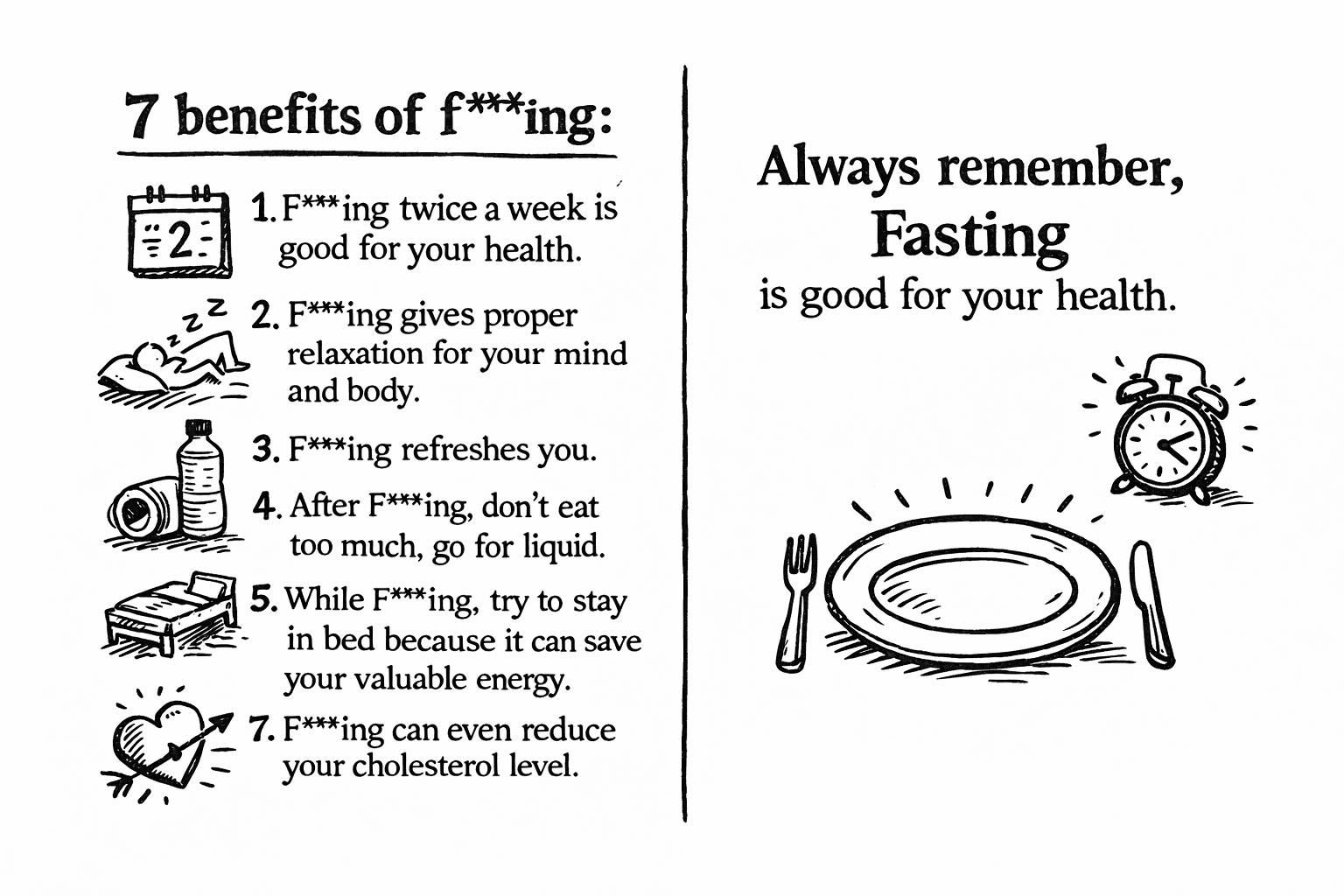
That same mechanism is showing up in a different form across social feeds — and the comparison is worth sitting with. A viral post framed as “7 benefits of f*ing” pulls the viewer in with implication, not clarity. The list that follows reinforces the assumption. Only at the end does the reveal arrive: the post is about fasting. The content never lies. But it never fully tells the truth either — not in the way the audience initially understands it. The gap is filled by the viewer.
This is the shift. Attention is no longer driven by information alone. It’s driven by interpretation. According to research from the Pew Research Center, audiences increasingly skim, infer, and move quickly through content environments, relying on pattern recognition rather than careful reading. That creates an opening. If a piece of content can guide what someone assumes, it can guide what they feel — and how long they stay.
Urban Social created that opening through absence. The fasting post creates it through suggestion. Different executions, same underlying structure. Both rely on a moment where the audience believes they understand what they’re seeing — and then has to reconcile that belief. That moment of recalibration is where attention locks in. It’s not confusion. It’s participation.
There’s a broader implication here for how content is being designed. The most effective posts are no longer just messages. They are sequences — constructed experiences that unfold across time, anticipating how a viewer will interpret the first frame, how they’ll move through the second, and where the shift will land. The goal isn’t simply to communicate. It’s to guide perception.
That also changes what “engagement” means. It’s not just likes, shares, or comments. It’s the micro-moment where someone pauses and thinks: wait — what is this? That pause is increasingly valuable. It signals that the content has interrupted automatic consumption and forced a second look. In a saturated feed, that is the closest thing to control a brand can achieve.
But there’s a tension in this approach worth naming. When attention is shaped through implication, it raises the question of where clarity fits. The fasting post works because the reveal is clean and harmless. Urban Social’s campaign works because the payoff aligns with the brand’s identity — a community-rooted venue that its audience already trusts. But the same mechanics, pushed further, can blur into manipulation. The line between guiding interpretation and exploiting it is thin — and often invisible in the moment.
Still, the direction is clear. Content is no longer competing on what it says. It’s competing on how it’s understood — sometimes before it’s fully read. The audience is no longer just consuming information.
They’re completing it.
And the brands that understand that are no longer just posting. They’re designing the way you think about what you see.