
Part of The Access Shift — an ongoing series examining how access to work, income, and stability is unevenly distributed across American life.
Structural Reality is a series examining how systems produce unequal outcomes across work, income, and opportunity.
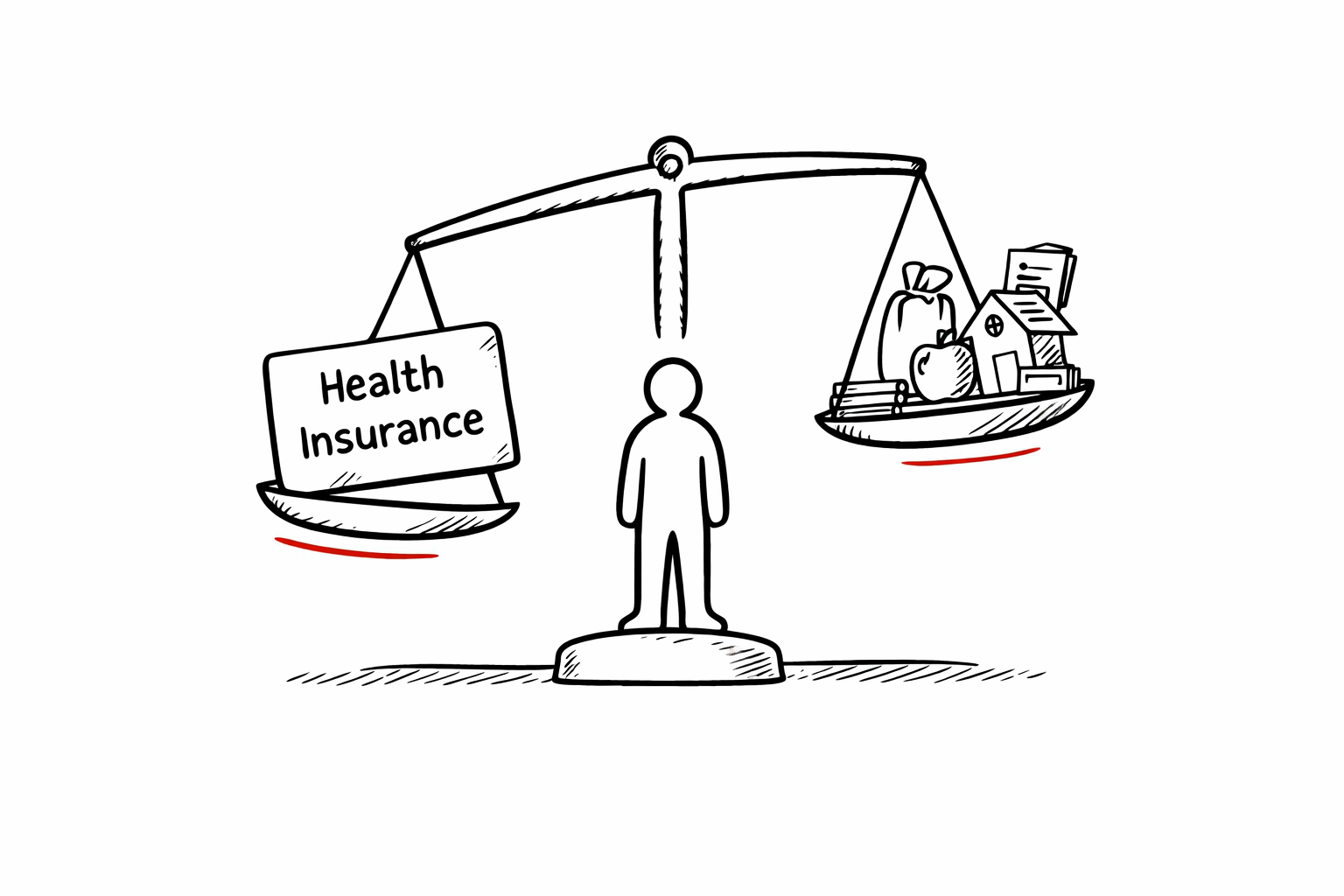
For many households, health insurance is no longer a background expense — it is becoming one of the largest fixed costs in the monthly budget. As premiums rise, the question is no longer simply how to access coverage, but how to absorb its cost without destabilizing everything else.
The numbers behind that shift are stark. According to KFF, the expiration of enhanced ACA premium tax credits at the end of 2025 is estimated to more than double what subsidized enrollees pay annually — a 114 percent increase, from an average of $888 in 2025 to $1,904 in 2026. ACA marketplace premiums were already set to rise by an average of 26 percent in 2026 before the subsidy expiration was factored in. For households that relied on those subsidies to make coverage manageable, the combined effect has been immediate and severe. One couple outside Atlanta saw their monthly premium triple — from $162 to $483 — a difference of nearly $3,900 per year relative to an income of approximately $30,000. Another enrollee in Texas described paying $800 per month for the cheapest available plan for two people on a household income of $120,000 — and still not qualifying for subsidies.
The impact is not isolated to coverage decisions. It extends into the structure of everyday life. Among ACA enrollees who re-enrolled for 2026, 80 percent report their premiums, deductibles, or out-of-pocket costs are higher than last year — and one in six say they are not confident they will be able to afford their monthly premium for the full year. Households are adjusting in real time — cutting discretionary spending, canceling services, and in some cases drawing from savings to cover short-term medical costs. A quarter of returning enrollees have downgraded their plan’s metal tier to lower premiums, trading reduced monthly costs for higher deductibles and greater exposure to out-of-pocket risk.
This creates a structural tension at the core of how insurance is supposed to work. Health coverage is designed to protect against financial risk — but at higher price points, it begins to generate its own form of risk. The tradeoff becomes immediate: maintain coverage and absorb the cost, or reduce coverage and increase exposure. Neither option resolves the underlying instability. Analysts project that higher premiums from the subsidy expiration will prompt approximately 4.8 million Americans to drop coverage in 2026 entirely.
The pressure is particularly acute for households that fall just outside subsidy thresholds but do not earn enough to comfortably absorb full premiums. As explored in our coverage of the housing market paradox, this is a pattern that repeats across categories — income disqualifies households from meaningful assistance, but does not insulate them from cost. A 40-year-old earning $50,000 annually could pay roughly $2,000 more per year for a benchmark silver plan in 2026. A 60-year-old earning $55,000 could spend 11 percent of their total income on premiums alone. The result is a cycle of adjustment: cutting, borrowing, or increasing work hours simply to maintain access to coverage that was already difficult to afford.
Over time, those decisions compound. Reducing discretionary spending may stabilize the present but limits flexibility. Drawing from savings addresses immediate needs but weakens future security. Taking on additional work increases income but often at the expense of time, health, and long-term mobility. What begins as a budget adjustment becomes a broader restructuring of how households operate — and of what they can realistically plan for.
The result is a system where coverage remains technically available, but not equally sustainable. Access exists, but at a cost that reshapes behavior, priorities, and long-term stability. And as premiums continue to rise, the question is no longer whether people have insurance — it is what they have to give up to keep it.
The gradual redefinition of who systems are designed to serve.
Across sectors—from public infrastructure to healthcare to everyday spaces—access is no longer assumed. As costs rise and systems face increasing pressure, services once built for broad reach are becoming more selective, more conditional, and less universal. The Access Shift explores how these changes are unfolding in real time—and what they reveal about who is included, who is left out, and how the structure of everyday life is quietly being reshaped.