
I wear my hair natural. I also straighten it sometimes, using products that smooth and elongate what is otherwise a full, rounded shape that most people would recognize immediately. I make those choices for reasons that are mine — mood, occasion, preference, convenience — but I have never been under any illusion that they happen in a vacuum. My hair, in either state, carries meaning that I did not assign to it and cannot fully opt out of. That is the reality of Black hair in America. It is never just hair. It is always also history, politics, identity, and in certain rooms, risk. Which is why when Vogue referred to what is widely recognized as the Afro as a “cloud bob” — soft, airy, newly discovered, apparently unattached to anything — I did not experience it as a simple editorial misstep. I experienced it as a familiar erasure, one more instance of a pattern I have been watching my entire life.
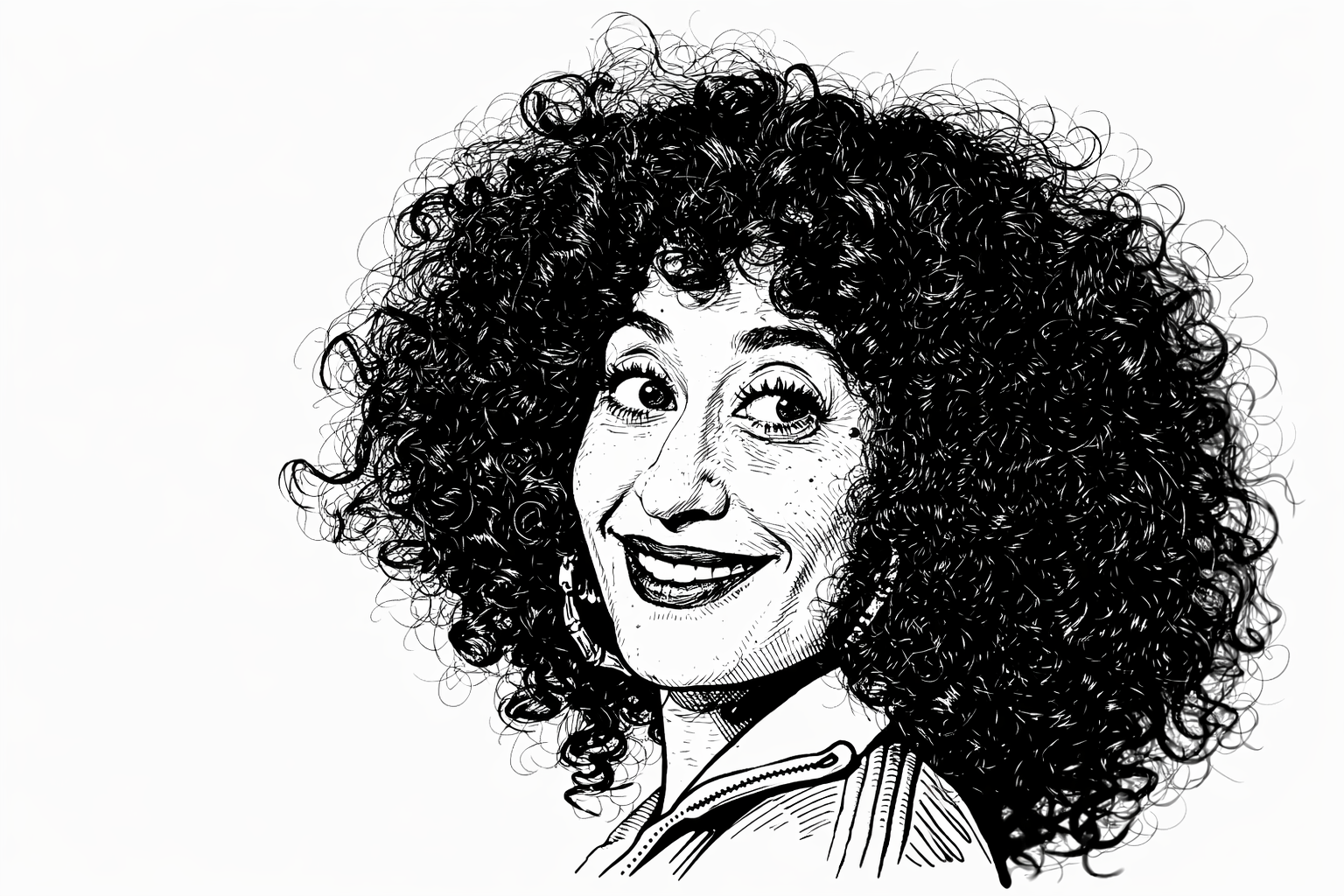
The controversy did not begin with a hairstyle. It began with a name. The Afro is not simply a silhouette or a set of aesthetic qualities — volume, texture, roundness. It is a cultural artifact shaped by specific history, specific politics, and specific acts of assertion. It emerged during the Civil Rights Movement as a visible rejection of imposed standards of beauty and assimilation, a statement that Black features in their natural state were not a problem to be managed but a source of pride to be claimed. To wear an Afro in that context was not a style choice in the way that choosing a bob or a blunt cut is a style choice. It was a political act with consequences. Women lost jobs over it. Children were sent home from school. The style carried weight because the society around it assigned weight to it — and that assignment did not come from fashion editors. It came from centuries of enforced hierarchy around what Black bodies were permitted to look like and where.
What Vogue’s framing did was detach the aesthetic from that history while keeping the aesthetic. The use of imagery associated with Tracee Ellis Ross — whose public identity is deeply tied to natural hair and whose presence in any natural hair conversation is never culturally neutral — made the omission more visible, not less. The visual language said one thing. The editorial language attempted to say another. That gap is what people responded to, and the response was not about whether styles can evolve or be reinterpreted. Styles evolve. Influences travel. The question is whether the reinterpretation acknowledges the lineage it draws from or quietly replaces it with something that sounds new and carries no obligation. The “cloud bob” sounds like a trend. The Afro sounds like a history. The choice between those names is not neutral.
The data behind this moment makes the stakes of that choice concrete. According to the 2023 CROWN Research Study, Black women are 2.5 times more likely to be sent home from work because of their hair. Natural styles — the Afro among them — remain actively regulated in professional and institutional spaces in ways that straight styles are not, which means the politics of the Afro are not historical. They are present tense. At the same time, global beauty and haircare markets projected to surpass $100 billion in the coming years continue to profit from the very aesthetics that are still penalized in everyday life. A style can be marginalized in one context and monetized in another, often without acknowledgment of the people who have carried its meaning across both. That contradiction — marginalized here, monetized there — is the structure that the “cloud bob” naming serves, whether intentionally or not. It makes the aesthetic available for consumption while making the history available for forgetting.
The renaming is not an isolated editorial decision. It reflects a broader incentive structure within fashion and media where novelty drives attention and attention drives revenue. Rebranding makes something feel new even when it is not, and that feeling of newness is commercially valuable in a way that historical specificity rarely is. But the process of making something feel new depends on a kind of cultural amnesia — it asks audiences to engage with the aesthetic while detaching from its origin, and over time that detachment accumulates. What was once specific becomes generalized. What was generalized becomes unrecognizable in its original form. And the people who carried the style through its most difficult iterations — who wore it when it cost them something, not when it was on a Vogue mood board — are left watching their history become someone else’s trend cycle.
I think about this when I make choices about my own hair. When I wear it natural, I am making a choice that sits inside a long conversation about what Black women are permitted to look like and where. When I straighten it, I am making a different choice that also sits inside that conversation, for different reasons that are no less political even when they feel purely personal. The Afro I can wear and the cloud bob Vogue is selling are not the same thing, even if they look similar in a photograph. One has a history. The other has a name designed to make that history optional. What is at stake in this moment is not simply terminology. It is the preservation of meaning in a system that consistently rewards its dilution — and the recognition that when the language changes, the story often changes with it. That is how entire histories get rewritten. Quietly, one renamed style at a time.