
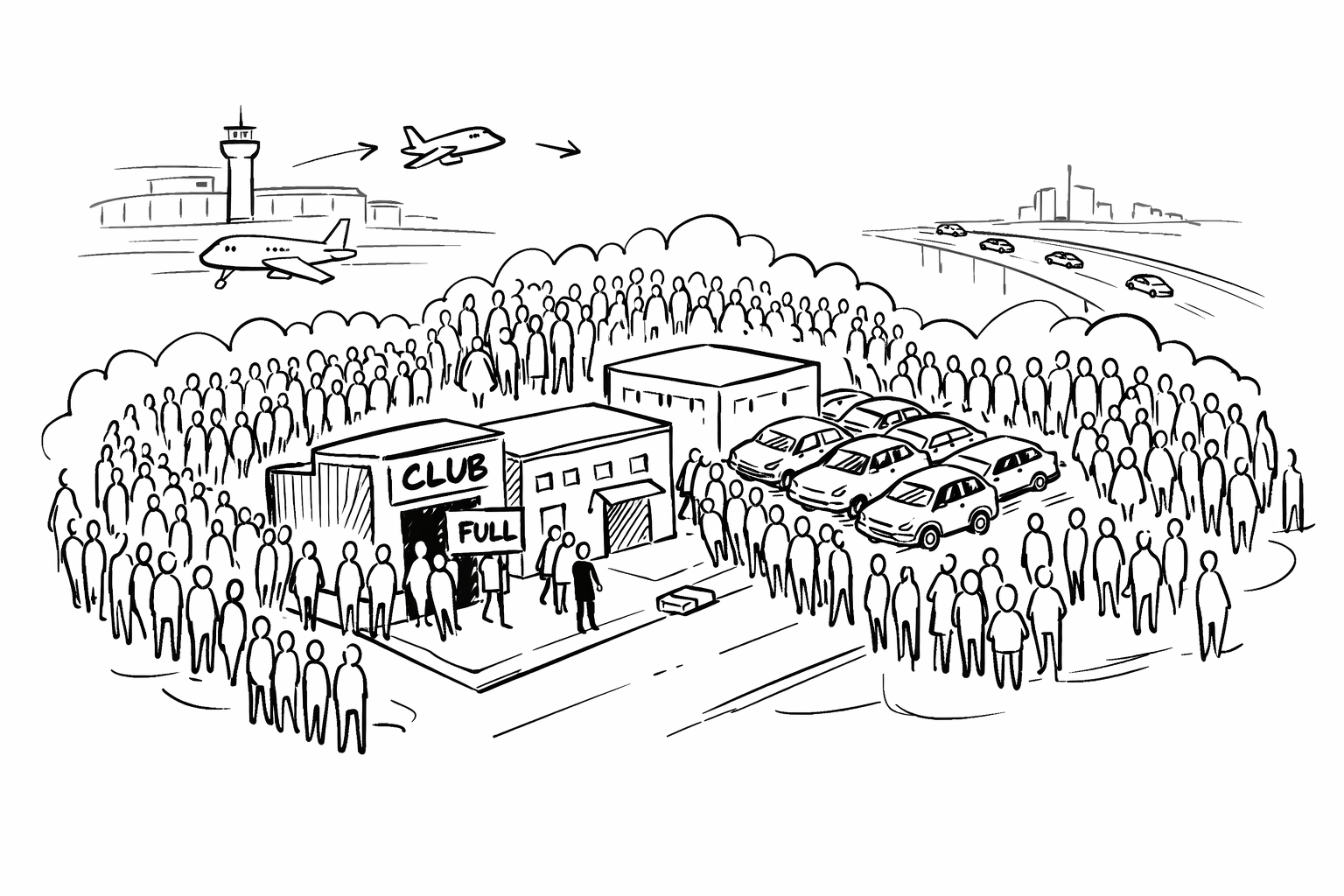
Cities don’t become destinations all at once. There is no formal announcement, no defining moment when a place is officially reclassified. The shift happens incrementally — through crowd behavior, social media, rising hotel bookings, and infrastructure quietly pushed past what it was built to handle. That is what is unfolding in Houston this spring.
No one positioned Houston as a spring break hub. Yet the numbers suggest otherwise. The city’s airports are expecting roughly 2.2 million travelers during the break period, with peak days approaching 185,000 passengers moving through terminals. Crucially, Houston is not just sending people away — it is pulling them in. Spring break travel is converging with the Houston Livestock Show and Rodeo, major sporting events, and rising cruise traffic from nearby ports, producing a level of activity that extends well beyond typical tourism patterns.
The effects are visible on the ground. Travelers are arriving hours early as security lines stretch unpredictably, in some cases exceeding two to three hours. The pressure does not end at the terminal. Nightlife districts, parking lots, and informal gathering spaces are absorbing crowds that exceed what those environments were built to handle. When venues reach capacity, the activity moves outside.
That spillover became harder to ignore over the weekend. Groups turned away from overcrowded clubs gathered in parking lots, blocking entrances and disrupting nearby businesses. Some altercations turned physical. Business owners reported shutting down early despite peak demand — losing late-night revenue because conditions had become unmanageable. In residential areas, short-term rentals hosted gatherings well beyond intended capacity, with noise complaints becoming routine rather than exceptional. What might once have been isolated incidents reads differently when it repeats across multiple locations within the same week.
Visitor accounts on TikTok and Instagram fill in the rest. People describe arriving at venues to find lines already stretching around the block, or being turned away after hours of waiting. What follows is less organized nightlife than improvisation — groups moving from one location to the next, eventually settling into whatever space is available: parking lots, gas stations, side streets. The destination isn’t always where people intended to be. It’s where they end up.
Not all of this is spontaneous. While viral footage and crowd behavior suggest a city being discovered organically, Houston’s tourism leadership has been working to accelerate that process. Local organizations have partnered with influencers — some with audiences in the tens of millions — to promote major events and expand the city’s profile. That investment is showing results. Hotel bookings are up between 12 and 15 percent compared to the same period last year, though the impact is uneven: restaurants report modest increases in out-of-town visitors, while nightlife and hospitality sectors are absorbing more concentrated surges.
What is unfolding is a hybrid phenomenon — part organic, part deliberate. Crowds form, content spreads, demand migrates from more restricted destinations, and visibility is simultaneously amplified by intentional promotion. When those forces align, the pace of change accelerates faster than the systems designed to manage it.
Airports, transit systems, policing strategies, and public planning are built around what a city has been, not what it is becoming. When demand scales quickly, those systems are tested immediately. Staffing gaps, traffic congestion, overwhelmed venues, and public safety concerns are not isolated failures — they are signs of a system adjusting in real time to pressures it was not designed for. Houston is early in that cycle. But it is no longer outside of it. The question is whether the city recognizes what it has become before deciding how to respond — because once a place becomes a destination in practice, it rarely reverts.