
Part of Structural Reality — an ongoing series examining the systems, policies, and decisions that shape everyday life for Black and Brown communities in America and around the world.
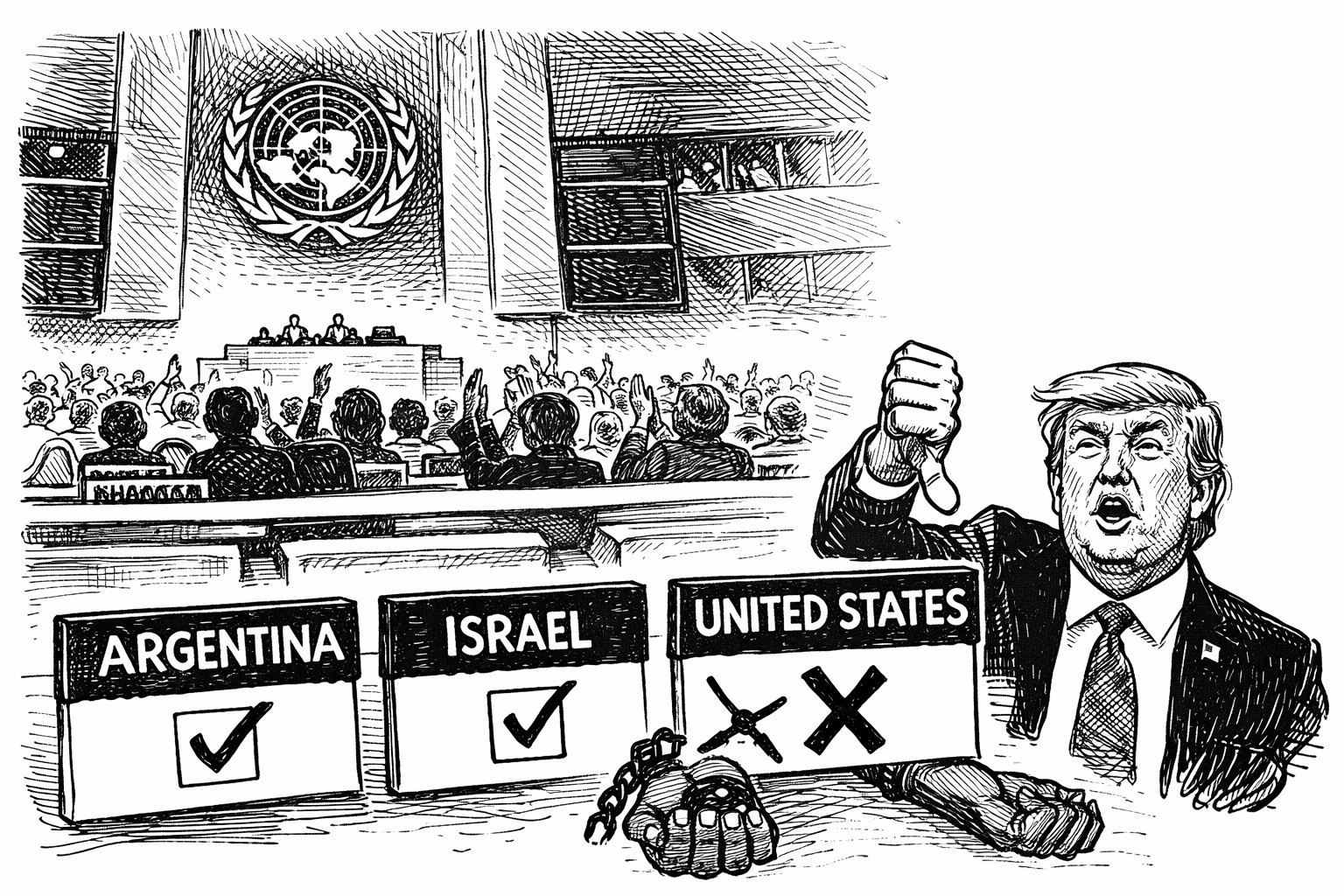
On Wednesday, the United Nations General Assembly voted 123 to 3 to declare the transatlantic slave trade the gravest crime against humanity. The resolution, spearheaded by Ghana, calls for formal apologies, financial compensation, restitution of cultural artifacts, and guarantees of non-repetition. Applause erupted in the General Assembly Hall when it passed. Three countries voted no: Argentina, Israel, and the United States of America.
The U.S. did not abstain — the way the UK and all 27 EU member states did. It voted against. U.S. Ambassador Dan Negrea called the resolution “highly problematic in countless respects,” stated that the U.S. “does not recognize a legal right to reparations for historical wrongs that were not illegal under international law at the time they occurred,” and described the reparations framework as “the cynical usage of historical wrongs as a leverage point.” In the same statement, he declared that President Trump “has done more for Black Americans than any other president.” That sentence, delivered at the United Nations while voting against a resolution affirming the humanity of 12.5 million enslaved Africans, is the one that requires the most examination.
The resolution is nonbinding — but nonbinding does not mean insignificant. It means 123 countries stood in a room and named the thing. The U.S. position is that acknowledging it legally would require accountability it is not prepared to offer. That is not a legal argument. It is a political one dressed in legal language. And it is consistent with a pattern: the Trump administration has removed slavery exhibits from national parks and museums, signed an executive order suggesting the Smithsonian focused too much on how bad slavery was, and reinstalled toppled Confederate monuments. The no vote is not an isolated decision. It is a continuation.
As FLO, Dave, and Kwn examined this week, Black Americans underwent an ethnogenesis under the most horrific circumstances in modern human history — and built a culture so generative it defines global popular culture more than a century later. The UN resolution is the world’s acknowledgment of what that forging cost. The U.S. no vote is its government’s refusal to participate in that acknowledgment. As The Black Recession Is Already Here documented, the economic consequences of that refusal are not abstract — they are measurable, ongoing, and borne by the descendants of the people the resolution was designed to recognize.
Ghana’s President Mahama called the resolution a safeguard against forgetting. The U.S. vote is a statement about what it intends to continue forgetting — and who it expects to absorb the cost.
The world said yes. The question now is what Black Americans do with the record of who said no.