
Sub-Saharan Africa’s recorded music revenues grew 15.2% in 2025, reaching $120 million, with digital revenues rising more than 20%. Spotify streams of African music are in the billions. Nigerian, Ghanaian, and South African artists are headlining festivals in London, filling arenas in Paris, and topping charts in cities their music was never designed to reach. By every surface metric, the Afrobeats moment is real and it is global.
The Lagos conference told a different story.
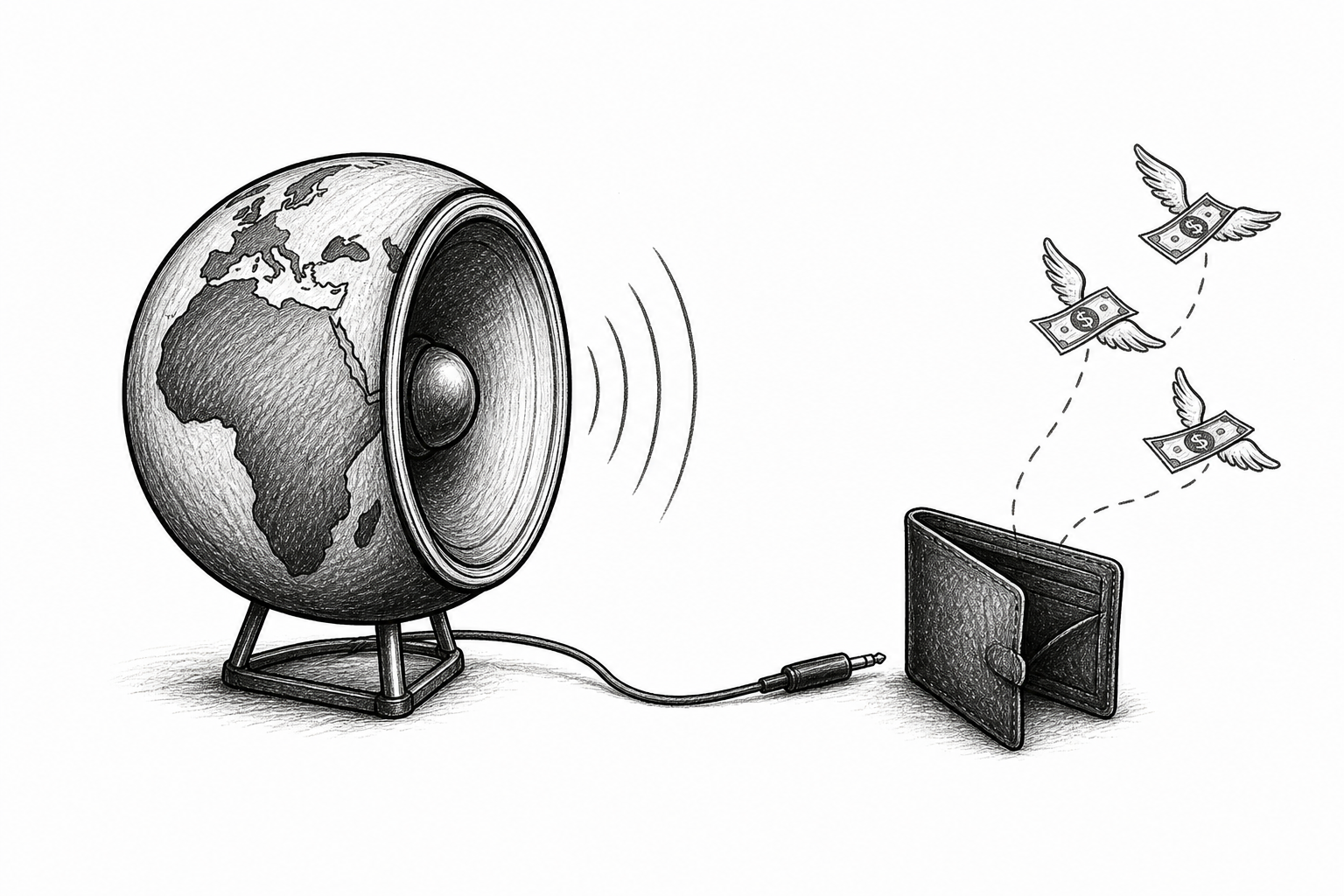
At the IFPI Africa Performance Rights Conference 2026, held in Nigeria’s commercial capital, record label executives, collective management organizations, and policymakers gathered to name something the streaming numbers obscure: the gap between Africa’s cultural influence and its financial returns is not closing. It is structural. The conference centered on three pressure points — copyright frameworks that haven’t kept pace with digital distribution, collective management organizations struggling to track and collect what artists are owed, and a broadcast licensing system that was built for a different era and is only now being revised. Nigeria’s Minister of Art, Culture, Tourism and the Creative Economy framed the stakes plainly: the continent’s creative momentum is real, but sustainability requires the ability to capture, license, and monetize output — not just produce it.
That tension has a cultural dimension that the licensing conference can’t fully name but that Nigerian poet and music critic Dami Ajayi has been articulating precisely. In a recent conversation published by Africa Is a Country, Ajayi argued that what is now called Afrobeats — the genre that has become shorthand for African music’s global ascent — emerged through local innovation, diaspora influence, and the organic energy of a generation that built its audience before the international labels arrived.
What’s happening now is something different. Global capital has moved in, streaming platforms have become the primary distribution infrastructure, and the genre is increasingly being shaped by what those systems reward rather than what the culture produces. Ajayi’s concern is not that Afrobeats is declining. It is that the industry may be entering a plateau phase driven more by external commercial logic than internal artistic direction — and that Nigerian stakeholders are capturing a fraction of the value being generated in their name.
The pattern is familiar because it is not new. It is the same mechanism that has governed Black creative economies across industries and geographies for decades: the culture produces the value, and the infrastructure determines who keeps it. SSC has been tracking this pattern across multiple dimensions. An earlier piece on Afrobeats’ crossover moment examined how United Talent Agency now represents Tyla, Wizkid, Burna Boy, Ayra Starr, Tiwa Savage, and Davido — concentrating the continent’s biggest names under a single Western agency’s umbrella, where the mediation between artist and market has a cost that doesn’t always show up in the press release.
The Afrobeats crossover piece named the stakes directly: whether Afrobeats will follow the same arc as reggae, as hip-hop’s early commercial crossover, as every genre that traveled from Black communities into American commercial infrastructure and arrived stripped of the economic relationships that should have traveled with it. The Lagos conference is not raising a new alarm. It is formalizing one that has been building for years.
What makes the Afrobeats moment distinct is that the gap is becoming visible in real time, while the genre is still at the height of its global reach. The path forward requires action on multiple fronts simultaneously. Copyright frameworks need to be modernized and enforced. Collective management organizations need the digital infrastructure to track streams, collect royalties, and distribute them accurately to African artists regardless of where in the world their music is being consumed. And the artists themselves — increasingly aware of the dynamic — are beginning to demand revenue models that match their reach: ownership stakes, publishing rights, direct licensing deals, and distribution infrastructure that keeps value closer to its source.
What the streaming numbers announce and what the Lagos conference confirmed are two different things. Afrobeats is one of the most significant cultural exports the African continent has produced. The system built around it is still being designed — and whoever controls that design will determine whether the next decade of growth belongs to the artists who built the genre or the platforms and labels that distribute it.
The sound travels. The question is whether the money will follow.