
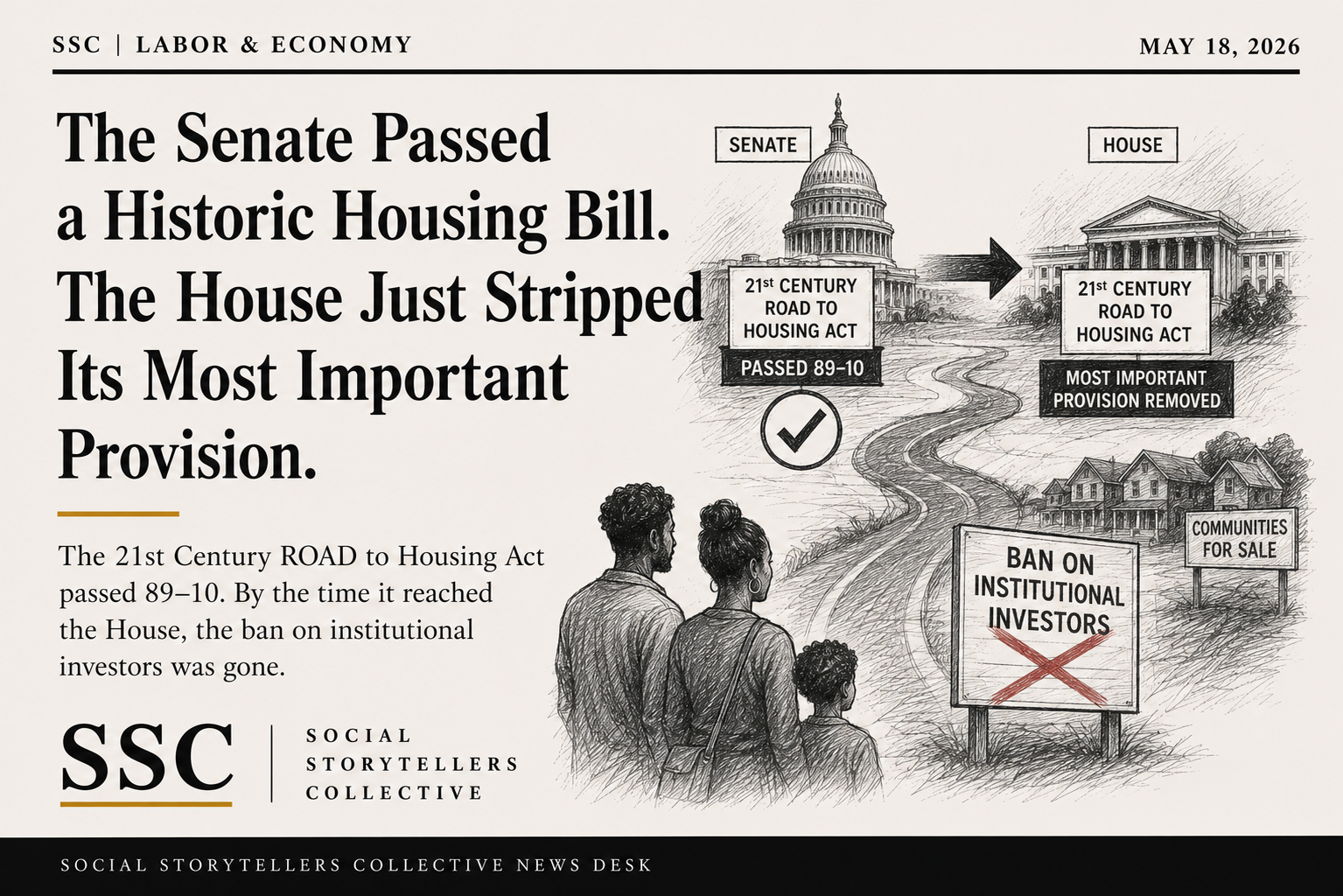
What remains is a bill that addresses the symptoms of the housing crisis without touching its most visible structural cause.
In March 2026, the United States Senate passed the most significant housing legislation in decades by a vote of 89 to 10. The 21st Century ROAD to Housing Act included, among its provisions, a direct prohibition on large institutional investors purchasing single-family homes. The definition was specific: any entity with investment control of 350 or moresingle-family properties would be barred from buying more. The bill passed with unusual bipartisan support at a moment when bipartisan legislation is rare enough to constitute news on its own. Then it went to the House. And the institutional investor ban was removed.
What the House did is worth understanding precisely, because the language around housing legislation is almost always more optimistic than the policy it describes. The Senate bill did not require existing institutional investors to sell their holdings. It did not retroactively touch the portfolios already assembled. It established a prospective ban with a 180-day implementation window and a 15-year sunset provision — meaning the restriction was already designed to expire before the youngest buyers entering the market today reach middle age. The House found that insufficient and eliminated it anyway.
The removal matters because institutional investment in single-family housing is not a peripheral issue in the affordability crisis — it is increasingly central to it. Over the past decade, investment firms, private equity funds, and real estate trusts have systematically acquired single-family homes in markets across the Sun Belt, Midwest, and Southeast, converting ownership inventory into rental inventory at a scale that individual families cannot compete with. When an institutional buyer can make all-cash offers on dozens of properties simultaneously, setting asking prices in a market, the first-time buyer approved for a conventional mortgage is not competing on the same terms. The homes that previous generations used to build wealth through ownership are increasingly the assets that financial institutions use to extract rental income from the people who cannot buy them.
The argument made against the investor ban — that it would reduce housing supply or chill development — has surface plausibility but limited empirical support. The homes institutional investors are purchasing already exist. The ban applied to acquisitions, not construction. The build-to-rent exception in the Senate version allowed institutional players to continue developing new inventory as long as they eventually sold it to individual buyers after seven years. The policy left significant room for institutional participation in housing while drawing a line at the mass acquisition of existing homes that families are actively trying to purchase.
That line is now gone from the legislation moving toward the president’s desk. What remains is a bill with real provisions: zoning reform incentives, expanded funding for affordable housing programs, regulatory changes intended to accelerate construction permitting, and tenant protections including right-of-first-refusal clauses that give renters advance opportunity to purchase before a property is sold to another investor. These are not nothing. They address real barriers. But they address them without confronting the mechanism that has most visibly disrupted ownership access for middle-income families in the markets where the crisis is most acute.
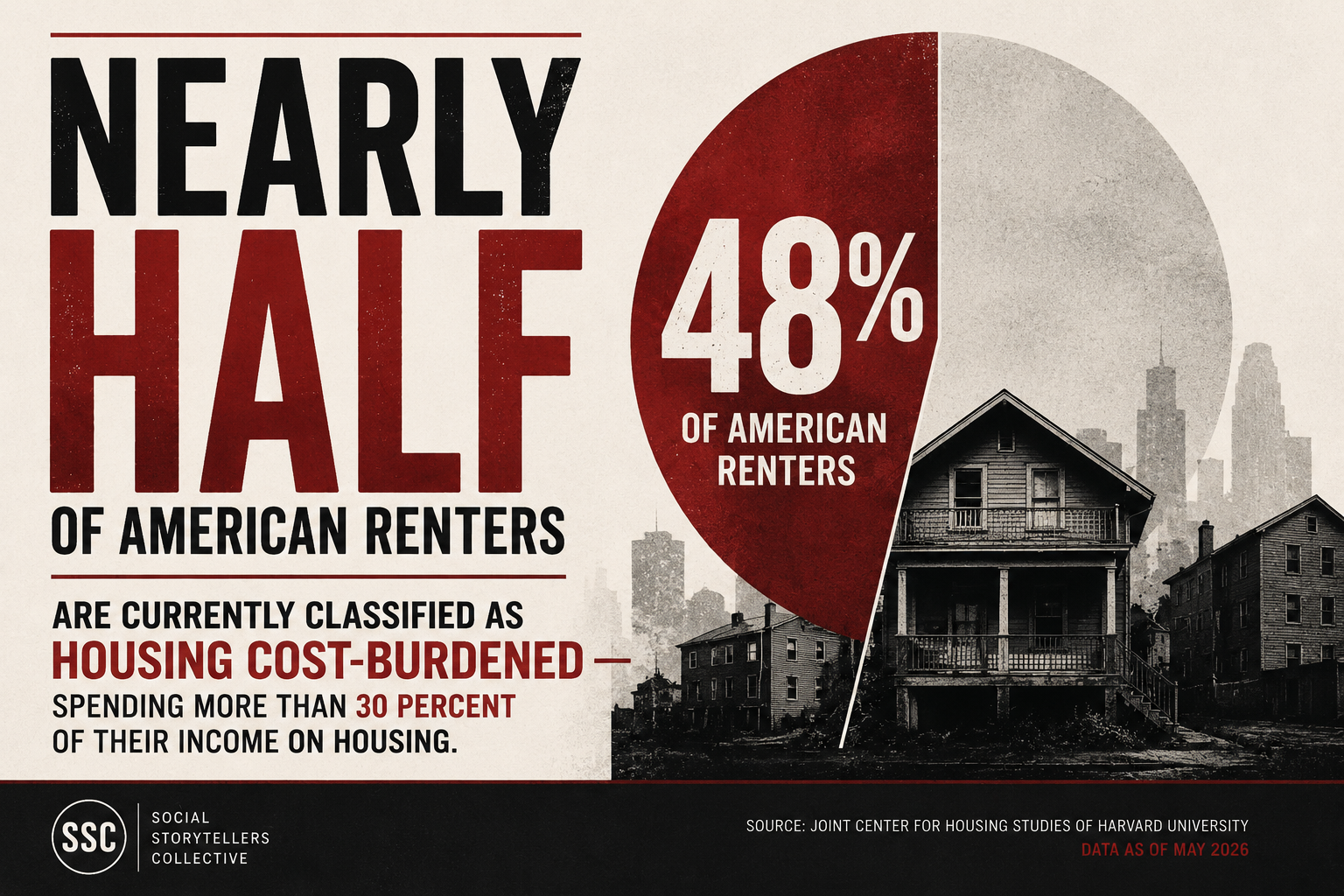
Nearly half of American renters are currently classified as housing cost-burdened — spending more than 30 percent of their income on housing. That figure has held relatively stable across years of housing reform discussion, pilot programs, and legislative proposals. The condition that produces it — wages that have not kept pace with housing costs in most markets — does not respond quickly to zoning changes or permitting reform. Those interventions operate on a timeline measured in years. The families currently cost-burdened are navigating a market that exists today, with the incomes they have today, competing against buyers who have structural advantages the legislation declining to address.
The 21st Century ROAD to Housing Act will likely pass in some form. It will contain real reforms. Advocates will correctly note that it represents progress. All of that can be true, and the removal of the institutional investor ban can still be the most consequential decision made in its drafting — the one that determines whether the legislation reshapes the housing market for the people most squeezed by it, or optimizes access for the institutions that are already winning inside it.
The Senate voted 89–10 to draw a line. The House erased it. The question now is whether any version of that line survives conference.