
Part of The Access Shift — an ongoing series examining how access is being quietly reshaped across American life. New stories every Wednesday at 12:00pm CDT.
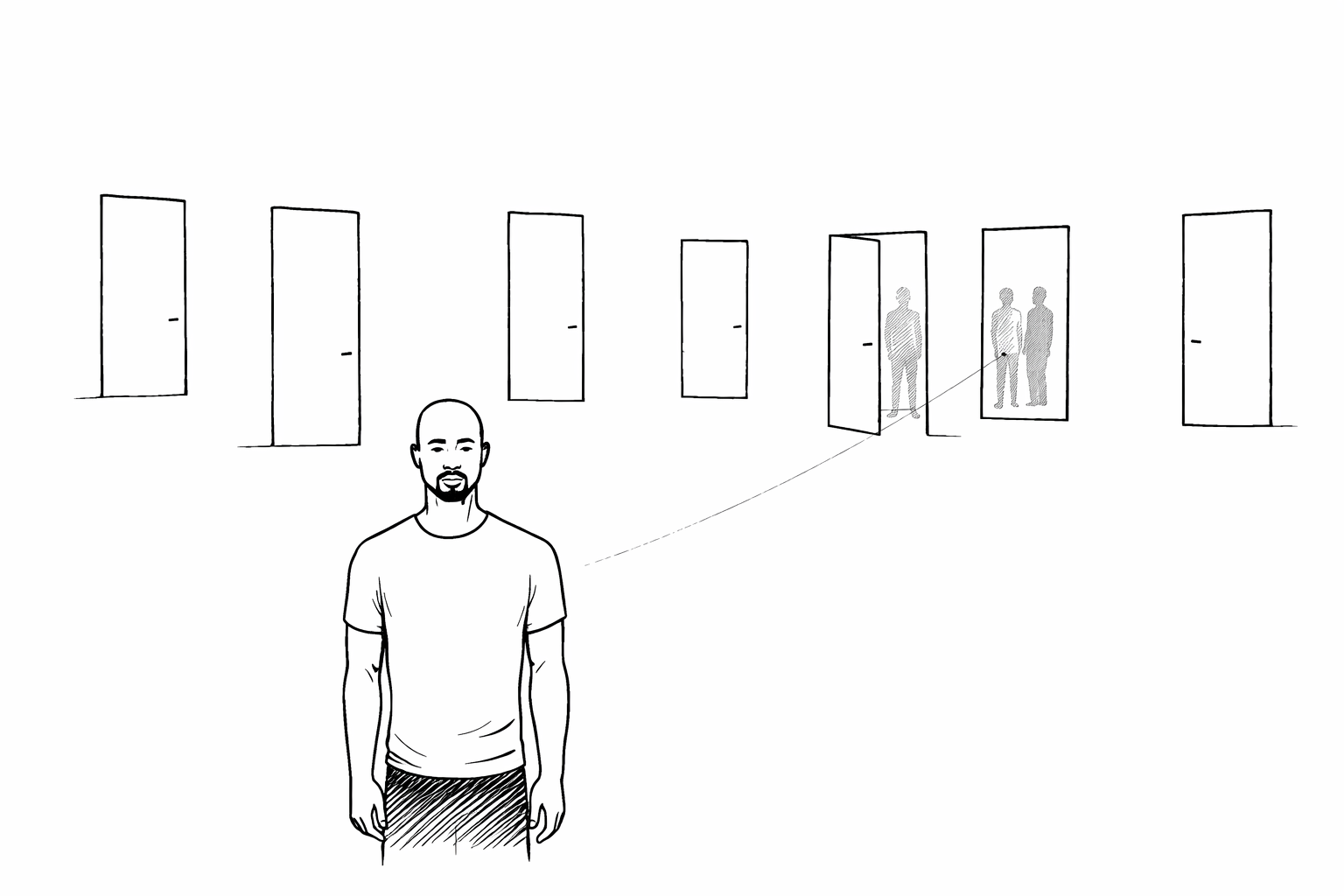
There is a version of professional mobility that looks like meritocracy. You build the skills, compile the credentials, gather the references, and submit the application. The strongest candidate advances. It is a tidy story, and it has been losing accuracy for decades. What has replaced it, largely without announcement, is a system in which access to opportunity is increasingly mediated not by what you know or what you’ve done, but by who already knows you — and is willing to say so in the right room.
The numbers make this concrete. A 2023 LinkedIn Workforce Report found that approximately 70% of jobs are filled through networking — meaning they are either never publicly posted or are effectively decided before the posting goes live. For candidates without existing professional networks, or with networks that don’t overlap with the industry they’re trying to enter, the posted job is often a formality. The application goes in. The decision has already been shaped by a conversation that happened elsewhere.
This is where credential inflation becomes a compounding problem. As more candidates hold bachelor’s and advanced degrees, formal qualifications function less as differentiators and more as baseline filters — necessary but not sufficient. What moves a resume from the pile to the call is increasingly a referral, a warm introduction, or name recognition in a shared network. And networks, as generations of research on social capital have documented, are not randomly distributed. They cluster by race, class, educational background, and geography. Access to a professional network that opens doors is itself a product of prior access — which means the system tends to reproduce the hierarchies already embedded in it. As The AI Resume Screen Won’t See You Coming examined, algorithmic hiring has added another filter layer that compounds these disadvantages before a human ever sees the application — meaning the game is often decided twice before anyone sits across from you in a room.
But here is where the conversation about Black professional networks requires its own honest reckoning — one that rarely surfaces even in spaces committed to equity. Having a Black colleague with hiring authority, someone who genuinely sees your value and tells you so, does not automatically translate into advocacy. I experienced this firsthand. A close colleague — Black, with real decision-making authority at a Fortune 400 company — told me without hesitation that he would advocate for me. I wasn’t asking for a role. I was asking for the opportunity to be considered, for my resume to be seen among the many where it would otherwise be overlooked. That felt like a reasonable ask between people who knew each other’s work and trusted each other’s judgment.
His words and his actions did not align. And sitting with that, I began to understand something that doesn’t get said enough: Black professionals in positions of influence often move differently than their white counterparts in the same rooms. Not because they don’t want to open doors — many do, deeply — but because the social calculus is different. There is a heightened awareness of perception, a cautiousness about how advocacy will be received, a concern about whether sponsoring someone will reflect on them in an environment where they are already being watched more closely than their peers. In predominantly white professional spaces, the warm introduction and the quiet word on someone’s behalf happen organically, without deliberation, as a natural extension of relationship. For Black professionals navigating those same spaces, the same act can feel loaded with risk in ways that are rarely acknowledged out loud.
That dynamic has a cost — and it falls heaviest on the people trying to get in. For first-generation professionals, career changers, and candidates from communities historically excluded from dominant professional networks, the informal infrastructure of opportunity has never been neutrally distributed. The lunch, the introduction, the text that says you should meet someone — these are forms of access that flow along existing lines of proximity and familiarity. You can be the most qualified person in the building and still find yourself outside the conversations that matter. As When the Economy Slows, Some Communities Feel It First documented, the communities with the least structural cushion absorb the earliest and sharpest effects of any system under pressure. In a tightening labor market, that includes the pressure of a hiring system that was never fully transparent about its own rules — and a sponsorship culture that asks Black professionals to carry a weight their white colleagues were never asked to consider.
What this moment requires is not just mentorship programs or diversity hiring initiatives, as valuable as those can be when done well. It requires an honest acknowledgment that the informal infrastructure of professional opportunity is itself a form of access — and that even within Black professional networks, the friction of advocacy is real, the perception stakes are high, and the gap between intention and action is wider than anyone likes to admit. The reference letter didn’t just become obsolete. It got replaced by something less formal, less legible, and much harder to navigate — even when someone who looks like you is holding the door.