
Part of The Access Shift — an ongoing series examining how access is being quietly reshaped across American life.
NEWS DESK | SOCIAL STORYTELLERS COLLECTIVE
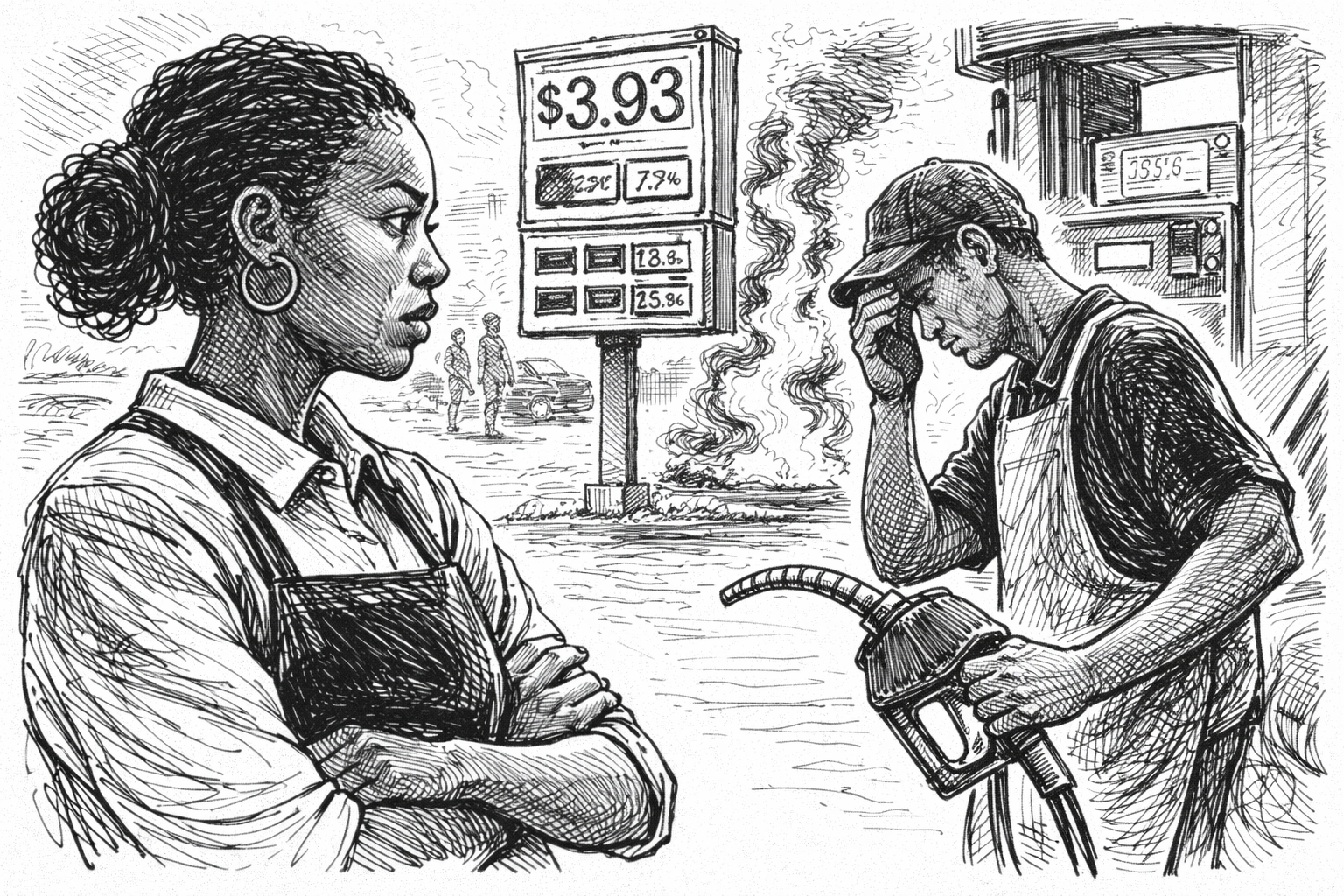
The U.S.-Israel war on Iran began on February 28. Within a week, gas prices jumped nearly 50 cents per gallon. By late March, the national average reached $3.93 — up from $2.98 before the conflict, a 32% increase in less than a month. The International Energy Agency has called Iran’s closure of the Strait of Hormuz the largest oil supply disruption in modern history. For most Americans, that global shock shows up as a number on a gas station sign.
Economists are clear about how that number lands. Higher gasoline prices function like a regressive tax, with lower-income households spending a greater share of their income on energy. When prices rise, those households don’t absorb the cost — they adjust around it. Spending gets cut. Debt increases. The average household is projected to spend an additional $740 on gas this year, but that figure carries different consequences depending on whether there is margin in the budget to begin with.
The labor market impact is already taking shape. Goldman Sachs estimates the oil shock is suppressing payroll growth by roughly 10,000 jobs per month, with losses concentrated in leisure, hospitality, and retail — sectors where Black and Brown workers are overrepresented. A foreign policy decision framed as national security is being paid for in two places: at the gas pump and on the paycheck, by people with the least proximity to the decision itself.
That pressure is landing on a labor market already under strain. Black unemployment stood at 7.7% in February — nearly double the white rate — within an economic environment SSC has tracked in The Black Recession Is Already Here and The Paycheck-to-Paycheck Economy. The same households absorbing higher gas costs are often navigating Medicaid redeterminations, shrinking DEI protections, and a contracting safety net. Each pressure operates independently. Together, they compound.
Why This Matters
When economists describe oil shocks as regressive, they are describing how cost is distributed. In practice, that means the households already stretched absorb the deepest impact — cutting back on essentials before higher-income households adjust anything structural. The Iran war carries a human cost abroad. At home, it carries an economic cost measured in gallons — and that bill is not being split evenly.
The Access Shift
The gradual redefinition of who systems are designed to serve.
Across sectors—from public infrastructure to healthcare to everyday spaces—access is no longer assumed. As costs rise and systems face increasing pressure, services once built for broad reach are becoming more selective, more conditional, and less universal. The Access Shift explores how these changes are unfolding in real time—and what they reveal about who is included, who is left out, and how the structure of everyday life is quietly being reshaped.