
A 77% placement rate within three months should signal a healthy early-career market. Instead, it reveals something more complicated: graduates are entering faster, but not necessarily better. According to new data from ZipRecruiter, recent grads are applying to more jobs, accepting roles outside their intended fields, and increasingly treating their first job as temporary. The outcome looks efficient. The process behind it is not.
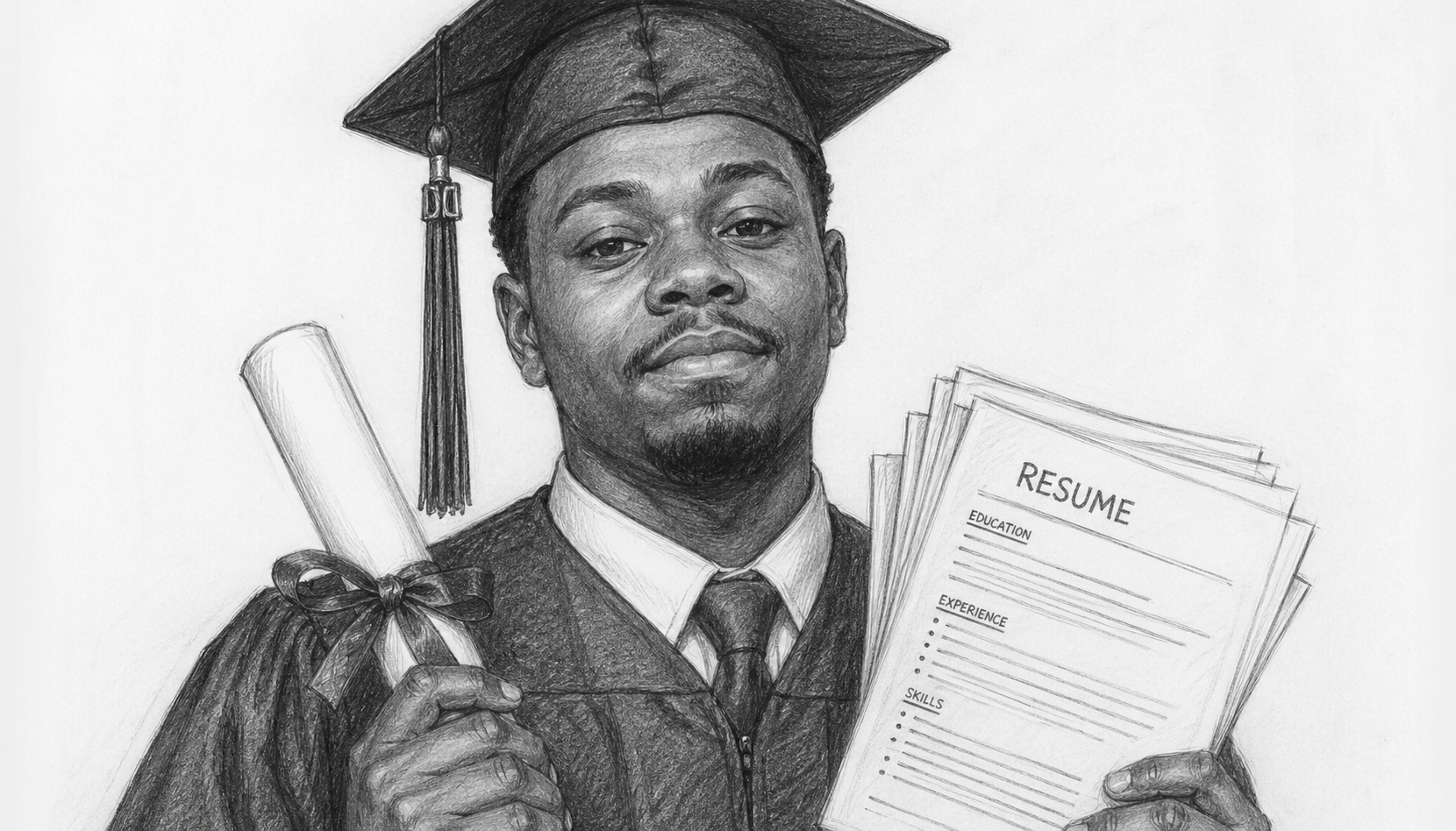
The shift begins with compression. Entry-level roles are shrinking while expectations are rising, forcing graduates to arrive “pre-qualified” for positions that were once designed to train them. Nearly half of respondents say Artificial Intelligence has already impacted their field, particularly in communications, media, and technical disciplines. But the deeper issue is not just technological disruption—it is institutional lag. Only 23% of graduates report receiving meaningful AI training in college, leaving them to bridge the gap between education and employment on their own.
That gap is showing up in behavior. Graduates are submitting more applications, broadening their job criteria, and accepting roles they believe they are overqualified for. Half say their current job is a stepping stone. This is not a temporary adjustment—it is a structural recalibration. The first job is no longer a starting point; it is a holding position within a longer, less predictable pathway.
What appears as optimism—80% of graduates expecting to reach their dream career within five years—reads differently in this context. It reflects delayed alignment rather than immediate confidence. Graduates are not rejecting the system; they are extending the timeline in which it might work for them. The expectation remains intact, but the route has become indirect.
The result is a labor market that has quietly moved the burden of adaptation downward. Employers are hiring more selectively, universities are preparing students unevenly, and graduates are absorbing the difference through additional effort, time, and flexibility. The system still produces outcomes, but it does so by shifting the cost of transition onto the individual.
The entry-level job has not disappeared. It has been redefined into something closer to mid-level readiness—without mid-level compensation or stability. What remains is a generation entering the workforce already in adaptation mode, navigating a system that expects readiness before it provides access.