
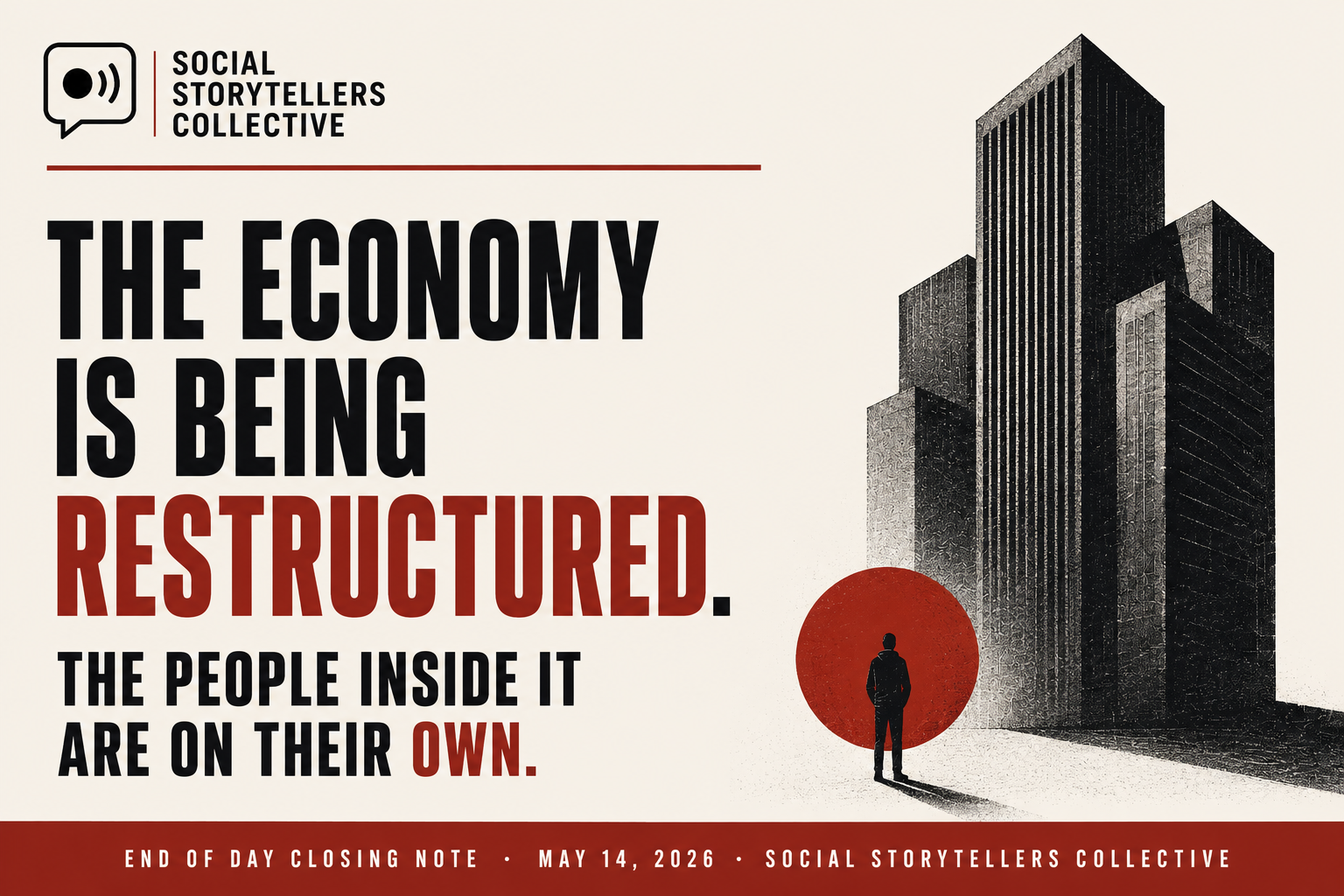
Oracle cut 30,000 workers and refused to negotiate. OpenAI paid out $6.6 billion to 600 insiders. Houston is losing the workforce that built it. Today’s note connects the dots.
This Morning… the Senate voted 99-0 to withhold their own paychecks during future government shutdowns — a unanimous admission that after a record 43-day shutdown last year and a 75-day partial closure of Homeland Security, the people making the decisions needed to feel the consequences. Accountability, it turns out, is easier to legislate when it’s personal. Speaking of decisions made at the top with consequences felt at the bottom — Oracle just cut 30,000 peopleto fund its AI ambitions. Here’s what happened.
Somewhere inside Oracle’s mass layoff, a worker sat down to review a severance agreement. They had stock that was months from vesting — approximately $1 million worth. The documents gave them days to decide. The company had legal counsel, institutional experience, and standardized agreements built over years of exactly these moments. The worker had the clock and no collective counterpart. They signed. The stock was gone.
That is not an exceptional story from today. It is a representative one. And it is where today’s note begins.
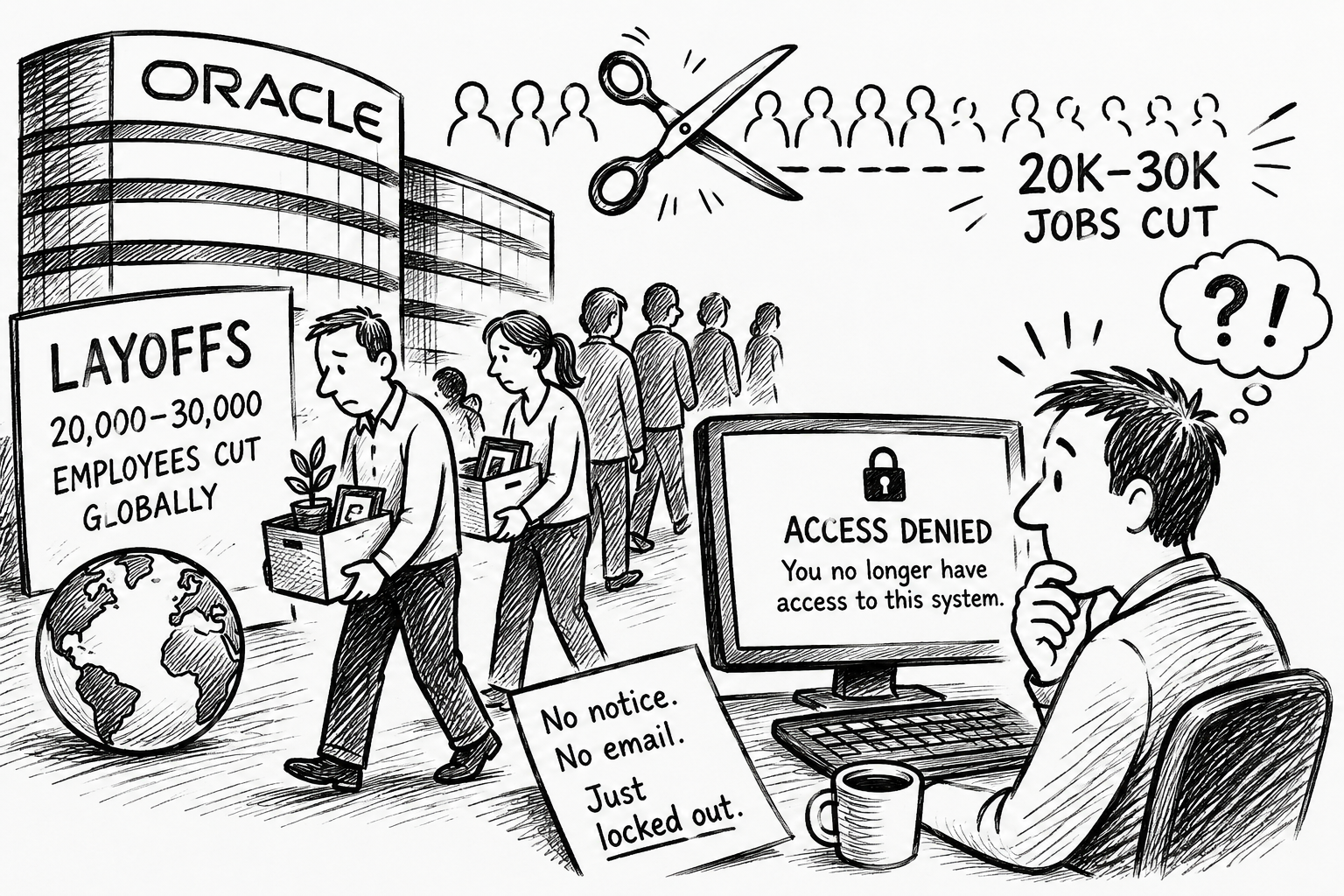
Oracle Workers Tried to Negotiate After Mass Layoffs. The Company Refused. Between 20,000 and 30,000 Oracle workers were cut globally — some learning they were terminated when they lost system access before any formal notice arrived. Workers attempted to negotiate: stronger severance, accelerated vesting, WARN Act protections. Oracle declined across the board. The negotiations failed not because workers asked for too much but because they asked alone. Individual negotiation in a mass layoff is disadvantaged before it begins. The company has legal counsel, institutional experience, and standardized agreements. The worker has days to review documents and no coordinated counterpart. What Oracle’s former employees learned is what white-collar workers across industries are learning in real time — that leverage has to be built before it is needed, and exercised collectively rather than one person at a time.
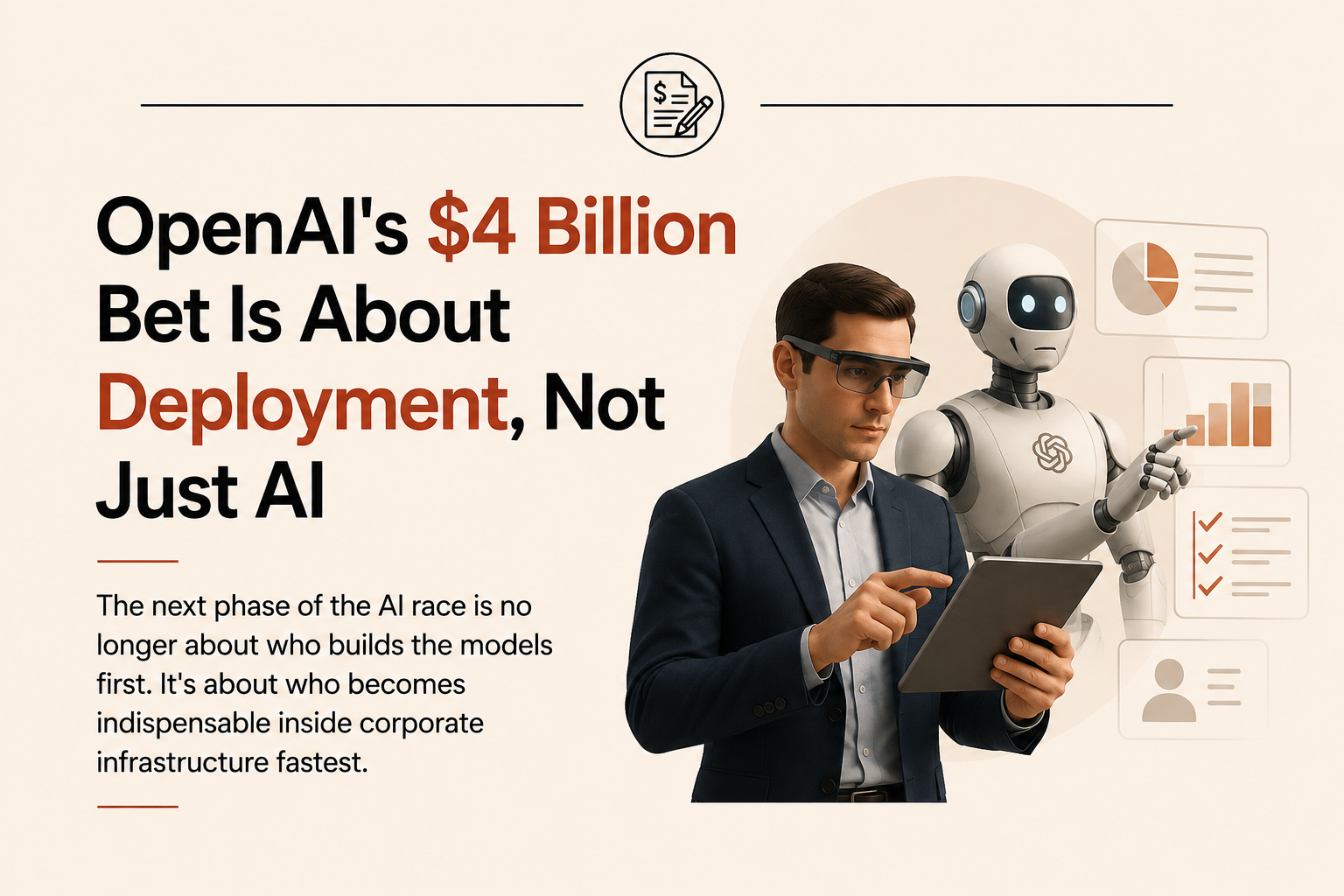
The AI economy is concentrating its gains at the top of the capital stack with a speed that is outpacing every other economic story this week. Two OpenAI stories tell that full picture. OpenAI’s $4 Billion Bet Is About Deployment, Not Just AI — OpenAI launched Deployment Co., backed by $4 billion and partnered with TPG, Bain, and Brookfield, to embed AI directly inside Fortune 500 operations. Only 30-34% of companies have redesigned operations around AI. The race is no longer about who builds the best model. It is about who becomes indispensable inside corporate infrastructure before the market stabilizes. And OpenAI’s $6.6 Billion Insider Payout Reveals Who the AI Economy Is Actually Building Wealth For — more than 600 OpenAI employees cashed out $6.6 billion during October’s financing round. 75 employees took the maximum $30 million each. Meanwhile 84% of companies haven’t redesigned roles around AI yet. The wealth is concentrating inside the cap table long before the public gets access. The infrastructure being built to transform how everyone works is generating extraordinary returns for a very small number of people while the workers being displaced by it absorb the disruption first.
The restructuring is happening at the institutional level too. Princeton Just Ended 133 Years of Academic Trust — and AI Is Why — Princeton’s faculty voted Monday to require proctoring for all in-person examinations beginning July 1, ending an honor system in place since 1893. The driver is not cheating in the traditional sense. It is AI. Personal devices have made misconduct harder for other students to observe and therefore harder to report — collapsing the peer accountability model Princeton’s honor system was built on. The institution did not change its values on Monday. It acknowledged that the infrastructure for upholding them had already broken down.
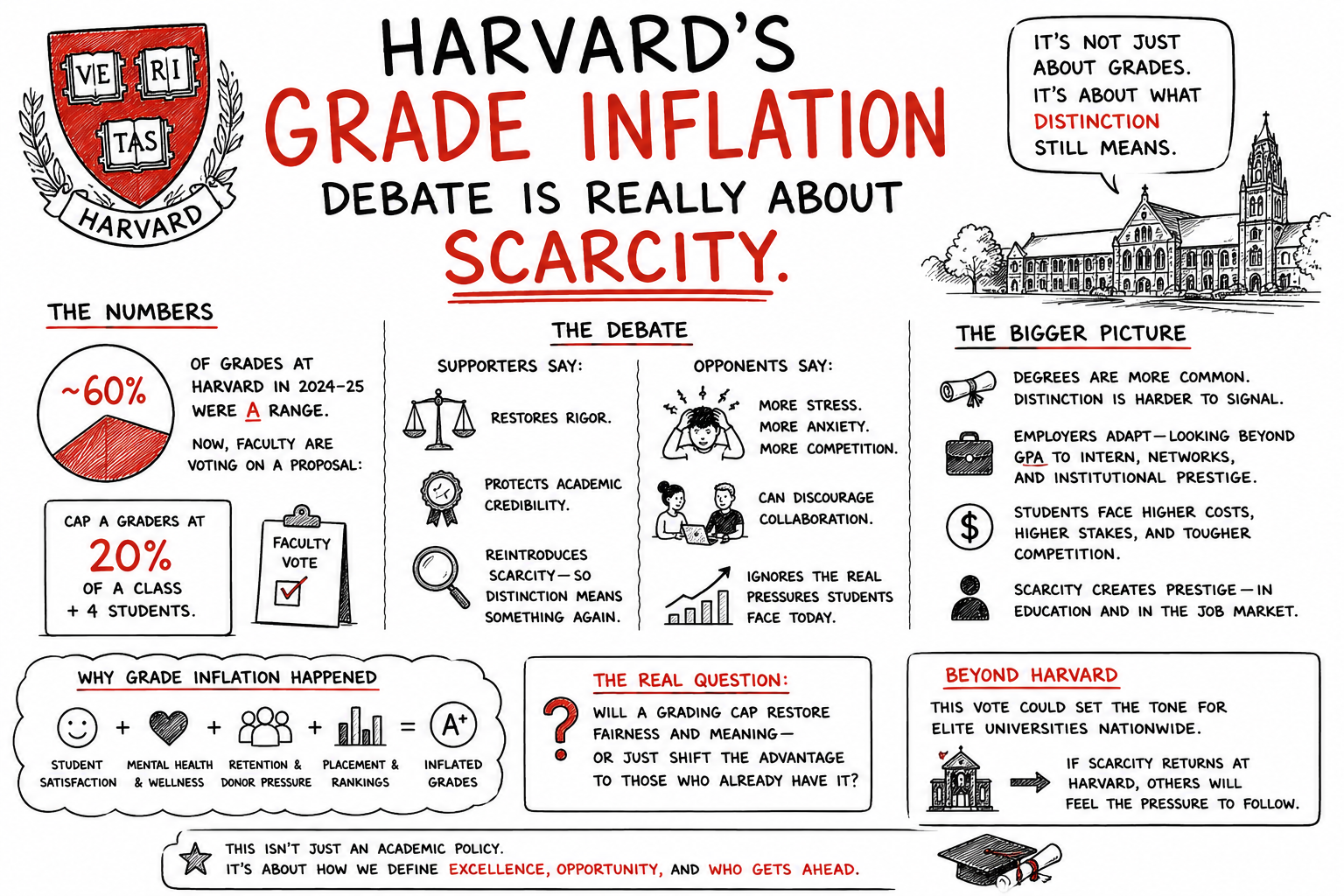
Harvard is wrestling with a version of the same erosion from a different direction. Harvard’s Grade Inflation Fight Is Really About Who Gets to Be Exceptional — roughly 60% of grades awarded at Harvard last year were A-range marks. Faculty are now voting on a proposal to cap A grades at 20% of each class. When the majority of students at one of the most selective institutions in the world are receiving the highest possible marks, the grading system is no longer functioning as a differentiator. A 20% cap does not restore rigor. It reintroduces artificial scarcity into an environment where the real problem is that competition for outcomes downstream of the degree has become more consequential than anything that happens inside the classroom. The students warning about stress and anxiety are accurately describing what the cap would do to the social dynamics of a place where everyone already believes their future depends on outperforming the person next to them.
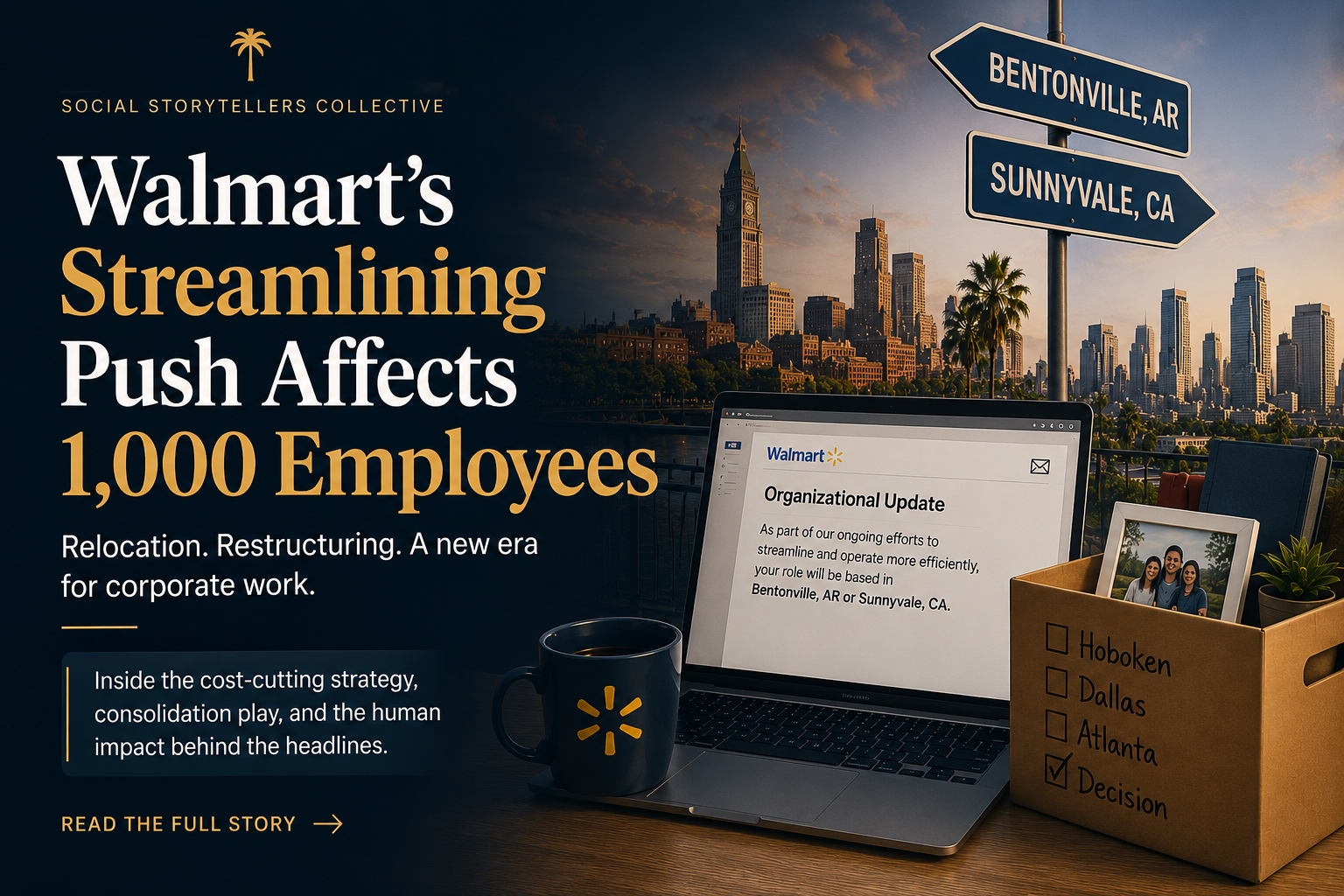
The restructuring is happening at the corporate level in ways that don’t show up in layoff announcements. Walmart Is Calling It Streamlining. The People Absorbing It Will Call It Something Else — somewhere in Hoboken, Dallas, or Atlanta, a product manager opened an email this week and learned their job still exists — in Bentonville, Arkansas, or Sunnyvale, California. They have a choice: uproot their family, absorb the cost of relocating to one of the most expensive zip codes in the country, or exit quietly. Relocation mandates function as a soft layoff with better optics. The company avoids a headcount number in the press while the workforce reduction happens through attrition — the people who cannot or will not move, for reasons that have nothing to do with performance and everything to do with access. The employees most likely to stay are the ones with the fewest constraints. The ones most likely to leave built their lives around the assumption that remote and hybrid work had permanently expanded where a professional career could be based.
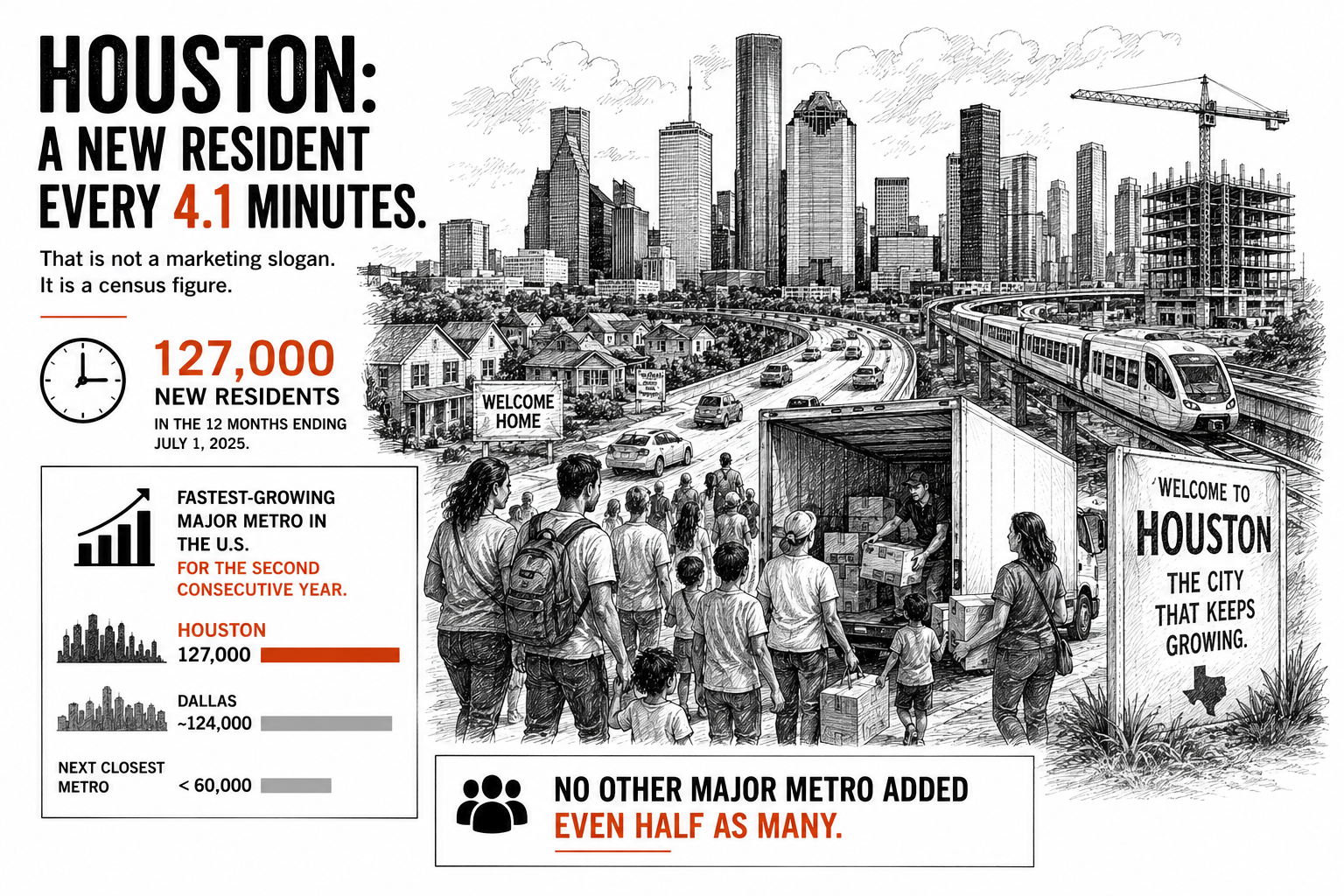
The restructuring is happening at the city level too. Houston’s Growth Engine Is Being Dismantled in Real Time — Houston added a new resident every 4.1 minutes last year. 56.5% of that growth came from international migration. The immigration enforcement policies now being implemented are not an external pressure on Houston’s economy. They are a direct strike at its engine. 31.8% of all working Houstonians are foreign-born. The projected job growth for 2026 is 30,900 — nearly 40% below the recent annual average of 50,000. The Greater Houston Partnership’s own report notes that 2025’s apparent strength likely reflects inflows that arrived before recent enforcement policies took full effect. The real numbers haven’t shown up yet. They will.
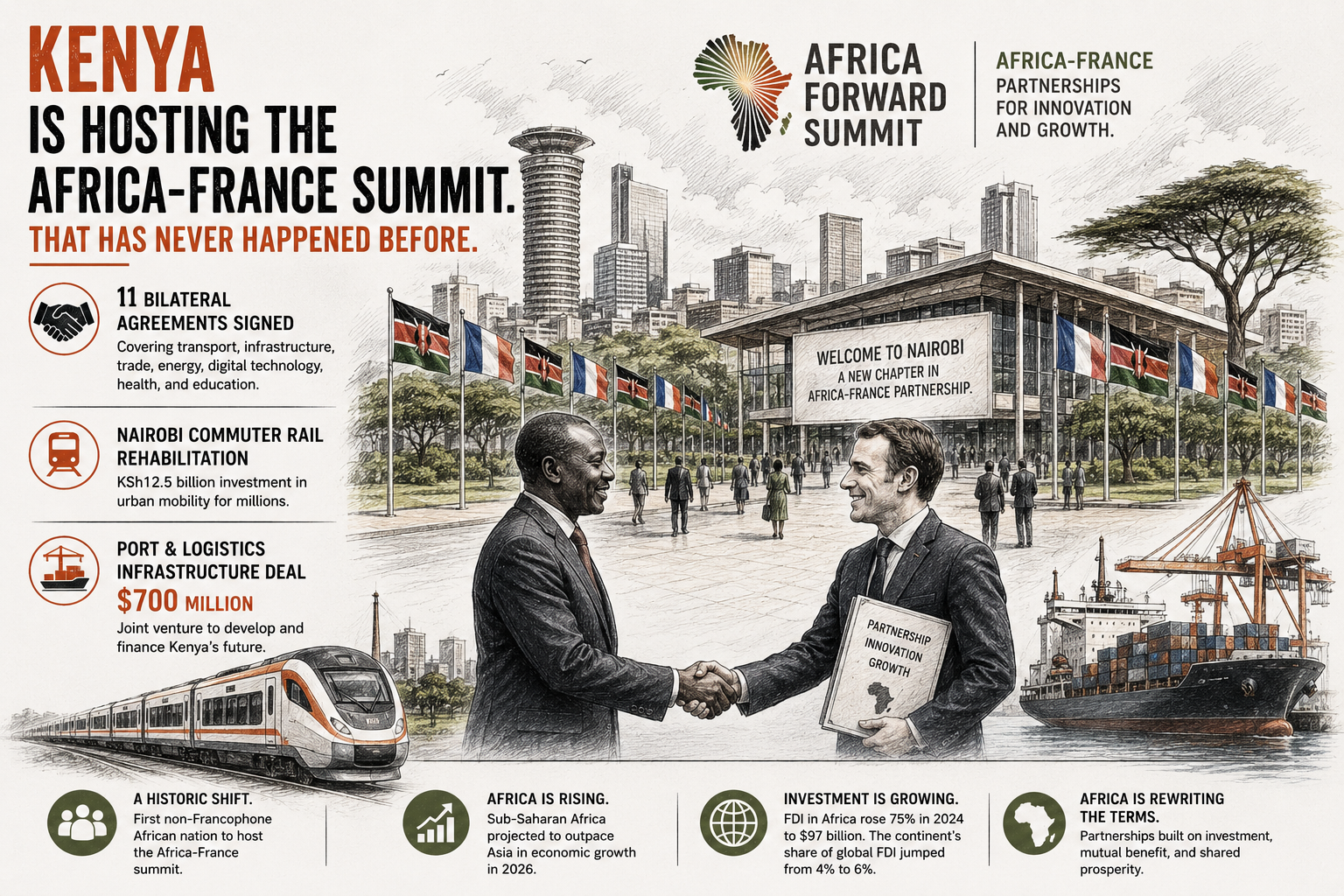
The global picture is shifting in ways the domestic news cycle is not tracking. Africa Forward Summit: Kenya Is Rewriting the Terms — the Africa-France Summit opened in Nairobi this week — the first time in the summit’s history it has been hosted by a non-Francophone African nation. Kenya and France signed 11 bilateral agreements including a KSh104 billion port and logistics joint venture and a KSh12.5 billion Nairobi Commuter Rail rehabilitation. Sub-Saharan Africa is projected to outpace Asia in economic growth in 2026. Six of the ten fastest-growing economies globally are African. FDI rose 75% in 2024 to $97 billion. Africa is not asking to be included in the global economy. It is restructuring the terms of its participation in it.
The question of what Americans believe about their own recent history is now a data story. Majority of Americans Now Unsure Whether Attempts on Trump’s Life Were Real — a NewsGuard/YouGov survey found only 45% of Americans describe each assassination attempt against Trump as definitively real. Roughly 30% believe at least one was staged. Many others are unsure. The story is not about conspiracy culture. It is about a growing collapse in the shared informational infrastructure that makes a functioning democracy possible. When majorities cannot agree on documented, witnessed, reported events, the erosion is not just political. It is institutional.

The cultural story today is the one that fits the note perfectly because it is about exactly what the rest of the note is about — the distance between what things were and what they are now, and the economic value of the memory in between. The Call Letters Became the Product — on May 4, Grant County Broadcasters rebranded its three-station Cincinnati network as WKRP in Cincinnati, acquiring the call letters from a nonprofit in Raleigh and launching with Gary Sandy recording promos. The global collectibles market has topped $496 billion. Streaming revivals drive a 33%subscriber spike. A radio station reviving WKRP is not primarily selling programming. It is selling instant emotional context — the symbolic memory of a time when local media felt personal rather than optimized. The real product being sold is not the radio station. It is cultural continuity. And in an economy where everything else is being restructured around efficiency, continuity may be one of the most valuable commodities left.

The cultural recruitment story goes deeper than nostalgia. How Nicki Minaj’s Grievance Became Someone Else’s Infrastructure — the TIME profile on Minaj and her alignment with Trump’s political movement is being consumed as a celebrity conversion story. It is not. It is a document of how the American right has built a pipeline that converts Black celebrity grievance — real grievance, legitimate grievance — into electoral infrastructure that delivers nothing structural in return. The right did not manufacture her frustration. It identified it, validated it, and redirected it. That distinction is the whole story. The pipeline depends on it never being named as such. We named it.
Today’s stories looked like they were covering different beats. They were covering the same one. These are not comfortable stories. They are necessary ones.
The Daily Visual Signal
A visual interpretation of the deeper systems, tensions, and structural shifts shaping the current moment — designed to translate complex societal changes into a single image.
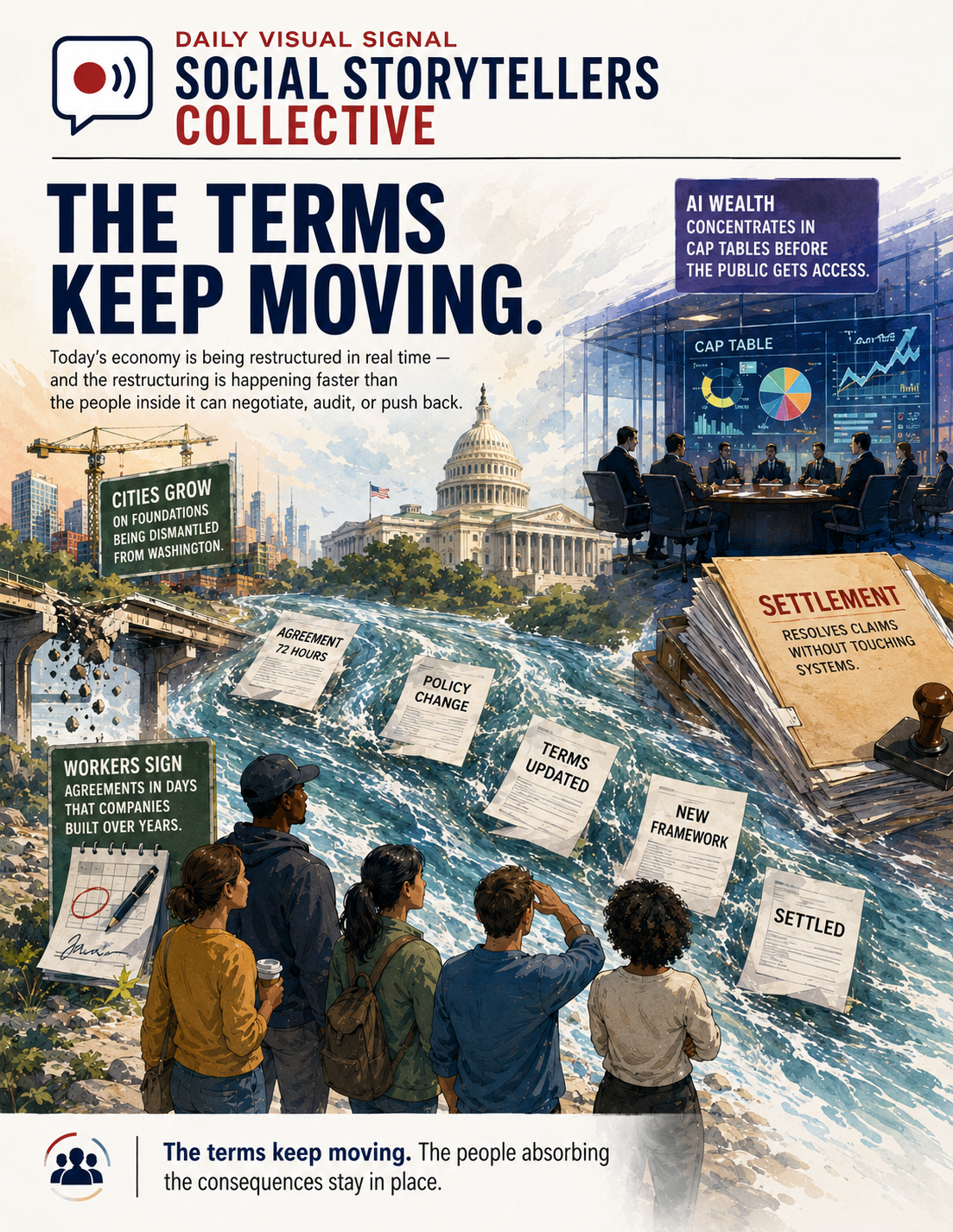
The Terms Keep Moving. Today’s economy is being restructured in real time — and the restructuring is happening faster than the people inside it can negotiate, audit, or push back. Workers sign agreements in days that companies built over years. AI wealth concentrates in cap tables before the public gets access. Cities grow on foundations being dismantled from Washington. Settlements resolve claims without touching systems. The terms keep moving. The people absorbing the consequences stay in place.
Featured Story: Cuba Is in a Humanitarian Crisis. The Headlines Are Still Treating It Like a Political Story.
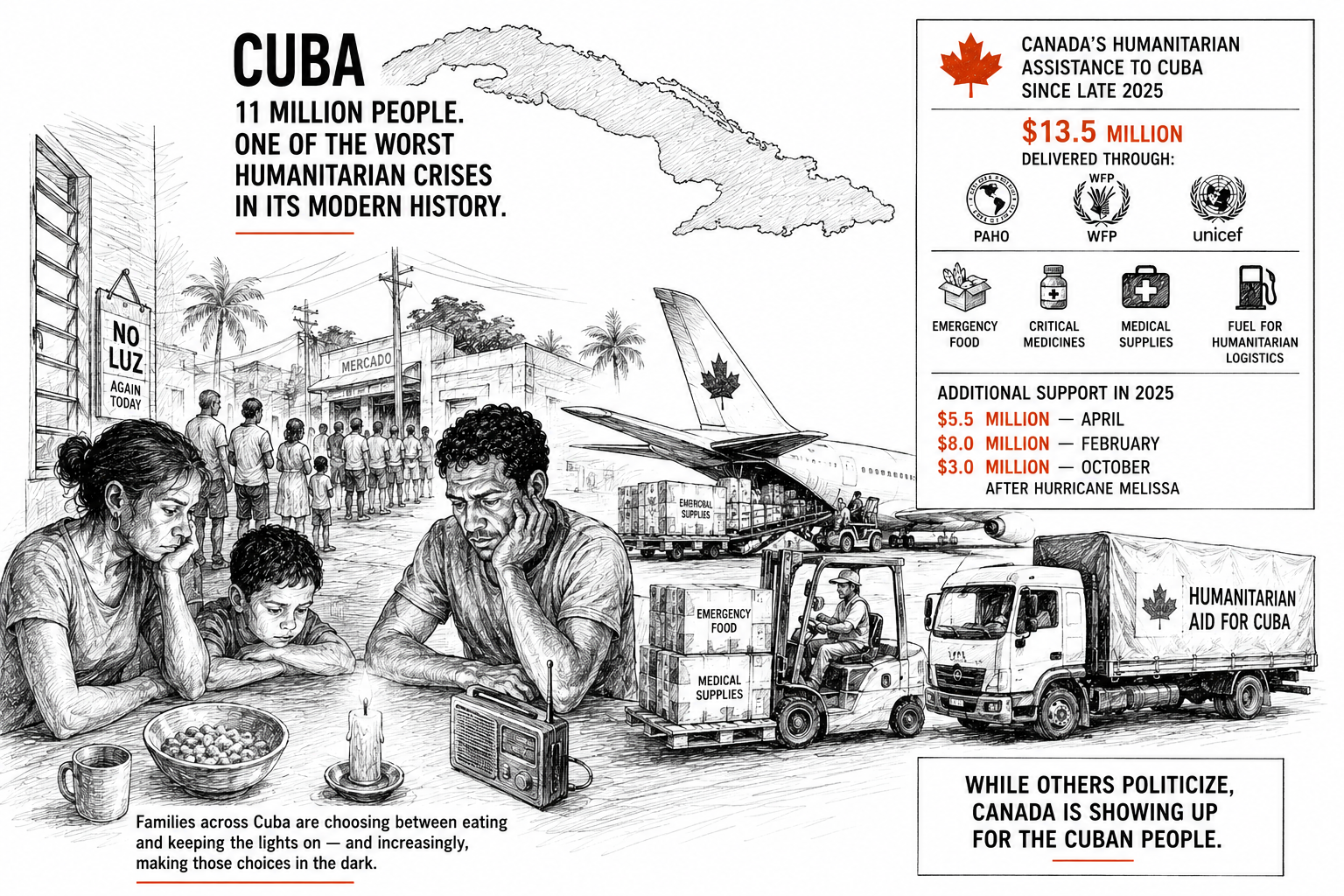
Nationwide blackouts. Medicine shortages. A government that raised internet prices during a power emergency. 11 million people absorbing the consequences of decisions they did not make — from a US embargo now in its seventh decade and a government that responded to a humanitarian crisis by making communication more expensive.
Canada has committed $13.5 million in emergency assistance since late 2025 — delivered through the Pan American Health Organization, the World Food Programme, and UNICEF. The ETECSA price hike triggered 46 documented protests — the highest sparked by a single event in 2025. University students called for strikes. A journalist was arrested for posting about state security surveillance. Ordinary Cubans are speaking on camera without coded language for the first time in years.
“The problem here is the government,” one resident told ABC News.
The mainstream coverage collapses into two competing political frames — US embargo versus Cuban government failure. Both contain truth. Neither is sufficient. What gets lost in both is 11 million people in the dark, making impossible choices, watching a state telecom monopoly raise the price of the one tool they could use to reach each other.
The people in the dark did not make either decision. That is the story.
Every story today arrived in a different package. A severance agreement with a clock on it. A $6.6 billion payout to 600 people. A city growing on a foundation being dismantled in real time. A $50 million check that doesn’t touch the system it was meant to address. A radio station selling the memory of a time when things felt more stable. And 11 million people in Cuba waiting for the lights to come back on.
Different packages. Same question underneath all of them: who decides the terms, who absorbs the cost when the terms change, and who never gets a seat at the table where those decisions are made?
That question does not belong to any one community. It belongs to anyone who has ever been on the wrong side of a restructuring. That is most of us. That is why these stories matter.
For the full experience, view this edition on desktop or laptop. If this briefing sharpened how you see the world, share it with someone else and subscribe to Social Storytellers Collective to stay ahead of the shifts shaping everything around us.
We will be back tomorrow with more.
— SSC