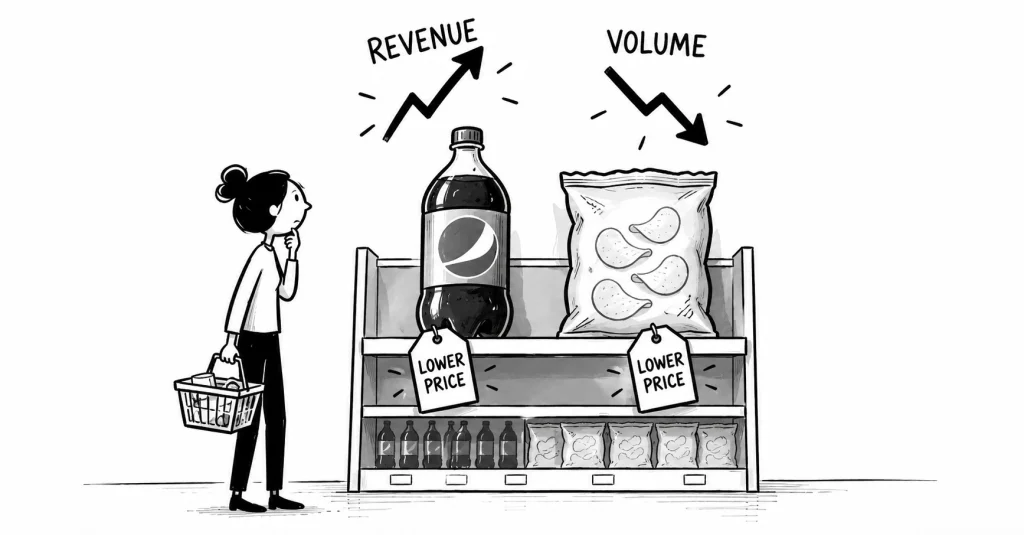
The snack and beverage company faces a test of whether affordability initiatives can rebuild demand while investors push for better margins.
PepsiCo entered its October 8 earnings release with a revealing combination: second-quarter revenue had risen 6.4% to $24.18 billion, but its first-half core operating margin slipped to 16.3%, down 15 basis points from a year earlier. Those figures, published in the company’s second-quarter financial results, show why growing sales dollars can coexist with pressure on profitability. The current development is the approaching assessment of PepsiCo’s turnaround, after months of pricing and product changes. The stakes reach beyond a quarterly scorecard: they involve whether familiar brands can persuade cost-conscious households to put more of their products back in the cart.
Higher Sales Do Not Settle the Demand Problem
PepsiCo’s reported growth also needs context. Its second-quarter organic revenue rose 2.4%, excluding currency effects and acquisitions or divestitures, while North American beverage volumes declined 4%, according to AP’s reporting on the quarter. In its own results, PepsiCo described affordability initiatives and a portfolio moving toward portion control, protein, fiber and zero-sugar choices. Taken together, those disclosures suggest a business pursuing several routes to growth simultaneously. More revenue alone cannot tell readers whether shoppers bought more, paid more, or encountered a company that had expanded through acquisitions. The demand question requires looking underneath the headline number.
The financial tension becomes clearer when price cuts enter the picture. Reuters’ October 7 earnings preview reported reductions of up to 15% on some products earlier this year, alongside pressure to improve margins following Elliott Investment Management’s roughly $4 billion stake. A discount can help win back a sale, but it also changes what the company earns from that sale. Whether the strategy succeeds depends on how much additional demand follows. A shopper may appreciate a cheaper bag of chips without buying enough extra bags to make the company’s economics work as planned.
Affordability and Changing Habits Are Different Challenges
The preview also identifies GLP-1 weight-loss drugs as a growing concern for snack and beverage demand. That is a potential structural challenge, rather than proof that medication explains PepsiCo’s current performance. Household budgets, prices, competing products and health preferences can all influence purchases, and the available figures do not isolate each cause. The useful editorial question is how a company responds when some customers want a better deal while others may want less of the product itself. Lowering a price addresses affordability. It cannot, by itself, establish that every buyer’s appetite or priorities will return to their previous pattern.
For consumers, the consequence of this struggle could appear through product sizes, promotions, ingredients and shelf prices. For workers and suppliers, the questions concern the operational changes management chooses while trying to make those products profitable. Those are implications to watch, rather than announced outcomes of the pending quarter. A turnaround can be built through renewed demand, changes in the product mix, or lower operating costs, and each route distributes benefits and pressure differently. Readers should therefore look for a concrete explanation of how the company intends to improve performance, including whether its affordability initiatives are broad commitments or selective tools.
The Next Test Is What Happens Beneath the Revenue Line
The company’s official release schedule places its third-quarter results on October 8, with management materials expected around 6 a.m. Eastern and an analyst question-and-answer session at 8:15 a.m. Until those disclosures arrive, forecasts remain forecasts. The most useful checks will be North American volumes, organic growth, margins and management’s explanation of pricing. An improving headline number would deserve scrutiny if customers still bought fewer units. Conversely, stronger volumes would provide evidence that the company is rebuilding demand, even if the cost of doing so temporarily constrains profitability.
PepsiCo’s next report will help show whether its affordability strategy is producing the recovery management wants. The broader lesson for businesses selling everyday products is that recognition and distribution do not guarantee a purchase when customers reconsider their spending. A company can adjust its offer quickly; rebuilding a household’s buying habit may take longer. What comes next should be judged through the relationship between prices, purchases and profit, with attention to who absorbs the adjustments. For SSC readers, the story is how a large consumer company responds when shoppers’ financial limits begin to challenge the assumptions behind its growth plan.