
Part of Society, Economy & Wellness — an ongoing series examining how economic pressure lands on the communities with the least margin to absorb it.
Donald Trump announced this week that TSA workers would be paid by redirecting existing federal funds — bypassing the congressional stalemate rather than resolving it. The House rejected the Senate’s Homeland Security funding bill on Friday, with Speaker Mike Johnson calling it a joke. The shutdown, now in its sixth week, has not ended. It has been routed around. TSA workers are getting paychecks. The mechanism that was supposed to produce those paychecks is still broken.
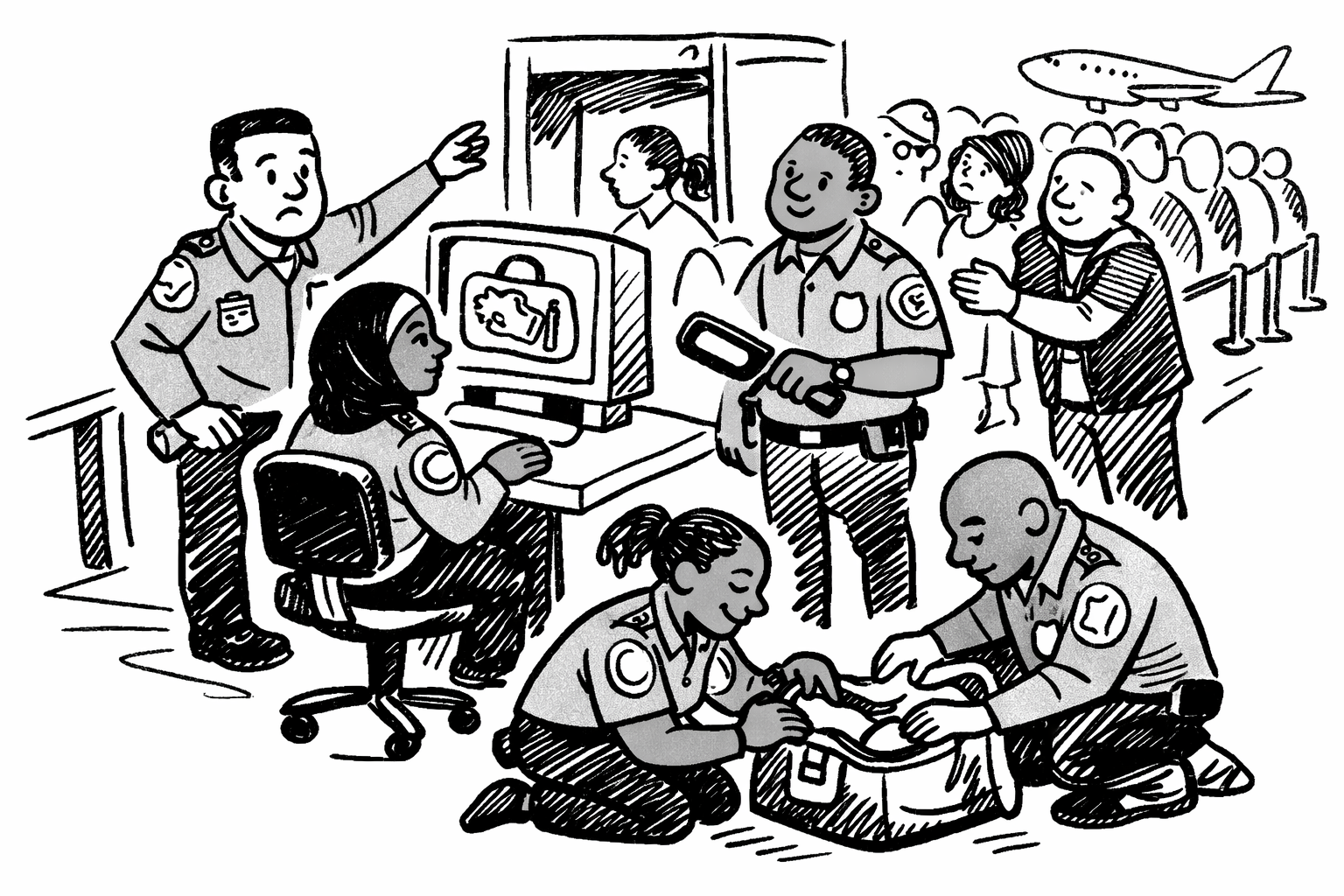
The practical consequences of that distinction are still visible at the airports. Wait times at George Bush Intercontinental Airport in Houston reached three to four hours in recent weeks. LaGuardia saw security lines extend outside terminals and into parking areas. A local entrepreneur in Houston began charging $65 per hour to hold a traveler’s place in line — a service that has since expanded as others have entered the market. According to recent data, TSA PreCheck members wait an average of five minutes compared to 45 minutes or more for standard travelers. The $65 line service is that gap made informal and available to whoever can afford it in the moment.
The workaround model — routing around broken systems rather than fixing them — is the defining structural pattern of this political moment. As Airport Lines Stretch Beyond Travel Delays as Shutdown Pressure Mounts reported, TSA workers were already making the choice between putting gas in the car or paying an electricity bill before the fund transfer was announced. The paycheck arriving through a different mechanism does not change the six-week gap, the attrition it accelerated, or the staffing shortages that remain. And as The $65 Line: How Airport Delays Are Creating a New Gig Economy examined, when public systems fail to meet baseline expectations, new markets emerge to absorb the pain — and those markets charge a premium that only some travelers can pay.
The workers are getting paid this week. The system that was supposed to pay them still has not been fixed. That is the story.