
Three weeks before the 2026 NFL Draft, the league held its annual HBCU Showcase at the Washington Commanders practice facility in Ashburn, Virginia. All 32 teams were in attendance. Players ran the 40, did the bench press, ran drills in front of scouts and decision-makers in what one FAMU prospect described as feeling like everything you’d see at the combine. The NFL called it an investment. The players called it an opportunity. Both of those things can be true and still not be enough.
Because here is the part that keeps landing wrong: in 2026, the HBCU Showcase was combined with the International Player Pathway Pro Day — placing HBCU prospects alongside international athletes transitioning to American football from rugby, basketball, and volleyball in the same event window. The league framed this as efficiency. Scouts would see both groups on the same day, in the same facility, on the same schedule. What it also communicated — whether intentionally or not — is that the NFL considers HBCU players and international developmental athletes to occupy the same category of prospect. Both outside the traditional pipeline. Both requiring a separate, additional audition before they earn the same consideration that Power Five players receive as a matter of course.
That framing matters. Not because the international athletes don’t deserve their shot — they do — but because HBCU players are not developmental athletes learning a new sport. They are American football players who have been playing at a high level their entire lives, competing on campuses with less recruiting infrastructure, smaller NIL budgets, and fewer scouts in the stands. Grouping them with athletes who are new to the sport is not a neutral administrative decision. It is a signal about how the league values what they have already built.
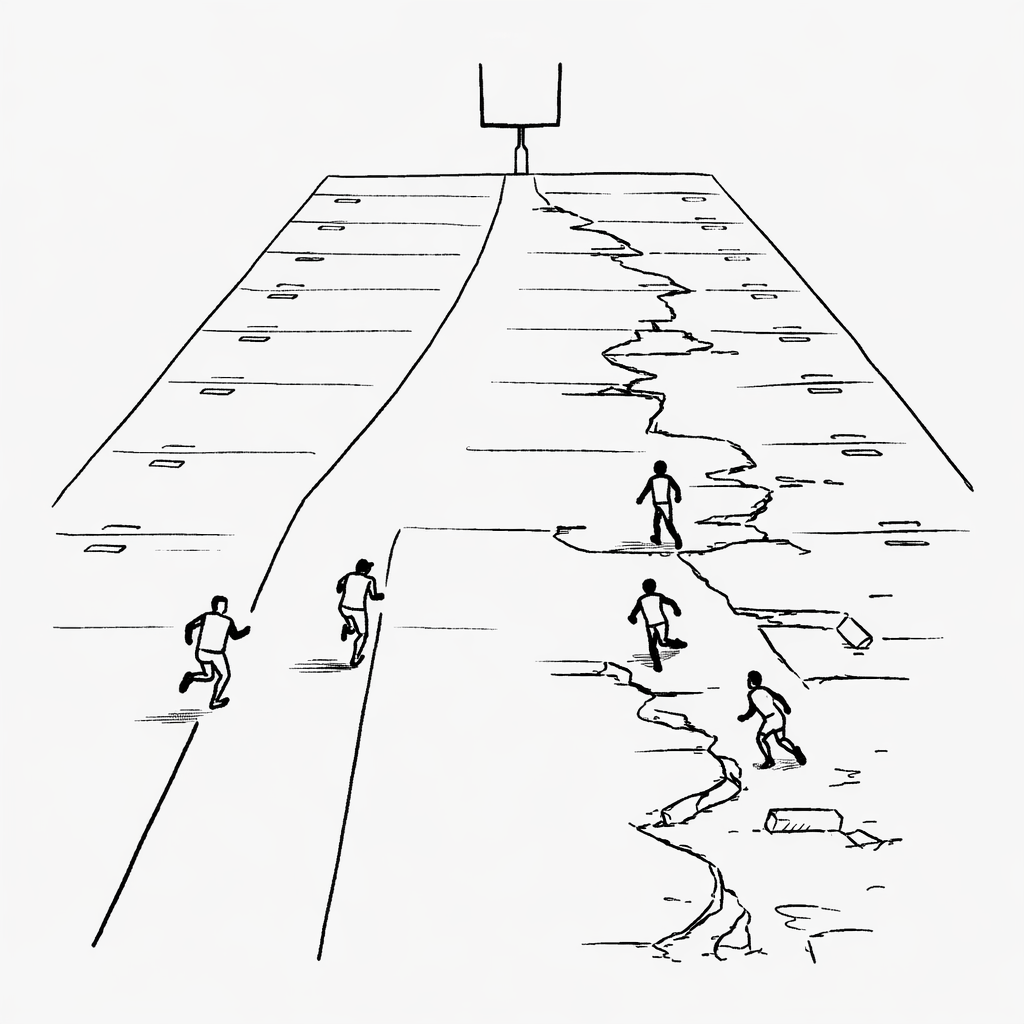
While Power Five athletes move through a well-established pipeline, many HBCU players are forced to take a different route — signing as undrafted free agents, fighting for roster spots at rookie minicamps, and having to prove themselves all over again just to get the same shot. The Showcase is a step in the right direction. The Legacy Bowl is a step in the right direction. The fact that all 32 teams showed up to Ashburn is a step in the right direction. But steps in the right direction do not change outcomes if the infrastructure that determines draft positioning — the scouting relationships, the film study habits, the combine invitations — still routes around HBCU campuses by default.
SSC covered the NFL’s Rooney Rule earlier this cycle. The Rooney Rule requires teams to interview minority candidates for head coaching and senior front office positions. It was designed to create process-level access where systemic exclusion had prevented it. The HBCU draft pipeline problem is structurally identical — not a talent problem, not a character problem, not a work ethic problem, but an access problem built into the infrastructure of how the league identifies, evaluates, and selects players before they ever put on a professional uniform. The Showcase is the equivalent of a Rooney Rule interview. It creates the moment. It does not change what happens in the room afterward.
The 2026 NFL Draft kicks off April 23 in Pittsburgh. The HBCU players who performed in Ashburn on March 30 have done everything that was asked of them. They showed up to a facility that wasn’t built for them, ran their 40s in front of scouts who may or may not have them on their boards, and did it all knowing that the player drafted ahead of them from a Power Five school might have fewer verified accomplishments and a better scouting report simply because someone was in the building to write one.
What the draft reveals in three weeks is not just who gets selected. It is what the league actually values when the showcase is over and the decisions get made in quiet rooms. The interest is confirmed. The talent is confirmed. The question is whether the system will finally recognize it — or whether HBCU athletes will once again be pushed to the margins and forced to prove themselves after the fact instead of being valued from the start.
As SSC documented in Access Doesn’t Scale on Its Own and The AI Resume Screen, access gaps do not close because the people being excluded work harder. They close when the systems doing the excluding are restructured. The NFL has the infrastructure, the resources, and the stated intention to restructure this pipeline. The draft is three weeks away. The tape doesn’t lie — but the draft board might.
Why This Matters
The HBCU showcase is visible. The draft board is not. What happens between those two moments — in the scouting reports that never got written, the film rooms where HBCU games weren’t on the reel, the conversations where a player’s ceiling got capped before he ever ran a professional route — is where the access gap lives. The NFL’s investment in HBCU visibility is real. Whether it translates into draft capital, roster spots, and careers is the question that April 23 begins to answer.