
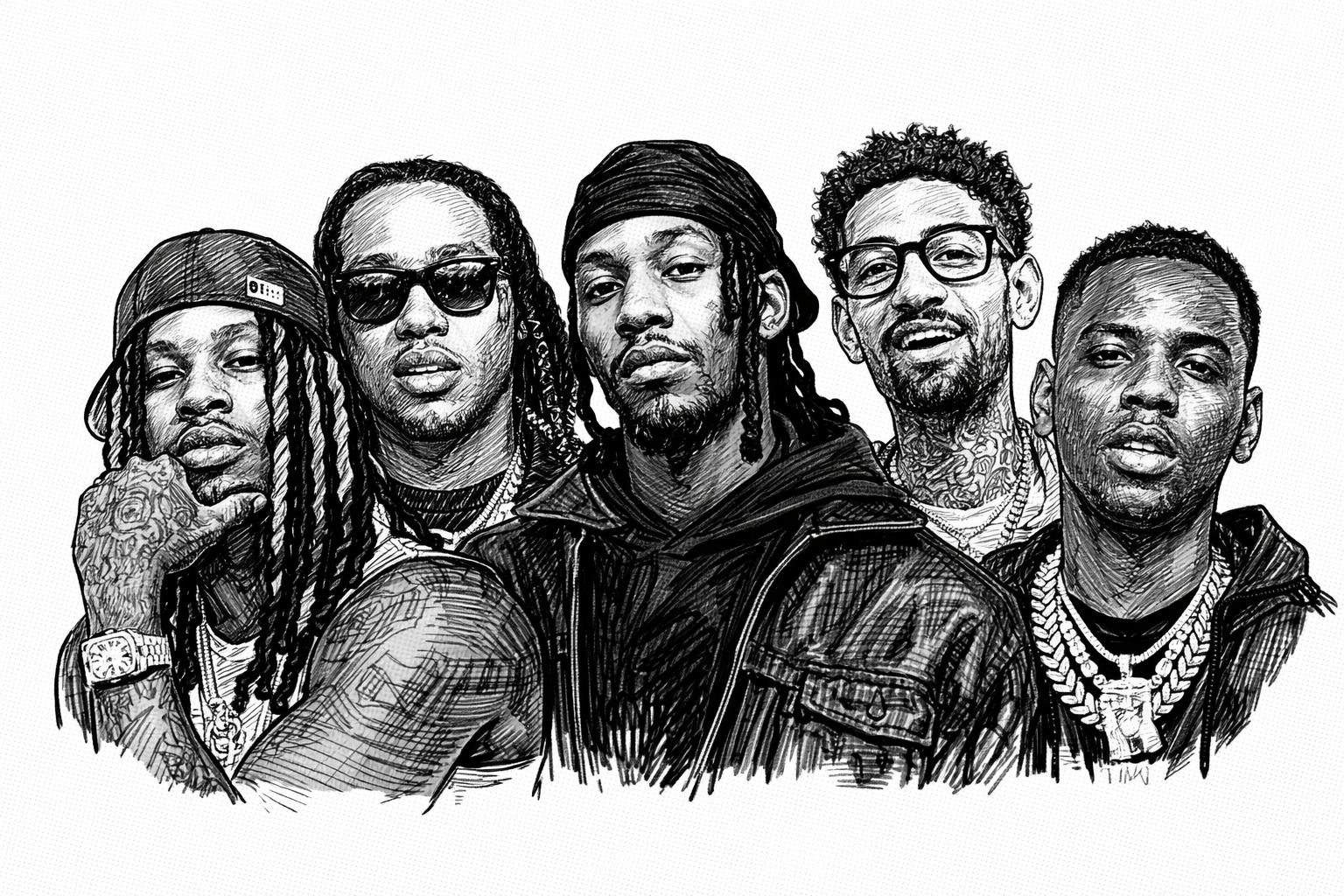
Offset, the Grammy-nominated rapper and former member of Migos, is recovering after being shot Monday, April 6, near the Hard Rock Hotel & Casino in Hollywood, Florida, according to multiple reports. A representative for the artist confirmed he is hospitalized, stable, and under close medical supervision. Beyond that, details remain limited. No official account of what preceded the incident has been confirmed, and the investigation is ongoing.
The absence of verified information has not slowed the story. Within hours, screenshots, fragmented updates, and unverified claims began circulating across social platforms, often stripped of sourcing and context. In moments like this, the narrative does not unfold linearly. It fragments, accelerates, and reshapes itself faster than facts can settle — and the person at the center of it becomes secondary to the story forming around them.
That dynamic is familiar. It is also worth pausing on, because it sits inside a much larger and more painful pattern.
Offset is alive. That is not something that can be said about enough of his peers. The list of rap artists killed by gun violence in the last decade does not require excavation. It is recent, recurring, and growing. Nipsey Hussle, shot outside his own store in Los Angeles in 2019, the week he was scheduled to meet with the LAPD to discuss gang intervention. Pop Smoke, killed in a home invasion in Los Angeles in 2020 at twenty years old, reportedly after his location was identifiable from a social media post. Young Dolph, shot and killed inside a Memphis cookie shop in 2021 while buying cookies for his mother. PnB Rock, shot during a robbery at a Roscoe’s Chicken & Waffles in Los Angeles in 2022, his location again reportedly visible on social media minutes before the attack. Takeoff — Offset’s own cousin and Migos groupmate — shot and killed at a private party in Houston in November 2022. King Von, Polo G’s close collaborator, shot outside an Atlanta nightclub in 2020. Drakeo the Ruler, stabbed backstage at a festival in Los Angeles in 2021. The names accumulate with a regularity that has become numbing, and that numbness is itself a problem worth naming.
What connects these losses is not random. There is a recognizable architecture to the danger — one built from visibility, proximity to wealth, the persistence of old conflicts into new circumstances, and the specific vulnerabilities that come with being a young Black man who has achieved public success in America without being able to fully exit the environment that shaped that success. Jealousy is a word that gets used frequently, and it is accurate as far as it goes. But it does not go far enough. What looks like jealousy at the individual level is often something more structural: the compression of aspiration and scarcity into the same geography, the way that visible success in communities without institutional wealth can become a target rather than simply an achievement, the absence of off-ramps between where these artists came from and the exposed, hypervisible lives they now lead.
The industry profits from that proximity. The aesthetic of authenticity — the expectation that artists remain tethered to their origin stories, that the music reflect lived experience rather than managed distance — is commercially valuable. Labels, streaming platforms, and media ecosystems extract enormous wealth from that authenticity while providing little in the way of structural support for the risks that come with it. Security infrastructure, mental health resources, conflict mediation, the kind of quiet institutional protection that athletes in major leagues receive as a matter of course — these are not standard features of a rap artist’s professional environment. What is standard is visibility without insulation, and fame without the institutional buffer that makes fame survivable at scale.
There is also something specific to how these incidents are consumed in public that deserves scrutiny. When a high-profile Black artist is shot, the focus moves rapidly from condition to speculation, from concern to storyline. The individual becomes a narrative before the facts have time to settle, and that narrative is shaped as much by audience expectation and existing bias as by verified reporting. The humanity of the person — their relationships, their recovery, the fear and grief radiating outward through their immediate community — tends to compress under the weight of the story being constructed around them. Offset is someone’s father, someone’s son, someone’s collaborator and friend. That is not the frame most of the coverage will hold for very long.
For now, the only confirmed reality is this: Offset was injured, he is alive, and he is being treated. Everything else is still forming, and in the absence of detail, audiences will fill the space with what they expect certain stories to look like. Those expectations are rarely neutral. They are shaped by familiarity with past narratives and by what the culture has been conditioned to find legible when the subject is a young Black man who built his life in public.
What this moment connects to is a pattern of loss that the industry has not reckoned with honestly, that the culture mourns individually without addressing collectively, and that keeps reasserting itself with enough frequency to suggest that something structural — not incidental, not random, not simply the consequence of individual choices — is producing it. Offset surviving is something to be grateful for. The conditions that keep generating these moments are something to be angry about.