
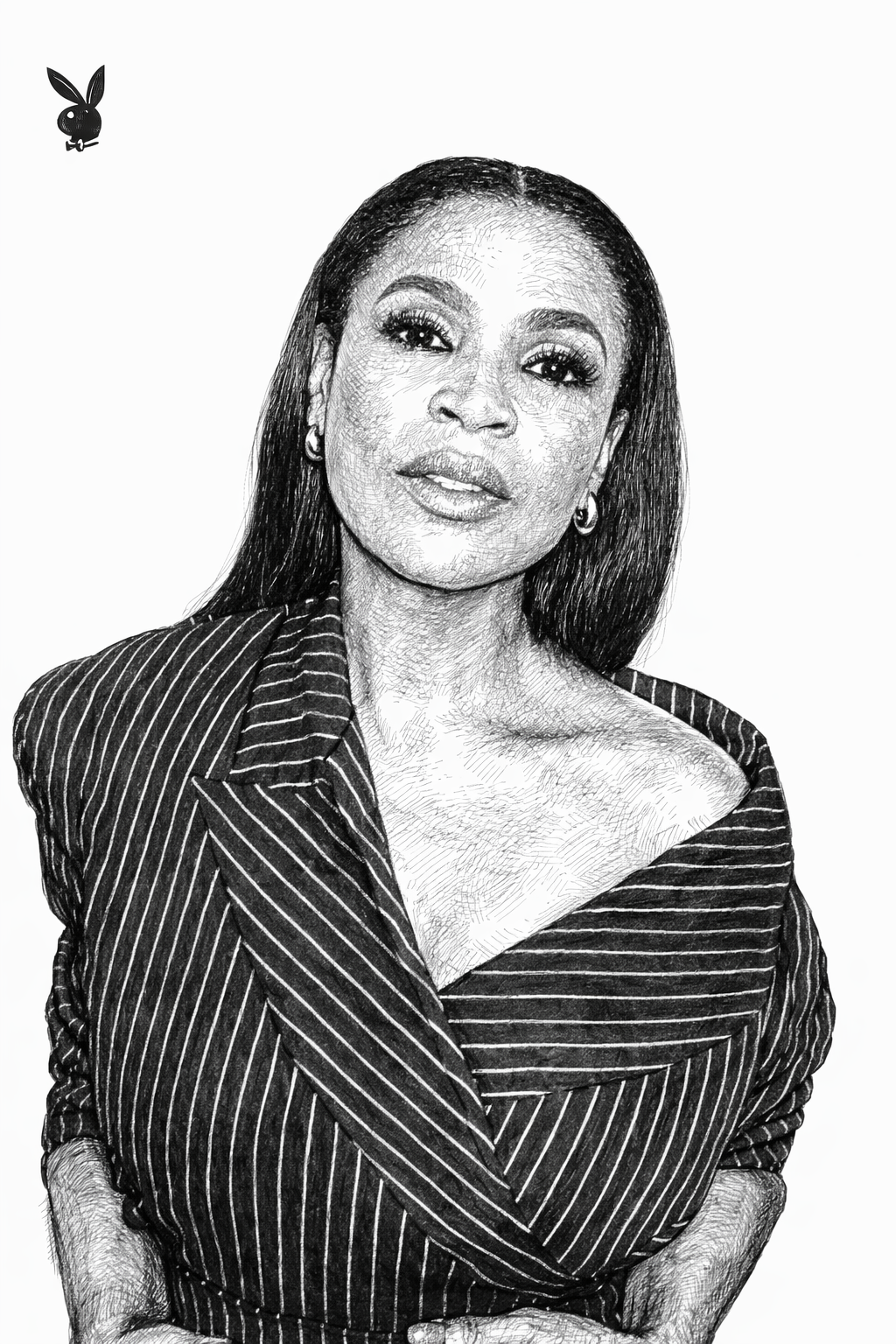
There’s a moment in a recent interview with Nia Long for Playboy that reads less like a personal update and more like a shift in how relationships are being defined in real time. Asked whether she’s dating, Long resists the premise entirely. “Am I ‘dating’? I don’t like that word,” she says, before explaining that her focus is on her children, her career, and herself. The answer is not evasive. It’s structural. The expectation that adulthood should center partnership is being quietly declined—not debated, not mourned. Just set aside.
What replaces it is something more deliberate. Long describes a relationship to time, attention, and intimacy that is self-directed rather than pre-negotiated with another person’s expectations. When the conversation turns to situationships, she acknowledges she’s never had one but expresses curiosity rather than dismissal. “It’s intense, it’s quick, it’s fun, and then it’s over,” she says, adding that the goal is to ensure departure happens on her terms. Even her stated preference for younger partners, framed with the line “they also go home,” points to the same underlying logic: proximity without permanence, connection without obligation, presence without claim.
At the level of language, the shift becomes even clearer. Long jokes that she might want partners to sign non-disclosure agreements—a comment that lands not because it’s absurd, but because it reflects something real. NDAs are instruments of control. They manage information, limit access, and define the terms under which closeness is permitted. Their presence in a conversation about dating signals a broader recalibration already underway: intimacy is no longer assumed to operate on trust alone or on a shared emotional default. It is increasingly being framed through explicit conditions—terms, thresholds, and exit strategies built in from the start.
This is not just one person’s preferences. It reflects a wider cultural movement away from fixed relationship scripts toward negotiated forms of access, and it is particularly pronounced among Black women navigating public visibility, past harm, and the ongoing demand to justify how they organize their private lives. Long’s 2022 public separation—playing out in tabloids while she remained composed in public—set a context the Playboy interview lives inside, even when it’s not named directly. Her current framing isn’t a retreat from love. It’s a recalibration of what love is allowed to cost.
The vocabulary is shifting to match. “Dating,” “situationship,” “commitment”—these are no longer stable categories. They are flexible frameworks people use to determine how much of themselves they are willing to share, and under what conditions, and for how long. What Long articulates, whether consciously or not, is a model where emotional labor, time, and presence are no longer default offerings extended on the basis of attraction or affection alone. They are resources. They have value. And value requires terms.
The generational dimension matters here too. Long is 54. Her framework did not emerge from the discourse ecosystem of younger women who grew up with attachment theory on TikTok and boundary-setting as a lingua franca. It emerged from experience—from decades of navigating an industry and a culture that consistently made her access to safety, privacy, and self-determination conditional on her performance of softness. What she’s describing now is not the language of therapy culture; it’s something older and harder. It’s the logic of someone who has already paid full price and is renegotiating the contract.
At the level of culture, what makes this moment legible is how casually it’s expressed. There is no manifesto. No declaration. No carefully crafted statement about what intimacy should look like. Just a quiet refusal to participate in a structure that no longer fits, and a willingness to build something else in its place—on terms she controls, at a pace she determines, with people who understand that access is earned and proximity is not the same as belonging.
The story is not that Nia Long isn’t dating. The story is that intimacy itself is being renegotiated. And access—to her time, her attention, her presence—is no longer assumed.