
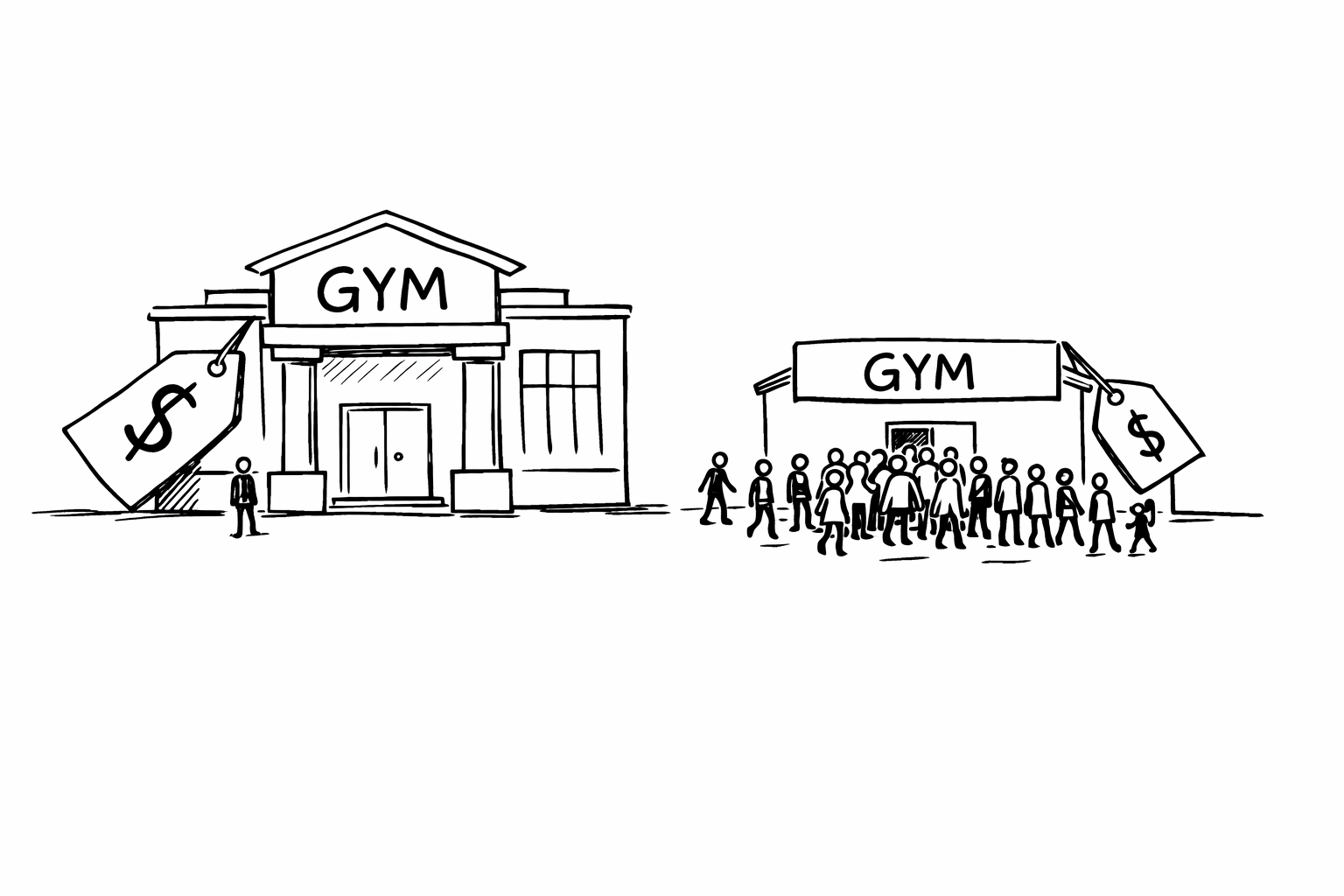
While broader consumer spending has shown signs of strain, growth is continuing in one specific segment of the economy: low-cost, high-access services. The latest expansion from EoS Fitness offers a clear example of where demand remains strong — and why.
The gym chain closed 2025 with more than two million members and expanded its footprint by over 20 percent in Q4, continuing a rapid national growth strategy built around affordability and scale. Rather than positioning itself as a premium brand, EoS has leaned into a high value, low price model — offering memberships starting at under $10 per month while still investing in amenities typically associated with higher-tier gyms. The company put $13 million back into existing locations in a single quarter while simultaneously opening additional sites across multiple states, suggesting growth is being driven not just by expansion but by a model that aligns with how consumers are recalibrating spending priorities.
At the local level, that demand is already visible in how these spaces are being used. When EoS opened its Allen Parkway location in Houston in 2023, Will Davison was an early member — and the gym was rarely quiet. Busy from early morning through late night, demand was high enough that his insomnia and access to off-peak hours became the only reliable window for training. Members adjusted their schedules entirely, working out in the middle of the night simply to avoid congestion. Long waits for parking and equipment became routine, and the environment evolved into something closer to a social scene than a traditional gym. What might appear as overcrowding is also a signal: when price and access align, demand doesn’t just increase — it concentrates.
That pattern reflects a broader shift in consumer behavior. As explored in our coverage of the two economies inside American consumer spending, costs rising across categories — from housing to groceries — have not eliminated discretionary spending but made it more selective. Consumers are still willing to spend, but increasingly within constraints. Lower-cost options that preserve access without requiring trade-offs are gaining traction across multiple sectors, from fitness to streaming to retail. The fitness industry has historically been segmented between premium boutique experiences and budget gyms — the current moment is reshaping that balance, with the most consistent growth occurring in models that combine affordability with breadth.
If that pattern continues, the implications extend beyond fitness. Growth is not disappearing — it is consolidating in places where cost and access meet in a way that feels sustainable to consumers. What looks like crowding in one space is, in effect, redistribution across the system — demand compressing into fewer options that more people can afford.
The Access Shift
The gradual redefinition of who systems are designed to serve.
Across sectors—from public infrastructure to healthcare to everyday spaces—access is no longer assumed. As costs rise and systems face increasing pressure, services once built for broad reach are becoming more selective, more conditional, and less universal. The Access Shift explores how these changes are unfolding in real time—and what they reveal about who is included, who is left out, and how the structure of everyday life is quietly being reshaped.