Workers are helping finance a national housing program through a mandatory levy. Now the government faces pressure to deliver homes people can actually afford.
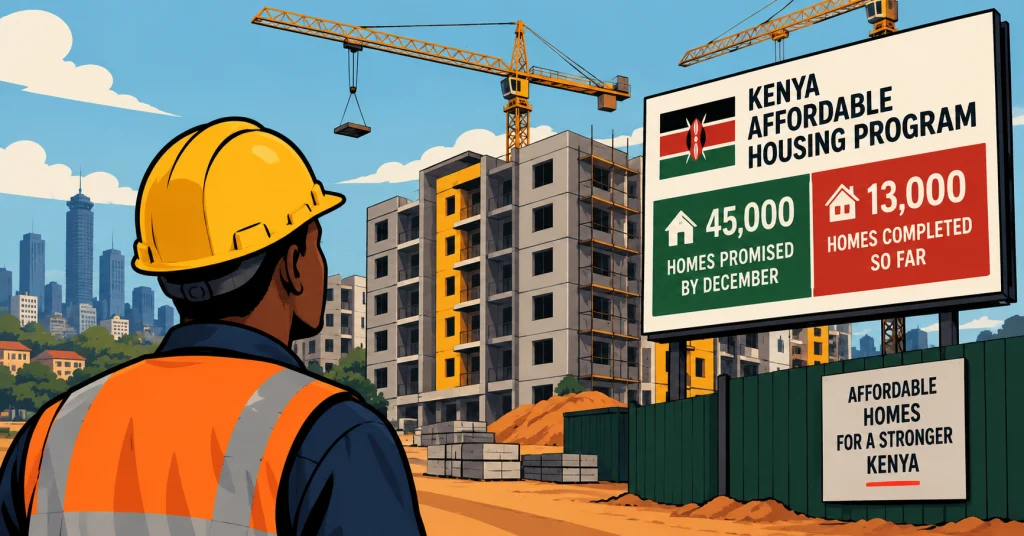
Kenya says 45,000 affordable homes will be ready for occupancy by the end of December, but the latest figures show how much construction remains. According to reporting by The Star, Affordable Housing Board chief executive Joe Mutugu said 13,012 homes had been completed as of October, with 7,050 occupied. Reaching the year-end target would require finishing nearly 32,000 additional units in roughly two months. The government says more than 303,900 homes are either completed or under construction nationwide, but homes under construction cannot yet provide shelter. The difference between projects announced, buildings finished and families moved in is becoming an important measure of the program’s success.
The program is partly financed through a mandatory 1.5% levy on workers’ earnings, upheld recently by Kenya’s Court of Appeal. That arrangement asks employed Kenyans to contribute to a national housing effort whether or not they eventually receive a home. Officials say the program includes housing for people earning less than 20,000 Kenyan shillings a month, alongside other units for middle- and higher-income households. Buyers generally pay a 5% depositbefore receiving an allocation when their development is completed. The government argues that the program creates construction jobs while expanding homeownership. Critics want clearer evidence that the money collected is producing homes accessible to the people helping finance them.
Demand appears substantial. Mutugu said a development in Mukuru attracted more than 25,000 applications for approximately 13,000 units. But demand alone does not establish affordability. A household may qualify for a unit yet struggle to accumulate the deposit or manage ongoing payments. Location also matters: a cheaper home far from employment can impose additional transportation costs that undermine the savings. The program therefore has to solve two problems simultaneously—building enough homes and ensuring that their prices, financing terms and locations work for the intended residents. Senators have called for closer examination of construction spending, allocation procedures and whether taxpayers are receiving value for money.
Kenya’s housing program could expand ownership opportunities while supporting a substantial construction workforce. Its financing model also concentrates risk among workers who contribute now in exchange for benefits that may arrive much later, if at all. The December deadline will provide an immediate test of construction capacity, but occupancy and household costs will offer a clearer measure of success. If the government delivers buildings faster than eligible households can afford to occupy them, Kenya could meet its construction targets without resolving the housing insecurity the program was created to address.