
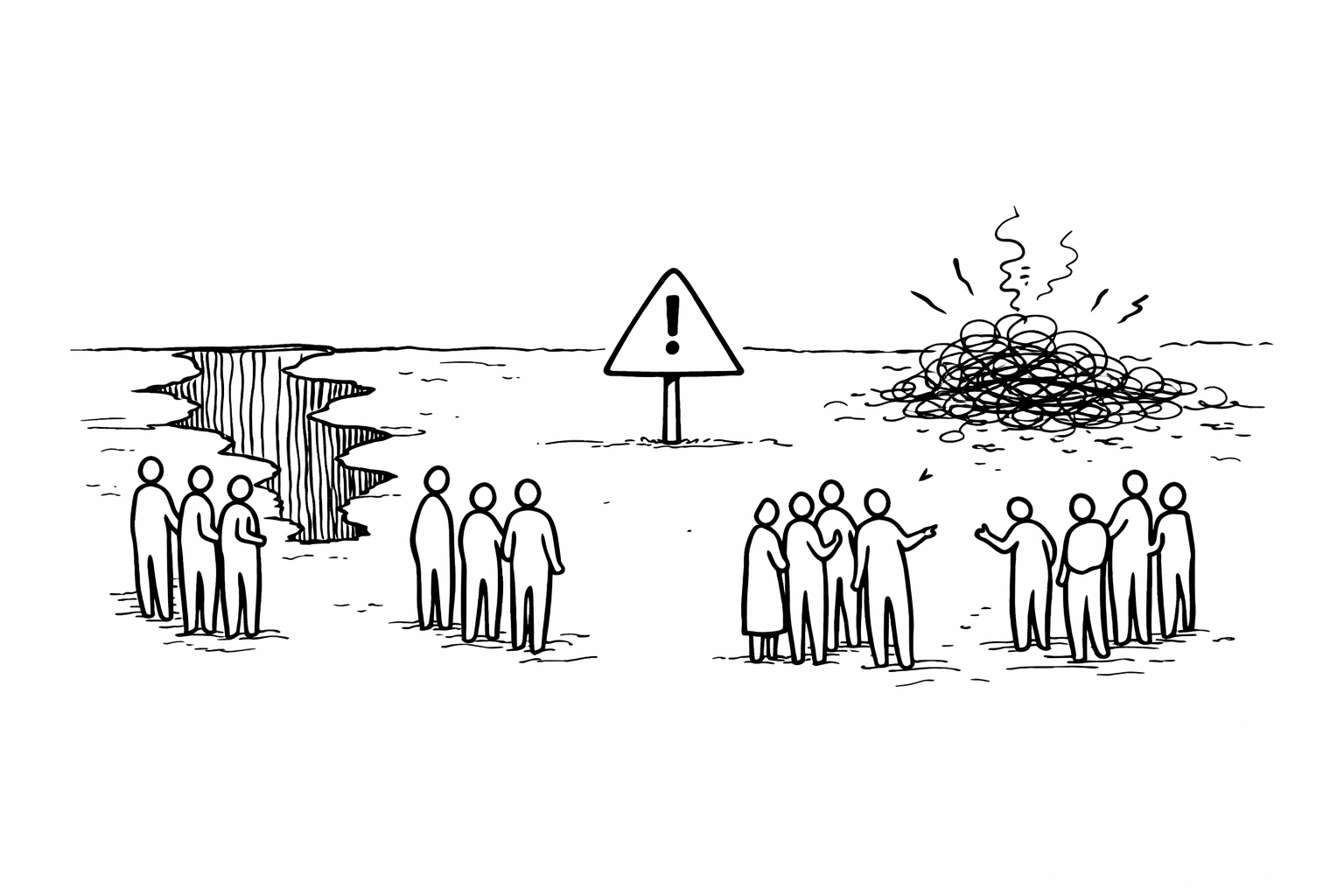
Part of Culture in Motion — examining who defines culture, how it moves, and what it reveals about the moment.
The debate over what comedians should be allowed to say is not new. It resurfaces in cycles, usually framed as a conflict between free expression and cultural sensitivity — and usually by the people whose expression is least likely to cost them anything.
Howie Mandel recently re-entered that conversation, arguing that comedy should have no boundaries. It is a position that aligns with a broader group of comedians who interpret audience pushback as restriction rather than response. The framing is familiar: if everything becomes off-limits, comedy loses its edge. The bit gets policed. The art suffers.
But the argument consistently elides the distinction that matters most — not whether something can be said, but who is saying it, from what position, and who absorbs the weight of it after it lands.
There is a difference between joking about a culture and joking at a community. The first can be an act of intimacy — the internal critique, the self-aware observation, the joke that only makes sense if you know what it costs. The second is something else: the use of a community’s pain, history, or particularity as raw material for someone who does not share it and does not carry it. Both can produce laughter. They do not produce the same thing in the room — and they do not distribute consequences equally after the room empties.
Richard Pryor understood this distinction viscerally. His comedy about race was not the same as a white comedian’s comedy about race — not because the words were different, but because the position was. He was joking from inside a life that the joke described. Dave Chappelle has spent two decades testing the edges of that distinction, sometimes brilliantly and sometimes in ways that revealed the limits of the “nothing is off limits” framework. The question his career keeps raising is not whether he has the right to say the thing. It is whether the thing he’s saying is doing what comedy at its best does — illuminating something true — or whether it is simply extracting entertainment value from someone else’s exposure.
The Mandel position does not make that distinction. It cannot, because making it would undermine the argument. If you acknowledge that some targets of comedy are more vulnerable than others, that some communities absorb the impact of jokes in ways that compound existing harm, and that the history a joke lands on shapes what it means — then “no limits” is no longer a coherent position. It becomes a preference for the structure where the comedian holds more power than the audience, where the performer’s intent outweighs the community’s experience, and where the only valid response to a joke is laughter.
That structure is what is actually changing. As SSC covered in When Influence Becomes a Liability, the current media environment has redistributed the ability to respond at scale. A joke that once circulated inside a controlled performance context — live, limited, immediate — now travels through networks, detached from its original framing, reinterpreted by audiences who were never in the room. What some comedians describe as “cancel culture” is, in most cases, a shift in who has the ability to push back and at what volume. The audience is no longer just present. It is part of the distribution system. Its response shapes how the content is received, amplified, or rejected.
This is not the disappearance of creative freedom. It is the redistribution of consequence — and it exposes what the “no limits” argument was always really about. Not creative freedom in the abstract. Creative freedom without accountability. The ability to aim the joke at whoever you choose and have the target absorb the impact without recourse.
The communities that have historically been the targets of that arrangement — Black communities, in particular, whose culture has provided material for comedians across every generation while the consequences of those jokes landed inside those communities rather than outside them — are not asking for comedy to stop being uncomfortable. They are asking for the discomfort to be honest about what it is and who it is for.
As SSC covered in Who Owns the Trend and Black Twitter Was Infrastructure, the extraction of Black cultural material for entertainment that Black communities do not fully control is not a new phenomenon. The comedy version of it is one of its oldest forms. The difference now is that the communities being mined have a louder voice in the conversation about what is being taken and what it costs.
Why This Matters
The question is not whether comedy should have limits. Every comedian operates within limits — the ones set by the room, the relationship, the history being invoked. The real question is who gets to define those limits and whose experience is treated as relevant in that definition. “Nothing is off limits” is a position that sounds like freedom. In practice it means: the comedian’s freedom to aim, and the community’s obligation to absorb. That arrangement is being renegotiated — not by censors, but by the people who have been absorbing it for a long time.