

Sixteen Ecuadorian fishermen take the U.S. boat-strike campaign to federal court, homebuilder confidence sinks to its lowest level since 2012, and five European countries unveil a deportation hub in Rwanda. Meanwhile, UNHCR warns that funding cuts are thinning the protections around refugee children, and Washington opens its fiscal year with a record October deficit.
Wednesday opens with five stories about what happens when a government moves a problem somewhere else. A military campaign pushes its costs onto fishermen who were never charged, an immigration crackdown shows up as empty job sites, Europe sends its asylum decisions to Kigali, donors pull back from refugee camps, and the federal budget carries the bill forward. Here are five things that matter today.
1. Ecuadorian Fishermen Take the Boat-Strike Campaign to Federal Court
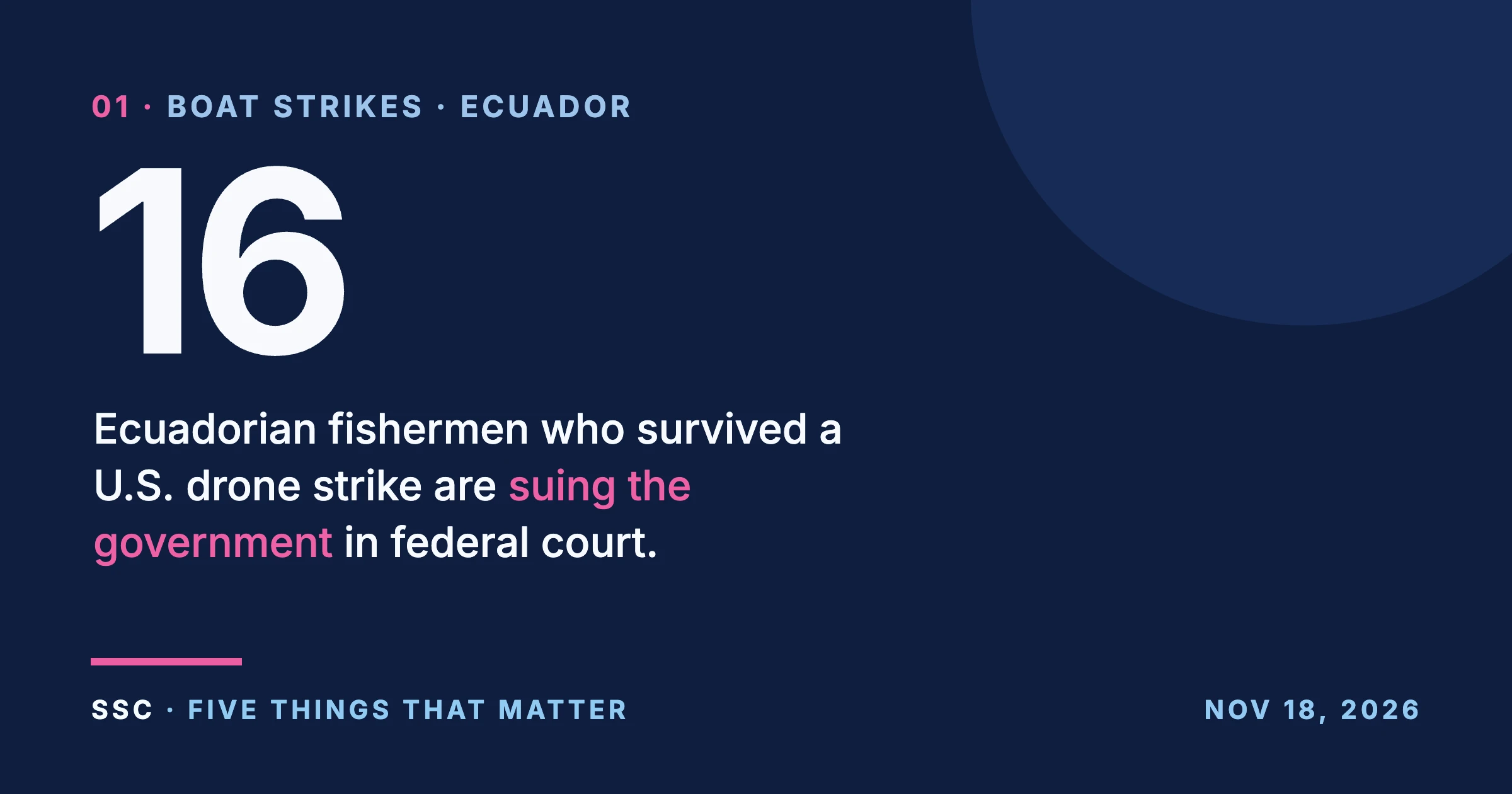
Sixteen Ecuadorian fishermen who survived a U.S. drone strike on their boat are suing the federal government in western Pennsylvania, The Guardian first reported, and Common Dreams laid out the claims. The complaint says two armed drones destroyed the La Negra Francisca Duarte II on March 17 about 385 nautical miles from Manta, burning two crew members, and that uniformed U.S. personnel then bound, hooded and jailed the men for weeks in El Salvador. Ecuadorian officials had searched the boat shortly before the strike and found no drugs, according to the filing, and none of the men has been able to work since. The Washington Office on Latin America says Operation Southern Spear, the campaign the suit targets, has killed at least 238 people. A Defense Department spokesperson declined to comment on pending litigation.
2. Homebuilder Confidence Falls to Its Lowest Level Since 2012

The National Association of Home Builders/Wells Fargo Housing Market Index fell four points to 25 in November, its lowest reading since April 2012, Reuters reported Tuesday. Higher mortgage rates kept buyers on the sidelines, while labor shortages tied to the immigration crackdown raised costs for developers. The workforce was already thinning: residential construction employment fell by 16,400 jobs in October, the biggest monthly drop since March 2021, according to NAHB data. A month earlier, more than a third of builders said immigration enforcement was active in their markets and discouraging legal workers from showing up to job sites, Inman reported.
3. Five European Countries Plan a Deportation Hub in Rwanda
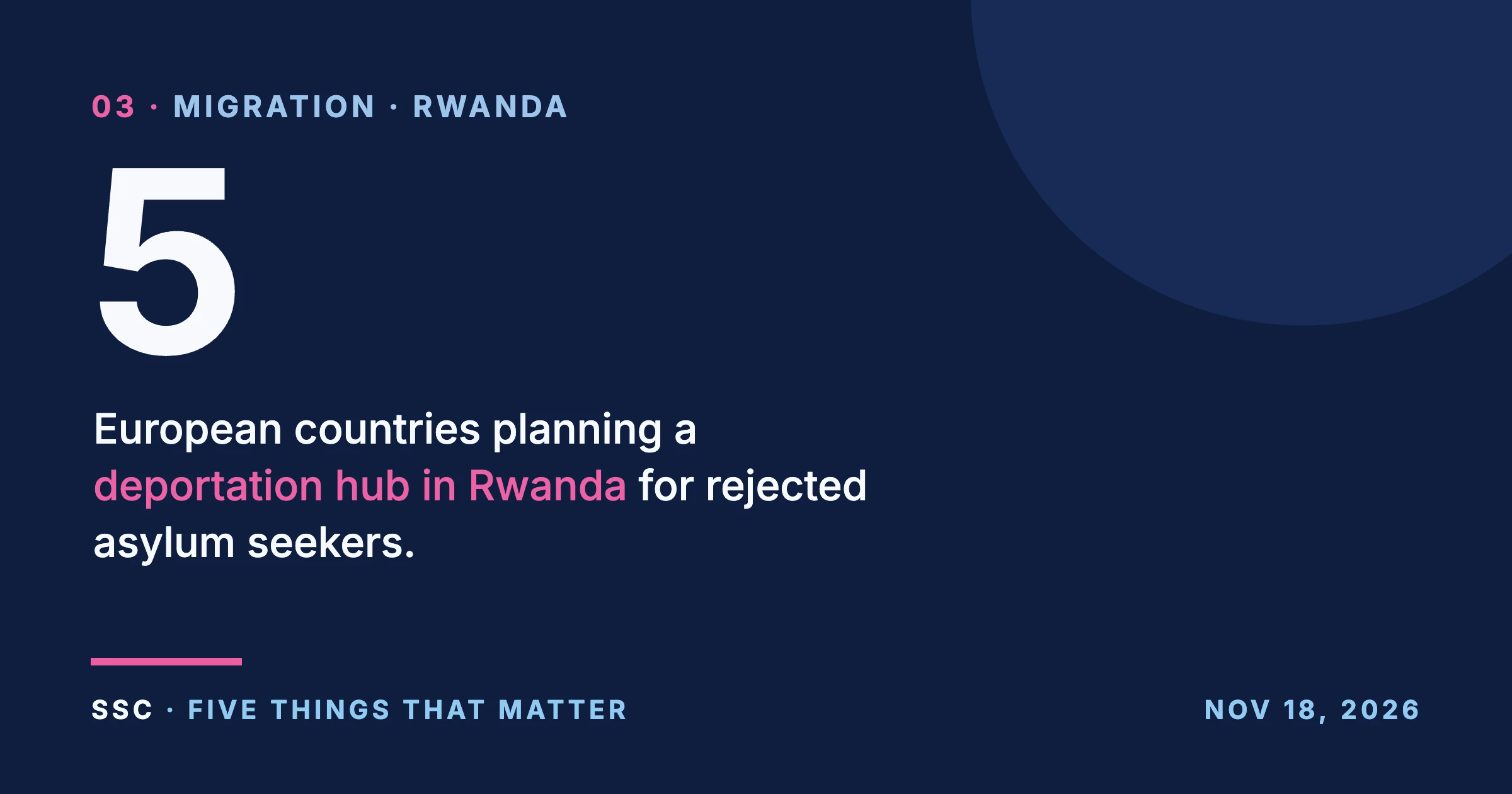
Germany, Denmark, Austria, Greece and the Netherlands unveiled plans Monday for a “return hub” in Rwanda where rejected asylum seekers could be sent as early as 2027, the Associated Press’ Sam McNeil and Claudia Ciobanu reported. The EU cleared the way this year: lawmakers voted in March to ease the setup of hubs outside the bloc, and a June deal lets member states negotiate them alone or in small groups. The first phase would focus on single men, with room for about 100 people, allAfrica reported. UNHCR, which fought Britain’s scrapped Rwanda scheme in court, is now advising the governments on whether the new plan complies with human rights law, Al Jazeera reported, while rights groups object to third-country deportations in principle.
4. Funding Cuts Are Thinning the Protections Around Refugee Children
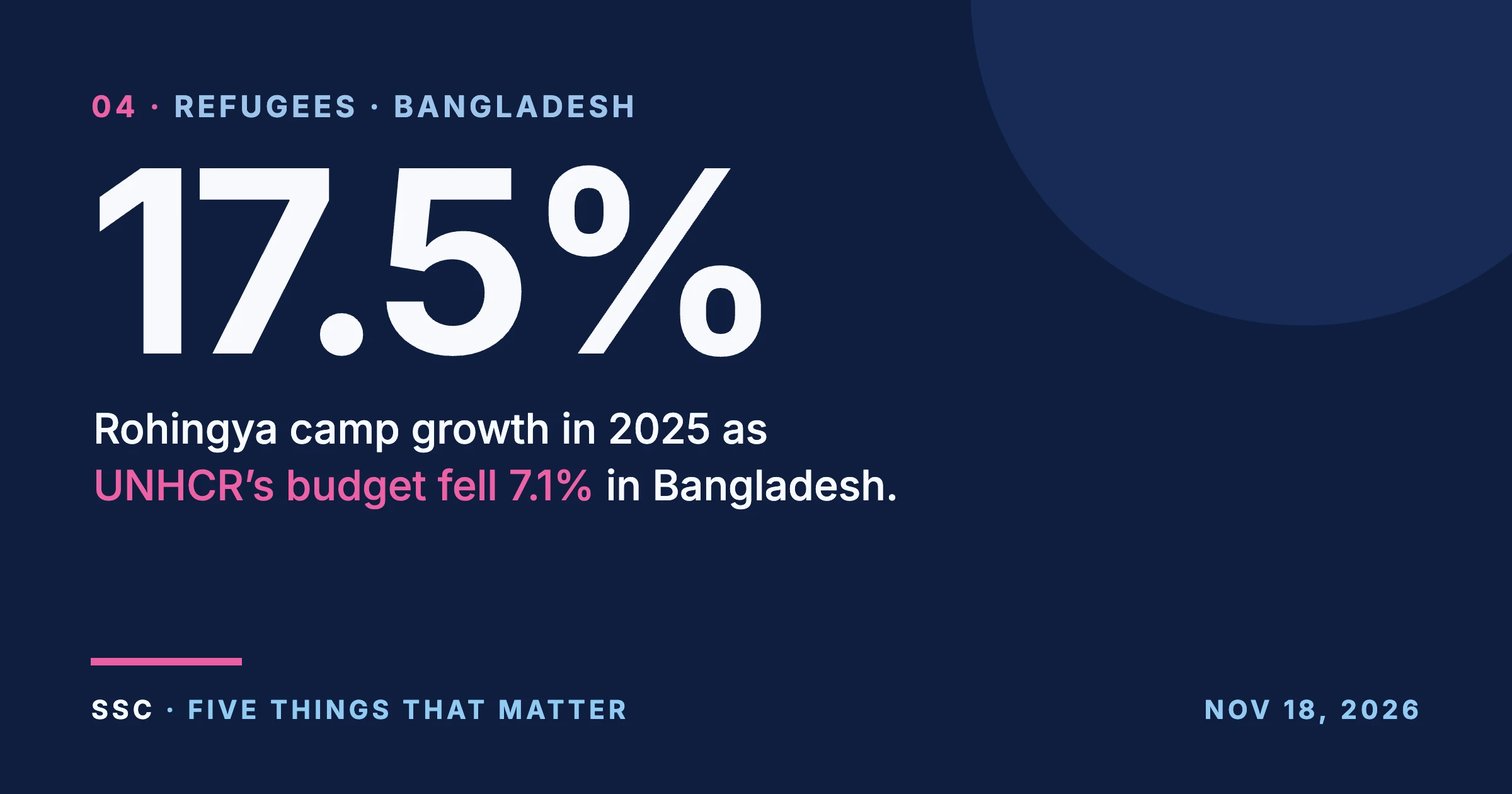
Two new case studies from UNHCR and Oxford University’s Nuffield College find that humanitarian funding cuts are weakening the systems that keep refugee children from being trafficked and exploited. In Bangladesh, UNHCR’s operational budget fell 7.1% in 2025 while the Rohingya camp population grew 17.5%. Ethiopia hosts 1,129,183 refugees and asylum seekers, and the second study traces how losing caseworkers, family tracing and safe spaces leaves children exposed. The researchers stop short of saying cuts automatically lead to trafficking. Their argument is that protection depends on several services working at once, and losing them together removes the people who would spot a child at risk.
5. Washington Opens Its Fiscal Year With a Record October Deficit

The federal government ran a $404 billion deficit in October, a record for the month and 42% higher than a year earlier, Reuters’ David Lawder reported. Receipts fell 9% to $369 billion, partly on lower customs collections, while outlays rose 12% to a record $773 billion. Adjusted for benefit payments shifted between months, the gap was still $285 billion, up 49%. Treasury Secretary Scott Bessent has set a goal of cutting the deficit to 3% of GDP, but the fiscal 2026 shortfall came in at 6.2%, and the Committee for a Responsible Federal Budget called the start of fiscal 2027 a warning sign.
The Bottom Line
Each of these stories moves a cost off one ledger and onto someone with less say over it. Fishermen absorb a military campaign, construction crews absorb an enforcement push, rejected asylum seekers absorb Europe’s politics, refugee children absorb donor fatigue, and future taxpayers absorb this year’s gap. Watching where the cost lands tells you more than the announcement does. Context matters.
Five Things That Matter is produced by the Social Storytellers Collective News Desk. Get the End of Day Closing Note free in your inbox.