
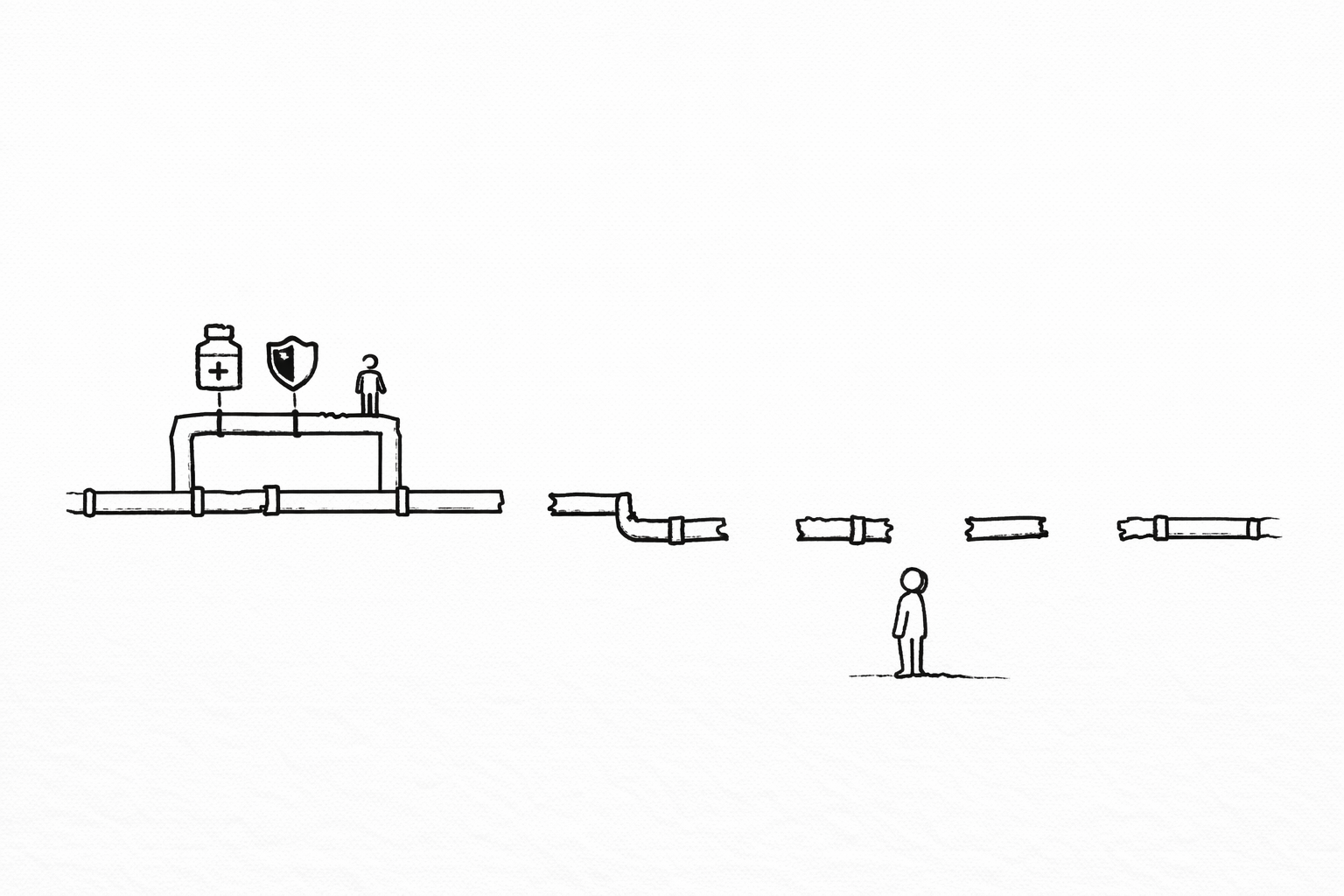
The numbers are stark. In Uganda, expanded access to antiretroviral therapy helped drive HIV-related orphanhood rates down by nearly 70% over two decades. That progress was built through sustained investment in treatment infrastructure, prevention programs, and research networks. Cuts to U.S. global HIV/AIDS funding, particularly through PEPFAR, are now putting all of it at risk. Experts warn that reduced funding could lead to 2.8 million additional children losing parents to HIV — a reversal of one of global public health’s most significant achievements.
The damage extends beyond treatment access. Prevention programs are contracting. Clinical trials have already been halted. Health officials warn that inconsistent access to medication could accelerate drug resistance, potentially creating strains that are harder and more expensive to treat globally.
That last point matters domestically. HIV infrastructure is interconnected — when treatment, prevention, and research weaken in one region, the effects don’t stay contained. Rising infections, accelerating drug resistance, and stalled innovation increase long-term costs and global exposure, including in the United States. Framing this as a foreign aid issue misses what it actually is: a structural risk to global public health with direct domestic consequences.
This is the through line we’ve been tracking across our HIV coverage — from HIV Treatment Didn’t Collapse — But What’s Holding It Up Should Concern You, where volunteer labor quietly absorbed the cost of a collapsing formal system, to When Access Becomes Conditional, where eligibility tightening left the most vulnerable without coverage. The pattern is consistent: funding recedes, community labor fills the gap, and the system appears stable until it isn’t. This is what a public health crisis looks like before it declares itself — and the window to respond is narrowing.