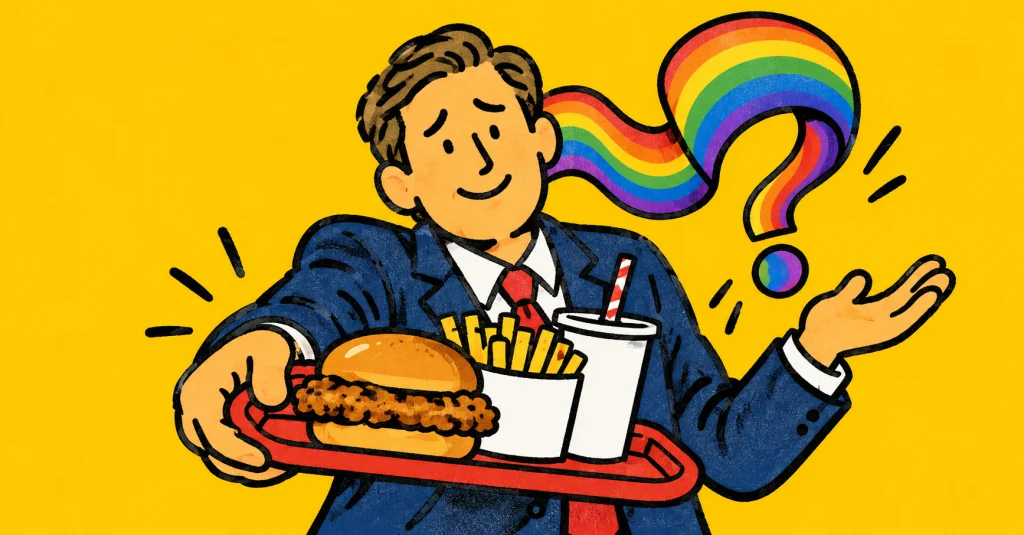
During an October 14 interview on NBC’s TODAY, CEO Andrew Cathy repeatedly emphasized hospitality rather than directly addressing questions about LGBTQ+ equality. The exchange reopened a controversy that Chick-fil-A has spent more than a decade trying to move beyond.
Social Storytellers Collective | Business & Culture in Motion
For more than a decade, Chick-fil-A has tried to move its public identity away from the controversy surrounding its former leadership’s opposition to same-sex marriage. The company has adjusted its charitable giving, emphasized customer service and continued expanding its restaurant business. Yet one question has remained difficult for its executives to answer publicly: Where does Chick-fil-A stand on LGBTQ+ rights today? That question resurfaced during an October 14 appearance on NBC’s TODAY, when CEO Andrew Cathy was asked about the company’s position. Rather than offering an explicit statement about equality, he returned to the language of hospitality, good food and serving customers. The exchange raised an issue that extends beyond one restaurant chain: whether welcoming someone as a customer is the same as publicly supporting their equal rights.
The question Chick-fil-A keeps returning to
The interview was part of NBC’s Business in America series, which examined Chick-fil-A’s history, growth and operating philosophy. According to NBC’s account of the interview, TODAY co-anchor Craig Melvin revisited the protests and boycotts that followed the company’s earlier controversies. Cathy invited critics to experience the restaurant’s food and hospitality, explaining that people entering its locations would be welcome. When Melvin suggested that Cathy was reluctant to revisit the company’s history, the executive again emphasized serving customers. The responses communicated a commitment to customer service, but they did not establish whether Chick-fil-A supports LGBTQ+ equality as a corporate position.
That history began drawing national attention in 2012, when then-company president Dan Cathy, Andrew Cathy’s father, publicly defended a biblical definition of marriage. The remarks came amid scrutiny of Chick-fil-A’s financial support for religious organizations accused of opposing LGBTQ+ rights. Supporters defended the family’s religious freedom and organized demonstrations of their own, while critics called for boycotts and challenged the company’s presence in some public facilities. The controversy turned a fast-food purchase into a political and cultural statement for some Americans. Fourteen years later, Andrew Cathy leads a company that has changed parts of its public approach without clearly repudiating his father’s position in the October 14 interview.
The company changed its giving. The questions remained.
Chick-fil-A made a significant adjustment in November 2019, announcing that its charitable foundation would concentrate on education, homelessness and hunger. The decision followed reporting that its foundation had contributed approximately $1.8 million in 2018 to organizations facing criticism over LGBTQ+ issues. According to Axios’s reporting on the financial disclosures, $1.65 million went to the Fellowship of Christian Athletes and $115,000 to the Salvation Army. The company said those organizations would not receive funding under the new giving plan, although executives did not establish a permanent prohibition against considering religious organizations in the future. The change represented a measurable adjustment in charitable priorities, but it did not amount to a comprehensive declaration of the company’s beliefs about LGBTQ+ rights.
Chick-fil-A’s employment policies also deserve consideration. Its current corporate nondiscrimination provisions include sexual orientation, gender identity and gender expression, offering a more concrete measure of its workplace commitments than the CEO’s televised comments alone. Meanwhile, the business continues to grow. NBC reported that the family-owned chain generates nearly $24 billion in sales across approximately 2,900 locations, and Cathy said it opens roughly 150 restaurants annually. Those figures suggest that the controversy has not prevented the company from maintaining substantial commercial success. They do not, however, tell us whether customers have reconciled their views of the brand’s history or simply separated those concerns from their purchasing decisions.
When hospitality becomes the corporate answer
The exchange also illustrated competing expectations about what corporations owe the public. Some observers believe a privately owned restaurant company should be judged by how it treats customers and employees, rather than whether its executives endorse particular political or social positions. Others argue that a business whose leadership previously took a public position on marriage equality cannot resolve that history simply by declining to discuss it. The interview produced both reactions. Former TODAY anchor Katie Couric criticized Cathy’s response as insufficient, while conservative media commentator Curtis Houck argued that NBC’s questioning unfairly targeted the company despite its record of serving customers. These responses demonstrate why the interview became a broader argument about accountability, religious expression and corporate neutrality.
Chick-fil-A is not required to make every customer agree with its founders’ religious beliefs, and its continued success indicates that many consumers are comfortable supporting the business regardless of those beliefs. But the question Melvin posed concerned the company’s present position, not the quality of its sandwiches or whether customers would be greeted courteously. Its charitable decisions and employment policies provide evidence of how the organization operates, while Cathy’s interview leaves uncertainty about how its leadership defines equality. For a company that has spent years moving beyond one of the most recognizable corporate controversies involving LGBTQ+ rights, the next chapter may depend less on whether it can welcome everyone through its doors and more on whether it is willing to explain what that welcome means.