
Most renters in Boston never see a line item for parking. They pay for it anyway.
On Wednesday, the Boston City Council voted to eliminate minimum parking requirements for new housing, WBUR reported. Under current rules, new developments must include between 0.5 and 2 off-street spaces per unit, depending on the neighborhood. The proposal from Council President Sharon Durkan lets developers decide how much parking a building actually needs. It still needs final approval from the city’s zoning commission.
The vote sounds technical. It’s really a vote about who pays for cars in a city where median rent is above $3,000 a month.
What a parking space really costs
Parking is one of the most expensive things a developer can build, and it doesn’t pay for itself. In Boston, an above-ground garage space costs $34,000 to $59,000 to build, according to a Pioneer Institute study citing Cumming Group data from late 2025. An underground space runs $106,000 to $152,000.
Those costs don’t disappear. Developers pass them on through rent and sale prices. Pioneer cites a 2016 UCLA study finding that garage parking adds about 17% to the typical household’s rent. It also estimates that building one space per unit instead of two in a mid-market Boston rental could cut construction costs by up to 17%.
That means a renter who doesn’t own a car, and in Boston many don’t, is still paying to build a place for one.
Built for cars that aren’t there
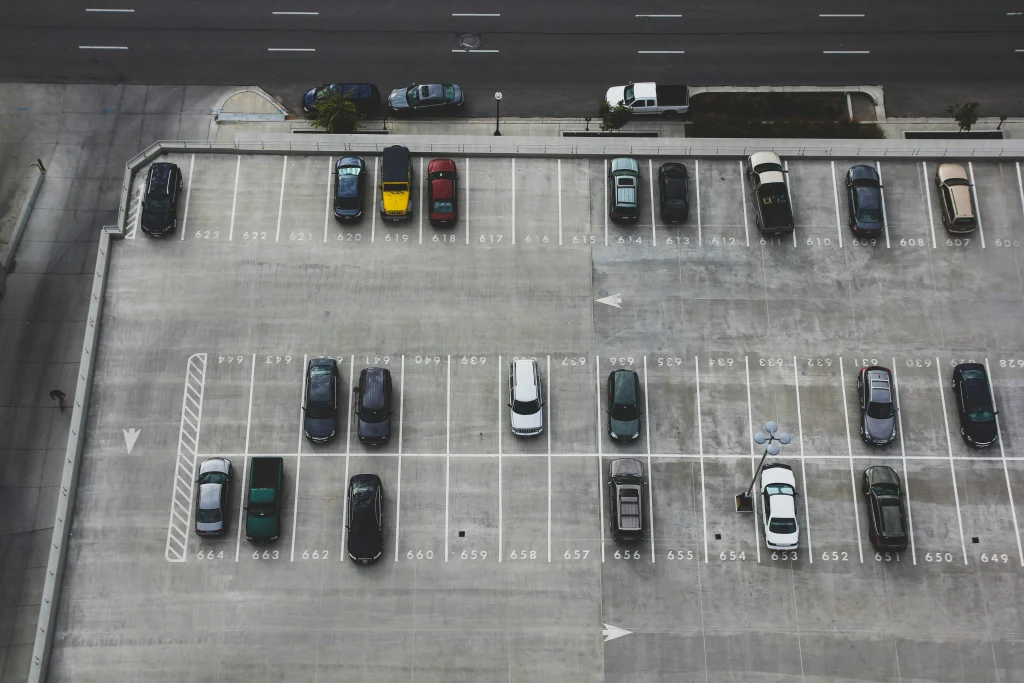
The spaces often sit empty. A 2019 study by the Metropolitan Area Planning Council counted parking at about 200 multifamily developments across 14 Inner Core communities at peak overnight hours. Of 19,439 spaces, nearly 30% were empty. That’s more than 41 acres of unused pavement.
MAPC estimated the excess parking added $94.5 million in construction costs across the developments it studied, about $5,000 per unit. It also found the biggest predictor of how many cars a building had was how much parking it offered. Build the spaces, and residents fill them. Build fewer, and many buildings need fewer.
Why smaller buildings suffer most
The mandate hits hardest where the city needs the most help: modest projects. A large tower can absorb the cost of a garage. A six- or 12-unit building often can’t. The proposal’s text argues that “removing parking mandates increases the financial viability of smaller, ‘missing middle’ housing projects.”
“For residents that are struggling to afford to live here, we need to be bold and we need to work fast,” Durkan said before the vote, according to The Boston Globe.
Boston has already dropped minimums for affordable housing, downtown and some commercial areas, the Globe reported. Cambridge and Somerville have eliminated them entirely.
The carve-outs tell the real story
The opposition was not mainly about whether parking raises housing costs. It was about where the change would apply.
Councilors Ed Flynn, John FitzGerald, Erin Murphy and Brian Worrell voted against the measure, WBUR reported, after most pushed for exemptions for their own districts. Floor amendments to carve out individual districts failed. Durkan did add carve-outs for East Boston and Charlestown, which set their own parking rules in 2024 and won’t drop minimums until at least 2029, and for Mattapan.
The concerns are real. “For many residents, driving remains a necessity, not a luxury,” Murphy said. “How does a family of five bring home a week’s worth of groceries on a bicycle?” Councilors also raised street spillover and access for people with disabilities who rely on cars.
But ending the mandate doesn’t ban parking. Developers can still build it where residents want it. The change removes the requirement to build it everywhere, at every renter’s expense.
The neighborhood-by-neighborhood fight shows how parking became a housing cost in the first place. Each district wanted to protect its street parking, and the cheapest way to do that was to require new buildings to provide spaces. The bill for that protection went to future renters, who weren’t in the room.
What’s next
The proposal now goes to the zoning commission. Mayor Michelle Wu’s administration hasn’t committed. A city spokesperson told WBUR it would “evaluate the implications of eliminating parking minimums citywide.”
The question for the commission isn’t whether Boston needs parking. It’s whether every new renter should keep paying for it by default. In a city where housing costs push families out, the space under the building may be one of the easiest costs left to cut.
Sources
- Boston moves to eliminate off-street parking requirement for new housing, WBUR, Nov. 18, 2026
- Boston City Council parking minimums vote, The Boston Globe, Nov. 18, 2026
- New study calls for reducing or eliminating parking requirements for new housing, Pioneer Institute, Apr. 15, 2026
- New study finds off-street residential parking overbuilt across Metro Boston, Metropolitan Area Planning Council, 2019