
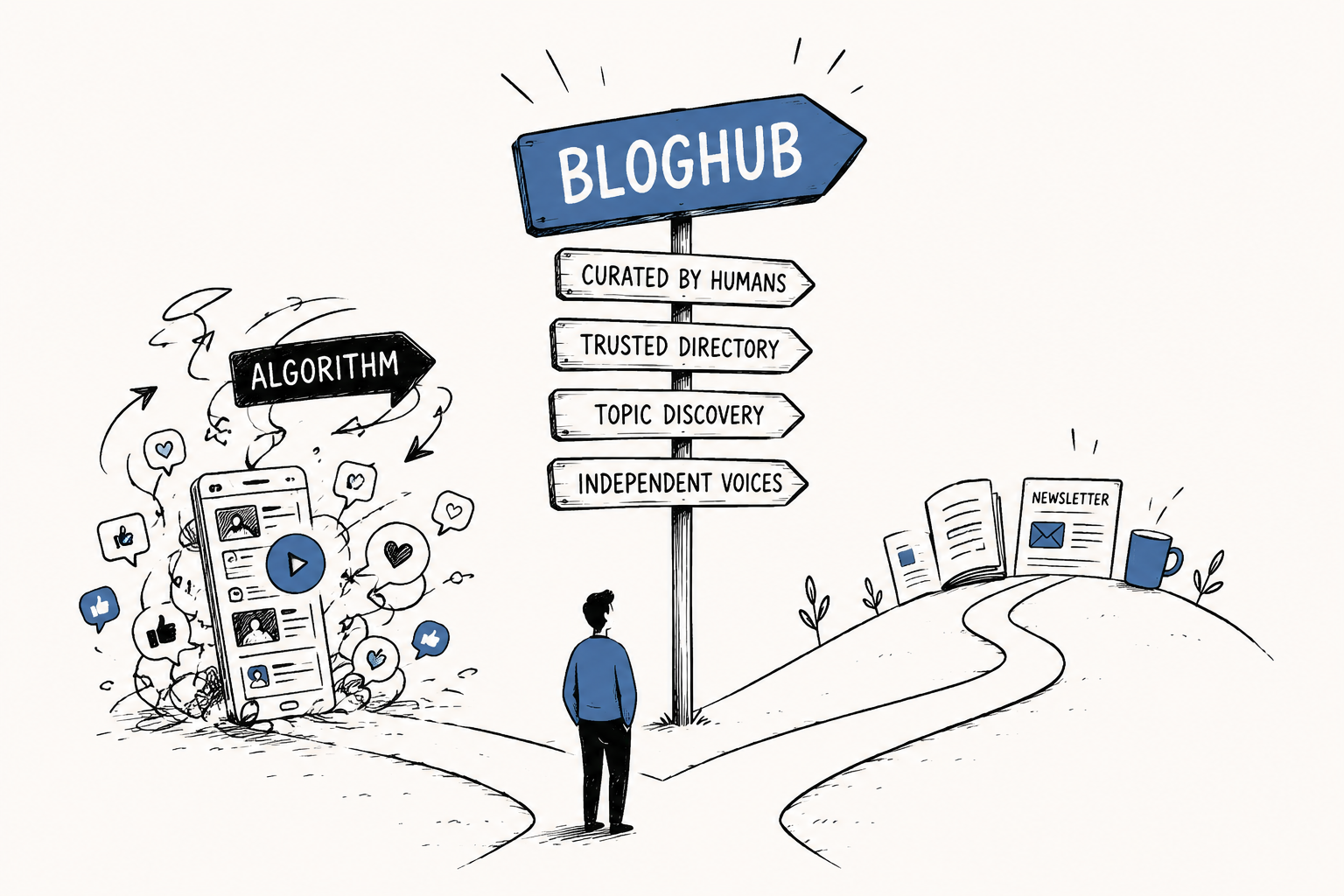
Firebird Technologies launched BlogHub alongside blog2video.app as a community-curated directory for discovering high-quality blogs and newsletters across topics. The premise is straightforward: a place to find writers, publications, and independent voices outside the usual social feed. But the simplicity is the point. BlogHub is entering a digital environment where discovery has become one of the hardest unsolved problems in independent publishing.
Writers were told for years that the internet had removed the gatekeepers. Anyone could publish. Anyone could build an audience. Anyone could reach readers directly. Technically, that’s still true. Practically, distribution has gotten more complicated. Search favors authority, optimization, and scale. Social platforms reward velocity, engagement, and reaction. Newsletter platforms help writers reach existing subscribers, but they don’t automatically solve the problem of being found by new readers in the first place. The open web still exists — but most of its traffic now passes through systems writers don’t control and didn’t build.
BlogHub matters as more than a directory because of what it’s actually arguing: discovery has become a trust problem. Readers don’t only need more content. They need better pathways toward work that feels useful, credible, specific, and worth their time. Writers don’t only need publishing tools. They need referral systems, curatorial infrastructure, and communities that help their work travel without requiring them to constantly perform for algorithms that weren’t designed with their interests in mind.
This is where the stakes get real for independent publishers and small editorial projects. A writer can spend years building a body of work that’s thoughtful, original, and well-researched and still remain invisible because dominant distribution systems aren’t designed to reward depth. A newsletter can be genuinely useful and still struggle to surface outside its existing subscriber network. A blog can offer real insight and still get buried beneath search results built around scale and optimization. The problem isn’t that good writing doesn’t exist anymore. The problem is that the pathways to find it have narrowed considerably — and the narrowing has accelerated.
Human curation is one response to that narrowing. A directory like BlogHub operates on a different premise than a feed: instead of assuming the most engaging post is the most important one, it assumes that people can help one another find value. Instead of reducing discovery to recency, virality, or keyword density, it creates a space where the act of selection becomes part of the service. That doesn’t make the model immune to bias or quality-control challenges — any curatorial system has those. But it does point toward a different kind of internet infrastructure, one built around recommendation, trust, and shared attention rather than endless scroll.
The broader lesson for independent media is this: the next phase of publishing won’t be won by better writing tools alone. It will depend on better discovery systems. Writers need ways to be found by readers who aren’t already following them. Readers need ways to navigate abundance without surrendering judgment to an algorithm. Small publications need routes to audience growth that aren’t fully dependent on paid social spend, search volatility, or decisions made inside platform boardrooms. Direct ownership of an audience still matters more than anything. But audience ownership begins with audience discovery — and right now, the infrastructure for that discovery is thin.
SSC is building across newsletters, social platforms, and a website precisely because distribution can’t depend on one channel. Every independent publisher eventually learns this: producing the work is only part of the challenge. The harder task is creating enough pathways for the right readers to find it, trust it, and return to it without being dependent on any single system that can change its algorithm on a Tuesday afternoon and erase six months of growth overnight.
BlogHub isn’t trying to replace the platforms. It’s making a smaller, more durable argument: the open web still needs maps. In a digital culture dominated by feeds, search engines, and platform-controlled visibility, the publishers who build the most durable audiences in the next five years won’t necessarily be the loudest or the largest — they’ll be the ones who figured out how to be found by the right people, through multiple channels, before any single platform decided their reach was worth limiting.
SSC News Desk | Social Storytellers Collective
Get SSC analysis delivered to your inbox every day. Subscribe: https://246481934.hs-sites-na2.com/newsletter