New Pew data shows concern about energy, food, housing and healthcare climbing across party lines, while support for Trump’s economic policies and tariffs is weakening inside his own coalition.
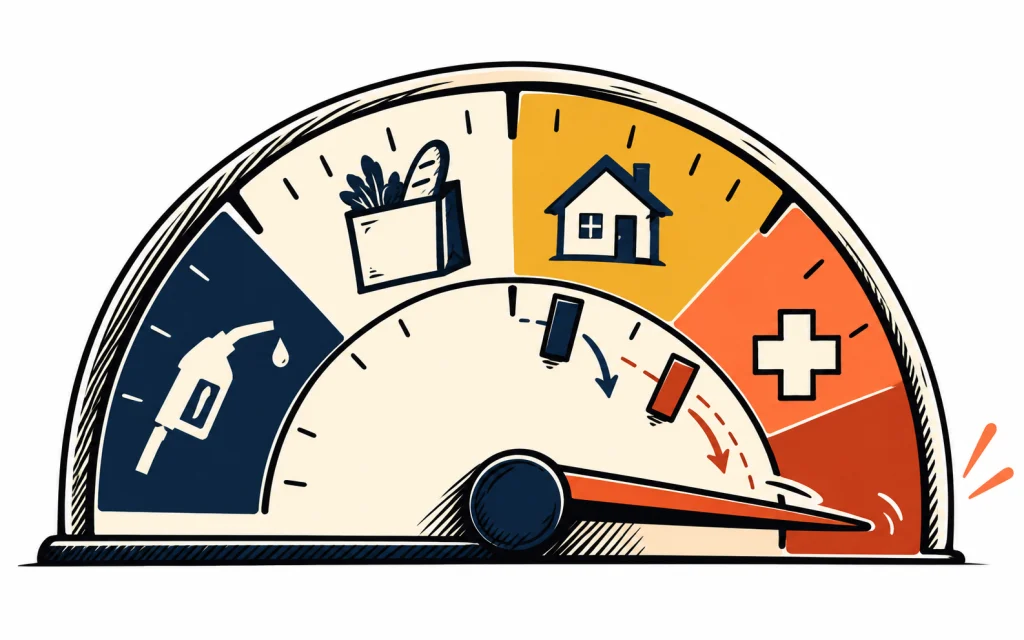
The economic story heading into the final weeks of the 2026 midterms is becoming harder to separate from the political one. Only 21% of Americans now describe national economic conditions as excellent or good, down from 28% at the beginning of the year, while 42% say conditions are poor. The most immediate pressure is coming from household costs. Seventy-four percent of Americans say they are very concerned about gasoline and energy prices, 73% about food and consumer goods, 69% about healthcare and 66% about housing. Concern about employment is also moving higher: 48% now say they are very concerned about people who want to work being unable to find jobs, up from 29% at roughly the same point before the 2022 midterms. The survey was conducted September 28 through October 4 among 5,062 U.S. adults, capturing an electorate that increasingly sees affordability as the defining economic problem.
The shift is especially important because it is no longer being driven entirely by Democrats. Republican assessments of the economy are also deteriorating. Just 36% of Republicans and Republican-leaning independents now describe economic conditions as excellent or good, down from 41% in July, while the share calling conditions poor has risen to 23%. Pew’s longer-term data shows an even sharper erosion in confidence in Trump’s own economic agenda. At the beginning of 2026, 57% of Republicans said Trump’s policies had made economic conditions better. That number has fallen to 39%, while the share saying his policies have made conditions worse has nearly doubled from 18% to 35%. The partisan gap remains large, but the direction of movement is what matters: economic dissatisfaction is now penetrating the president’s own coalition.
The Cost Problem Is Bigger Than Gas
Gasoline has become the most visible symbol of that frustration because concern has risen so quickly. In January, before the U.S. military conflict with Iran, 43% of Americans said they were very concerned about gas and energy prices. By October, that figure had climbed to 74%. But focusing only on the pump risks understating the broader affordability problem. Majorities in both parties also say they are very concerned about food, healthcare and housing costs, meaning the strain is reaching several of the expenses households cannot easily avoid. That creates a different political environment than one in which dissatisfaction is concentrated in a single sector. Voters may disagree on immigration, foreign policy or social issues, but a grocery bill, rent payment or insurance premium is experienced directly.
The anxiety also extends beyond current prices to expectations about what comes next. Only 26% of Americans expect economic conditions to improve over the next year, while 39% expect them to get worse and 34% expect little change. Republicans remain more optimistic than Democrats, but even within the GOP only 41% expect improvement. That helps explain why economic sentiment can remain weak even when particular national indicators look healthier than public opinion suggests. Households make judgments from what they are paying, whether they can find work, how much debt costs and whether they believe those conditions are likely to improve. By that measure, the electorate is signaling very little confidence that relief is coming soon.
Tariffs Are Becoming Part of the Affordability Problem
The administration’s tariff policy is also losing public support. Fifty-six percent of Americans now say Trump’s tariffs will have a mostly negative effect on the country over the coming years, compared with only 20% who expect a mostly positive effect. Republican voters remain more supportive, but enthusiasm is slipping there too. The share of Republicans who expect tariffs to have a mostly positive impact has fallen from 52% in August 2025 to 40% today, while the share expecting a mostly negative effect has risen to 26%. That erosion matters because tariffs were presented not simply as trade policy, but as part of the administration’s broader economic strategy to strengthen domestic production and protect American workers. As voters become more worried about prices, policies that can raise the cost of imported goods become harder to defend politically.
That concern connects directly to SSC’s reporting this week on tariffs beginning to show up in factory layoffs and business decisions. The policy argument has always been that higher import costs would eventually encourage more domestic production. The near-term reality is more complicated: companies that rely on imported components can face higher costs before new domestic supply chains exist, leaving them to raise prices, reduce margins, delay investment or cut jobs. Pew’s findings suggest the public is increasingly interpreting tariffs through that immediate household and workplace experience rather than through the promise of future industrial revival. The debate is therefore moving away from an abstract argument about trade and toward a more politically dangerous question: who is paying for the transition now?
The timing makes all of this consequential. In the companion Pew survey SSC examined earlier, 84% of registered voters said the economy is very important to their midterm vote, making it the leading issue across party lines. That same research found Democrats holding an eight-point national House preference advantage and a substantial enthusiasm edge, while Trump’s approval rating had fallen to 30%. The new economic data helps explain the environment underneath those numbers. Voters are not simply dissatisfied with the state of the country in the abstract. They are reporting concrete worries about energy, groceries, healthcare, housing and employment — the recurring expenses and risks that determine whether a household feels secure.
The most politically significant finding may therefore be the erosion inside the Republican coalition itself. Democrats have overwhelmingly disapproved of Trump’s economic policies throughout his second term. What is changing is that Republicans are becoming less convinced those policies are working. Thirty-five percent now say Trump’s economic agenda has made conditions worse, while only 39% say it has made them better. That is close to an even split inside a party whose voters were far more optimistic only months ago. With three weeks remaining before the midterms, the economic problem for Republicans is no longer simply persuading skeptical Democrats or independents. It is convincing more of their own voters that the costs they are experiencing today are worth the economic results they have been promised tomorrow.