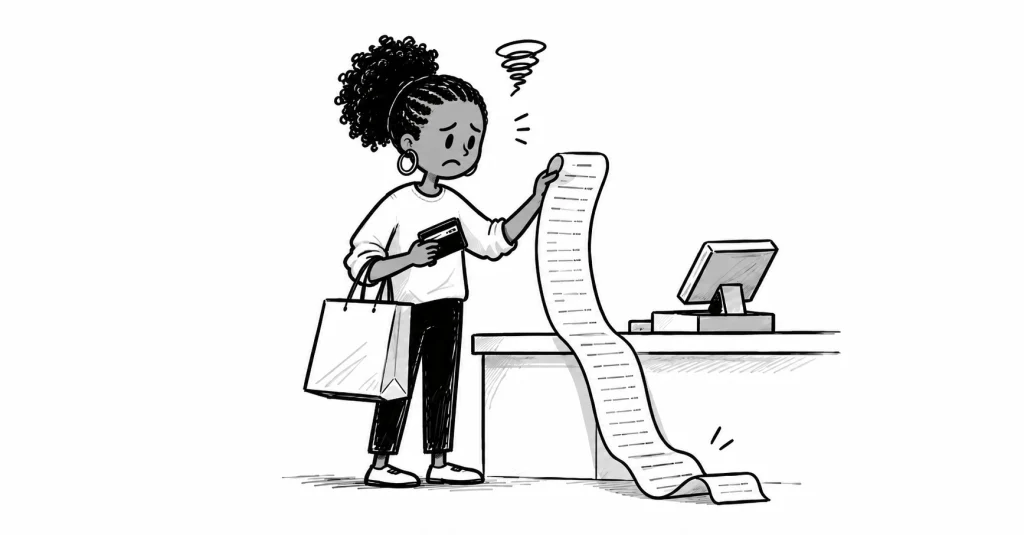
Consumer purchases are growing even after inflation, while confidence falls and some households face harder choices about essentials. The figures measure different parts of the same economy.
Americans increased their spending by 0.6% in August after adjusting for inflation, even as their inflation-adjusted disposable income showed no growth that month. Those Bureau of Economic Analysis figures help explain a seemingly contradictory economy: purchases are supporting growth, but household buying power is not necessarily improving alongside them. Separately, the Conference Board’s consumer confidence index fell 6.7 points to 81.9 in September. Spending measures what households purchase; confidence captures their assessment of conditions and expectations. People can keep paying for goods and services while becoming less certain they can sustain those payments.
Spending Can Grow Without Financial Relief
Inflation explains part of the increase in spending, but it does not explain all of it. BEA reported that purchases rose 0.9% in current dollars in August, with growth remaining positive after accounting for price changes. Its personal consumption expenditures price index was 3.4% higher than a year earlier. These measures establish that consumers collectively purchased more while continuing to face rising prices. They do not show that every household increased consumption or had money left over afterward. An aggregate spending figure combines purchases by people with substantial financial flexibility and those working within narrow budgets, without revealing how comfortable either group felt making them.
Employment provides another reason spending can hold up despite pessimism. The September jobs report showed a payroll increase of 29,000 and an unemployment rate of 4.2%, which the Bureau of Labor Statistics described as little changed. Slower employment growth does not immediately eliminate the paychecks of people already working. But it can make someone less confident about finding another position, increasing earnings or recovering from a layoff. For a household dependent on continuing wages, the present and the future can therefore feel different: income still arrives, purchases continue, and concern about what happens next grows. A stable national unemployment rate does not resolve that uncertainty.
Some Households Have Moved Beyond Trading Down
Cleveland Federal Reserve Bank President Beth Hammack described a more difficult situation among people she met in her district. During an October 2 PBS NewsHour interview, she said participants in a Northeast Ohio roundtable had previously substituted cheaper foods. Now, she said, they were deciding which bills to pay and relying more on credit. Her account concerns particular conversations rather than a national estimate of household hardship. It nevertheless identifies something spending totals cannot establish: whether a purchase reflects financial ease or a difficult choice. Buying groceries still counts as consumption when doing so leaves less available for rent or transportation.
The Conference Board’s September survey also found that assessments of families’ current finances turned negative, with the share describing their situation as bad overtaking those calling it good. Expectations for business conditions, jobs and income weakened. Planned spending on several discretionary activities, including airfare, movies and amusement parks, moderated, although vacation plans held up. Those mixed intentions are more informative than assuming pessimistic consumers stop purchasing everything. Households can preserve certain experiences, reduce other purchases and continue paying essential expenses. Surveyed plans also describe intentions; they are not a record of transactions that have already occurred.
Confidence Also Depends on What Comes Next
Hammack’s concern extends beyond the immediate strain of paying bills. She warned about an inflationary mindset taking hold and emphasized returning inflation to the Fed’s 2% objective in a timely way. The concern is that sustained price increases can shape expectations and influence future wage and pricing decisions, making inflation harder to reduce. That is different from saying households have become comfortable with higher costs. Accepting inflation as persistent can coexist with resentment, financial juggling and continued purchases. Nor would a slower inflation rate automatically restore earlier prices: it would mean prices were increasing more slowly, rather than that accumulated increases had disappeared.
The coming income, spending and employment reports will help establish whether consumption remains supported by improving purchasing power or increasingly difficult adjustments. The measures deserve to be read together: spending growth, earnings after inflation, savings and the availability of work each reveal something the others cannot. Businesses may see sales continue while customers become more selective; policymakers may see economic expansion alongside households with little room for disruption. For Americans managing those budgets, relief will be easier to recognize when paying for today’s needs also leaves room for tomorrow’s expenses. Continued spending alone cannot tell us whether that room is growing.