
Part of Culture in Motion — examining who defines culture, how it moves, and what it reveals about the moment.
The crossover has already happened. That is the part the American music industry keeps getting wrong about Afrobeats. The conversation about whether African music will break into the mainstream is being had by people who have not been paying attention — because the music has been in arenas, on charts, and in cultural conversation for years. What is happening in 2026 is not a breakthrough. It is a reckoning with a breakthrough that already occurred, and with the question of who benefits when American commercial infrastructure finally decides to get involved.
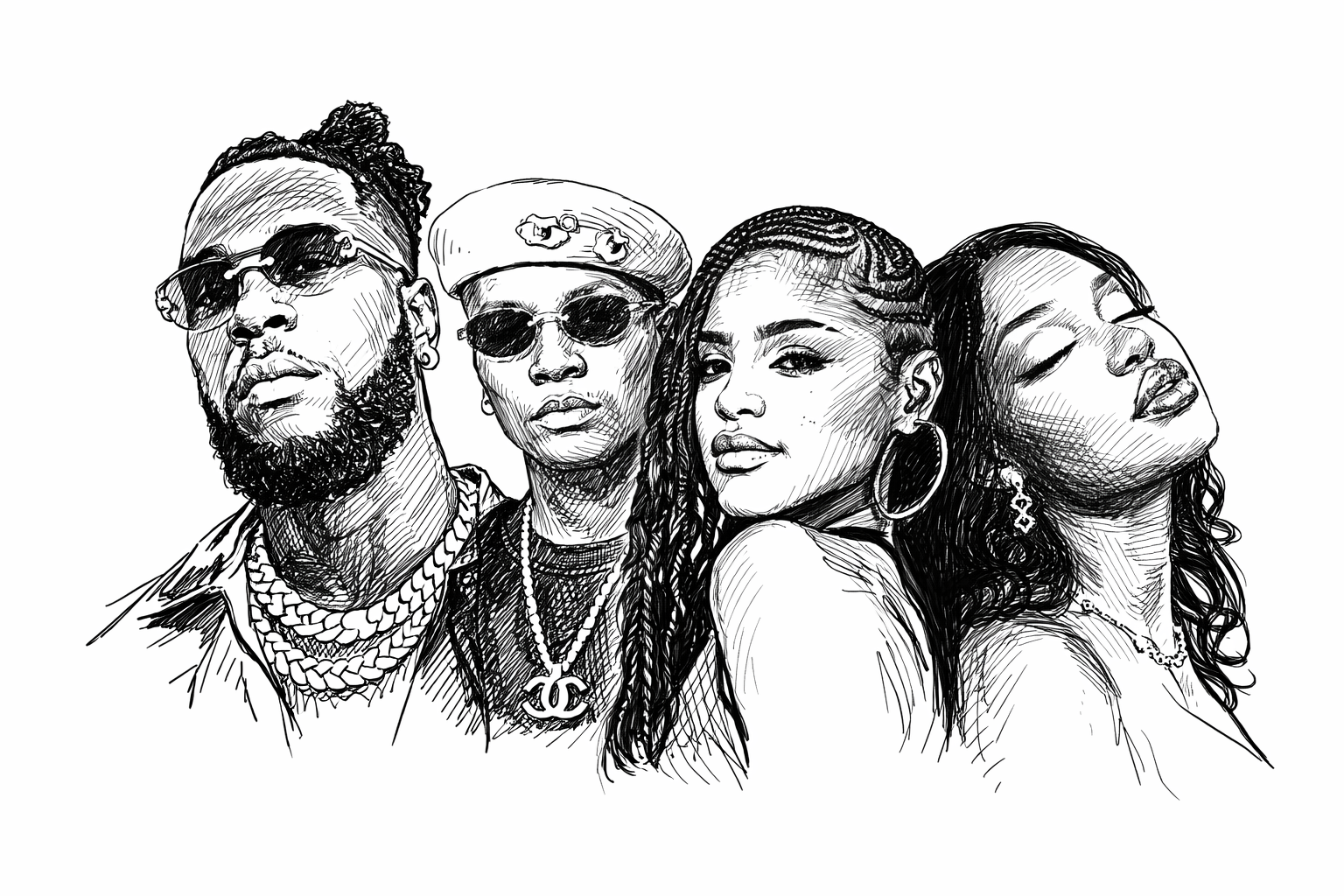
Burna Boy is the most-followed African artist on Spotify worldwide, with over 40 million monthly listeners. His concerts fill Madison Square Garden in New York, the O2 Arena in London, and the Stade de France in Paris. Tems won her second Grammy this cycle. Wizkid’s collaborative EP with Asake — Real, Vol. 1 — charted on the UK Singles Chart in January 2026. Tyla’s “Water” did not just chart in America; it redefined how the industry thinks about category, with the Recording Academy creating a new Afrobeats Grammy category in direct response to arguments about where her music belonged. Multiple music industry analysts are now predicting that 2026 is the year an African artist breaks through and drives one of the most-streamed songs of the year — the Bad Bunny moment for African music.
The Bad Bunny comparison is instructive, and not just because of the streaming numbers. Bad Bunny’s American crossover triggered a years-long conversation about who profits when Latin music goes mainstream — whether the labels, promoters, and platform infrastructure that amplified that crossover reflected the communities who built the sound, whether Latin artists were being signed on terms that extracted value at the point of maximum leverage, and whether the crossover would last or whether it would be absorbed, repackaged, and sold back to the communities who originated it in a form they no longer controlled. Those conversations are coming for Afrobeats. They are already overdue.
United Talent Agency has emerged as the dominant representation force in African music, with its roster including Tyla, Wizkid, Burna Boy, Ayra Starr, Tiwa Savage, and Davido — among the continent’s biggest names. That concentration of talent under one Western agency’s umbrella is itself a story. Who negotiates the deals, who sets the terms, who decides which artists get priority for American tours and brand partnerships and sync placements — these are structural questions about where the money flows when African music becomes a product the American industry wants to sell. The agency’s infrastructure is what enabled the scale. It is also what mediates between the artist and the market — and that mediation has a cost that does not always show up in the press release.
The diaspora dimension adds another layer that American coverage consistently flattens. As SSC documented in The Black Immigrant Population Has Doubled and the japa analysis, the West African community now driving Afrobeats’ American momentum is not a monolith and did not arrive by accident. The Black immigrant population in the U.S. has grown from 2.4 million in 2000 to 5.6 million in 2024 — with African-born immigrants now matching Caribbean-born immigrants at 44% of the total Black immigrant population. That community is concentrated in cities like Houston, Atlanta, New York, and Dallas — the same markets where Afrobeats is building its deepest American infrastructure. The artists reaching American arenas are not separate from that migration story. They are its most visible cultural expression — and their audiences in those cities are often the communities who left, or whose families left, under the same institutional pressures the music documents.
Burna Boy’s music is explicitly political. Wizkid’s catalog is a document of Lagos — its sounds, its contradictions, its aspirations. When American audiences consume that music without that context, they consume the product without the history. When American labels sign African artists without that context, they sign a commodity without understanding what they hold.
The crossover moment that the industry is bracing for in 2026 will generate enormous revenue. The question SSC is positioned to ask — and that Billboard and Rolling Stone will not — is whether the communities that built the sound will be positioned to capture any of it, or whether Afrobeats will follow the same arc as reggae, as hip-hop’s early commercial crossover, as every genre that traveled from Black communities into American commercial infrastructure and arrived stripped of the economic relationships that should have traveled with it.
Why This Matters
Afrobeats going global is not the story. The story is what happens to ownership, credit, and community wealth when a genre crosses over into a commercial infrastructure that was not built to protect the people who built the sound. The moment is here. The conversation is overdue. SSC will be in it.