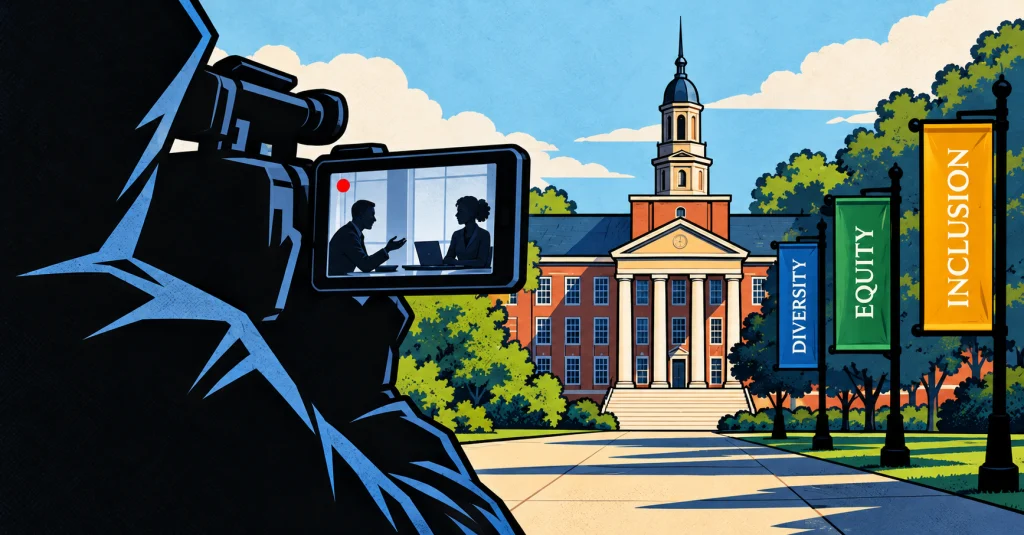
Accuracy in Media is using undercover recordings and public pressure to challenge university diversity programs. Its campaigns are also changing who gets to hold colleges accountable.
Imagine showing up to work at a university and discovering that a conversation you thought was private has become an online video questioning whether you’re breaking the law. That’s the approach Accuracy in Media (AIM) has taken in its campaign against diversity, equity and inclusion programs. According to Ryan Quinn’s October 26 investigation for Inside Higher Ed, AIM has released undercover recordings targeting approximately 40 universities across a dozen states over the past two years. The organization alleges that employees are finding ways around DEI restrictions. It has also deployed mobile billboards displaying the names and faces of students and faculty it accuses of supporting antisemitism. Universities have launched investigations following some recordings, and some employees featured in the videos are no longer employed.
AIM wasn’t always in the business of investigating college employees. Founded in 1969, it originally challenged what its leaders considered biased news coverage, particularly reporting about the Vietnam War. Its current president, Adam Guillette, previously worked for Project Veritas, an organization known for undercover investigations. Guillette argues that AIM’s mission remains consistent: exposing ideological influence in American institutions. But Don Irvine, whose father founded AIM, told Inside Higher Ed that the organization has become something closer to Project Veritas. The change reflects a different way of exercising influence. Rather than primarily challenging how journalists report events, AIM now produces material that can trigger investigations, damage reputations and force universities to defend their policies.
Universities have good reason to examine whether their programs comply with state and federal law. But an edited recording can generate consequences long before investigators determine whether anyone violated a policy. That’s where the power shifts. A private advocacy organization can decide which employees to investigate, which conversations to publish and which institutions face public pressure. University administrators, concerned about legal exposure and reputational damage, may respond by reviewing or eliminating programs before establishing whether the allegations are justified. AIM’s financial backing also remains largely undisclosed, according to Inside Higher Ed. That leaves the public with limited information about the donors supporting campaigns that can influence university employment and policy decisions.
The consequences extend beyond the employees appearing in the videos. When public exposure becomes a powerful enforcement tool, universities may begin making decisions based on the likelihood of becoming the next target rather than solely on legal requirements or educational needs. That gives organizations capable of generating controversy considerable influence over campus policy without the obligations imposed on public regulators. The likely result is a university system in which administrators become increasingly cautious, employees become less willing to speak openly, and decisions about diversity programs are shaped as much by outside pressure as by the laws governing them.