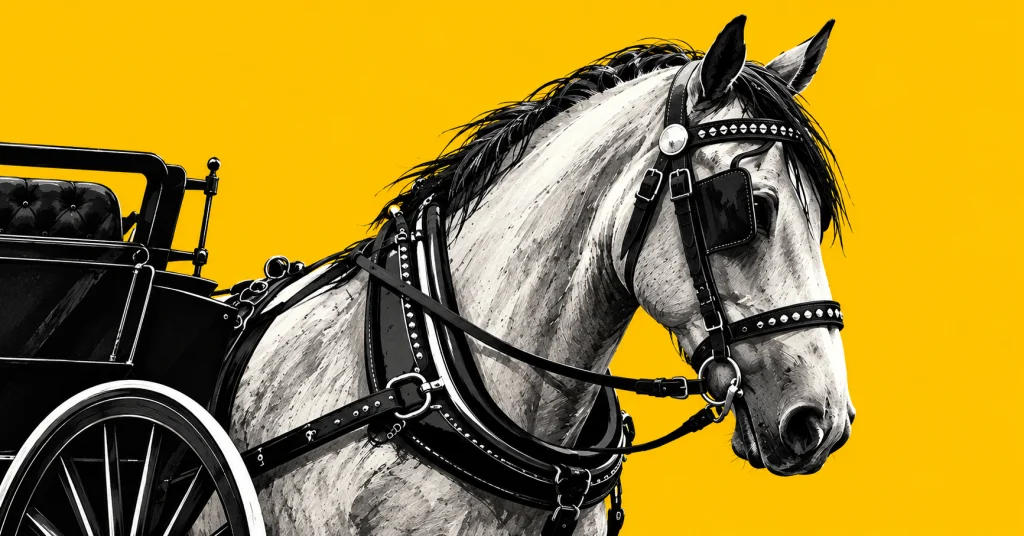
There is an understandable instinct to protect the things that make a city recognizable. New York has yellow taxis, brownstones, Broadway marquees, hot dog carts and, for more than 150 years, horse-drawn carriages circling Central Park. Tourists recognize them before they ever arrive. Movies helped turn them into shorthand for romance in New York. But longevity is not the same thing as justification. Sometimes the hardest part of preserving a city’s identity is accepting that not everything from its past deserves to follow it into its future.
New York City appears ready to make that choice. As Social Storytellers Collective reported, the City Council is preparing to vote on legislation that would phase out horse-drawn carriage rides in Central Park by June 2028. The proposal gained new momentum after 18-year-old Romanch Mahajan, visiting from India, died in June after a carriage horse bolted and he was thrown from the vehicle. His death turned a decades-old argument over animal welfare into something harder to dismiss as merely ideological: whether an increasingly crowded public park should continue accommodating an attraction capable of putting horses, riders and bystanders at risk. The Council says 29 members are already co-sponsoring the legislation, giving it substantial momentum ahead of the October 22 vote.
The answer should be yes, the carriages should end. Not because everything old must disappear, and not because the people who drive them have done something wrong. They should end because cities routinely retire practices when the environment around them changes. Central Park today is filled with pedestrians, runners, bicycles, scooters and other forms of micromobility competing for limited space. A horse can be trained, cared for and closely regulated, but it remains an animal capable of becoming frightened or behaving unpredictably. When that happens in one of the most heavily used urban parks in the world, nostalgia cannot function as a safety system.
New York has already tried the alternative: regulation. Carriage horses are subject to veterinary inspections, mandatory vacation periods, age limits and weather restrictions. Those protections are not meaningless. But they have not settled a political fight that has survived multiple mayoral administrations or prevented accidents from repeatedly reopening the debate. Former Mayor Bill de Blasio tried unsuccessfully to eliminate the industry. Eric Adams called for its end as well. Now Mayor Zohran Mamdani and Council Speaker Julie Menin have reached an agreement to phase it out. When several administrations with very different political coalitions arrive at roughly the same conclusion, the issue becomes less about one politician’s preference and more about a city struggling to reconcile an old practice with the place it has become.
But ending the carriages creates another obligation that supporters of the ban should not minimize. Roughly 200 drivers, owners and stable workers are connected to the industry, and many are immigrants or members of working-class families who built livelihoods around a business New York legally permitted for generations. The proposed law requires the administration to develop a worker-transition plan and allows the city to consider compensation, but those promises need substance. Job counseling alone is not an adequate answer for someone who invested years, money and identity into a licensed business that government is now eliminating. The city should provide retraining, direct pathways into comparable municipal or tourism work and meaningful financial support where workers lose business assets because of the phaseout. Protecting horses while casually discarding workers would be an incomplete version of progress.
The horses deserve the same seriousness. Romanch’s Law would prohibit owners from sending horses to slaughter and require humane disposition after the industry closes. That provision is essential because ending carriage rides should not simply relocate the welfare problem somewhere less visible. Retirement plans, sanctuaries and verified placements need enforcement and funding. If New York says animal welfare is part of the reason for ending the industry, then what happens to those animals afterward becomes part of the city’s responsibility too. A ban should be measured not only by the final carriage leaving Central Park but by whether the horses and workers attached to the industry land somewhere sustainable.
There will always be something unsettling about watching an iconic part of a city disappear. That is especially true in New York, where residents regularly worry that the city is becoming less recognizable, less affordable and less connected to the peculiar traditions that once gave neighborhoods their character. But preservation cannot mean freezing every custom in place indefinitely. Cities are living systems. Streets change. Technology changes. Standards change. What people consider acceptable risk changes. New York does not lose its history by acknowledging that horse-drawn carriages belonged to one chapter of it. Sometimes respecting history means knowing when something has completed its run — and making sure the people and animals who carried that tradition are treated responsibly when the curtain comes down.