
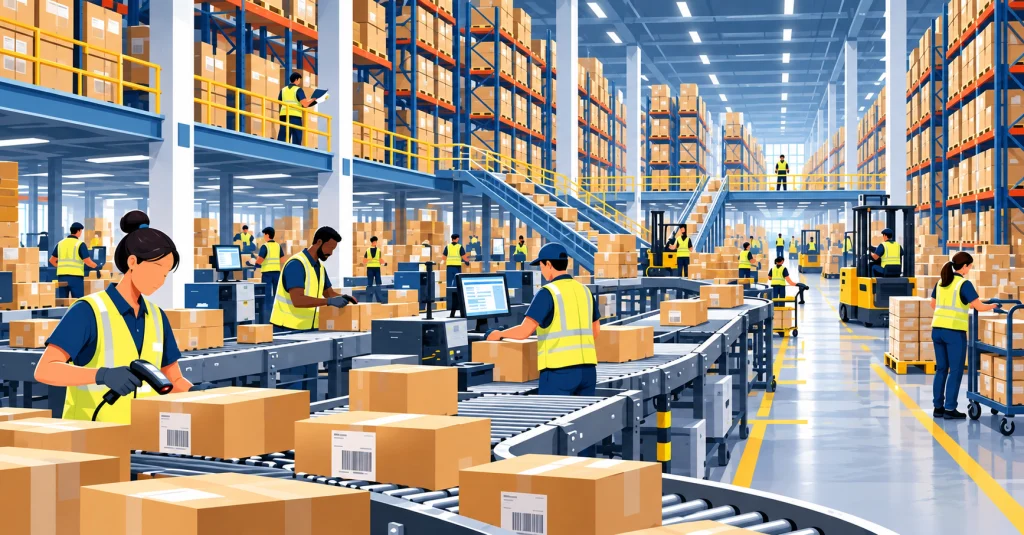
A $176 million investment, more than 400 new jobs and a distribution center spanning up to 1.2 million square feet are bringing premium athletic apparel brand ALO into northern Mississippi. The Los Angeles-based company announced plans Monday to establish a national fulfillment and distribution operation in Southaven. The project is expected to create hundreds of positions by 2027, with support from state and local economic development agencies. Beyond the hiring announcement is a revealing development in the retail economy: as brands compete for consumers online and in stores, some of their most consequential investments are happening far from shopping districts, inside the warehouses responsible for moving merchandise across the country.
The Business Behind the Brand
ALO has built its identity around premium fitness clothing, wellness culture and the idea that athletic apparel can function as everyday fashion. Its expansion increasingly requires infrastructure capable of supporting that identity at scale. Industry publication SGB Media reports that the company operates approximately 170 stores globally, including about 100 in the United States, alongside wholesale relationships with major retailers. The Southaven operation will support national fulfillment, giving ALO additional capacity to process orders and manage distribution as its retail footprint grows. The facility also has the option to accommodate returns processing, an important function for apparel companies whose customers routinely purchase multiple sizes or styles before deciding what to keep.
The location is no accident. Southaven sits within the greater Memphis logistics corridor, where interstate highways, freight transportation networks and proximity to Memphis International Airport create an attractive environment for national distribution. Rather than constructing an entirely new facility, ALO is moving into an existing industrial building. The Daily Memphian previously reported that the company was operating at a 1.2 million-square-foot warehouse at 3890 Highway 51, a property acquired earlier this year. That existing infrastructure helps explain why northern Mississippi continues to attract companies seeking distribution capacity without building an entirely new logistics footprint. For communities competing for corporate investment, access to transportation networks can be as important as access to customers.
Four Hundred Jobs, but What Kind of Jobs?
The promise of more than 400 jobs is significant for DeSoto County, particularly as workers navigate an economy in which employment opportunities are increasingly shaped by automation, shifting consumer demand and corporate restructuring. Distribution centers can create positions across warehouse operations, inventory management, transportation coordination, equipment maintenance and supervision. ALO’s recruitment activity offers a glimpse of the operational complexity involved, including reverse logistics, workforce planning, inventory recovery, productivity systems and automation. Yet the public project announcement does not establish the average wages, benefits or full-time status of the 400-plus promised positions. Those details will determine how much of the investment translates into durable economic opportunity for local households.
The employment announcement also arrives with an important public-policy consideration. The Mississippi Development Authority is supporting the project through the Mississippi Flexible Tax Incentive program, known as MFLEX, while DeSoto County and Southaven are providing additional assistance. The reported project details do not specify the total value of that assistance, making it difficult to calculate the public cost per job or evaluate the eventual return on taxpayers’ investment. Economic development officials emphasize the benefits of capital investment and new employment, but public accountability requires more than announced job totals. Wages, retention, local hiring, tax revenues and the durability of the operation are the measures that will establish whether this is a long-term regional economic gain.
Retail Growth Is Becoming a Logistics Story
The ALO project also illustrates how the geography of retail employment is changing. A premium clothing brand may build its cultural relevance through storefronts, social media and fitness communities, but its ability to grow depends on less visible systems of warehousing, inventory technology, shipping and returns management. Those operations can generate jobs in markets geographically removed from the brand’s most prominent customers. They can also create new dependencies on seasonal labor, third-party contractors and productivity technologies. ALO co-president Norm Hullinger said the company expects additional employment during the holiday season, indicating that its workforce needs may expand beyond the initial permanent hiring announcement. The company has not publicly detailed how those seasonal positions would compare with its longer-term employment commitments.
For Southaven, the opportunity is clear: a nationally recognized consumer brand is committing substantial capital to an existing industrial facility and promising hundreds of jobs. For ALO, the investment represents an operational bet that faster fulfillment and stronger distribution capacity will support its continued expansion. But the most consequential numbers may emerge after the announcement, when the facility’s payroll, hiring patterns and public incentives can be measured against the promises made in October. The next chapter of retail growth is being built in logistics corridors like northern Mississippi. Whether workers share meaningfully in that growth will depend on what these investments deliver after the ribbon-cutting.