
The proposed cuts would narrow access for students and humanitarian arrivals while expanding selected work pathways. Housing relief depends on whether those choices preserve the workforce needed to increase supply.
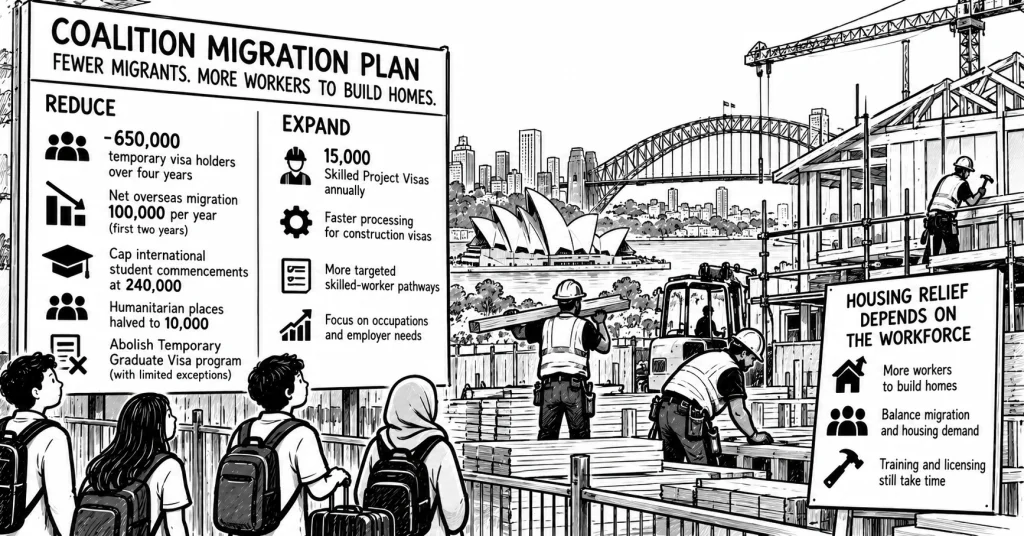
Australia’s opposition Liberal-National Coalition proposed October 6 to reduce the number of temporary visa holders by roughly 650,000 over four years and bring annual net overseas migration down to 100,000 for its first two years in government. At the same time, it would expand selected skilled-worker pathways and accelerate construction visa processing. The Coalition’s published plan describes a smaller migration system organized around particular economic needs. It is an opposition proposal ahead of the expected 2028 election, with access increasingly determined by occupation, qualifications and the work employers need completed.
The proposed reduction is substantial against the latest official figures. Australia recorded net overseas migration of 292,100 in the year to March 2026, according to the Australian Bureau of Statistics. A 100,000 target would be about 66% below that level. Net migration measures arrivals minus departures; the separate 650,000 figure concerns the stock of temporary visa holders. Neither figure represents a simple count of visas the government would stop issuing. ABC political correspondent Clare Armstrong reports that the Coalition’s annual target would rise to 130,000 in year three and 160,000 in year four.
The Cuts Fall Unevenly
The plan would cap international student commencements at 240,000 and halve annual humanitarian places to 10,000. It would abolish the existing Temporary Graduate Visa program while retaining limited post-study transitional pathways for PhD students, health and education graduates, and students at regional universities. These choices assign different prospects to people arriving for education, protection and employment. A student’s opportunity to remain after graduation would depend more heavily on the subject and location of study, while humanitarian access would contract despite serving a purpose separate from filling vacancies.
Selected employers would receive expanded routes to recruit. The Coalition proposes 15,000 Skilled Project Visas annually, tying workers to a defined project and period, alongside a task force to clear construction application backlogs. That structure gives policymakers and sponsoring employers greater influence over which workers gain entry and where they work. It could direct recruitment toward identifiable shortages, but its effectiveness would depend on matching qualifications to actual jobs. A visa allocation creates permission to enter; it does not automatically resolve licensing requirements, recruitment delays or shortages in supporting occupations.
Housing Needs Workers, Too
The housing argument contains a practical tension: migration adds demand for accommodation, while migrant workers can help build it. Master Builders Australia’s response welcomed the construction priorities but warned that aggregate migration numbers must support workforce needs. The organization also raised concerns about losing workers outside skilled visa categories. Its response shows why selecting tradespeople alone may be insufficient: construction delivery depends on a wider workforce, and cuts elsewhere could undermine the benefit of faster approvals for priority workers. The industry group’s position is supportive of targeted recruitment, with reservations about the overall reduction.
Training more Australians offers another route, but it takes time. In its earlier assessment of migration and housing supply, Master Builders estimated that improvements in domestic training would take three to five years to produce additional qualified workers. It also identified slow, costly skills recognition and licensing as barriers to using migrants already in Australia. Those constraints would remain relevant under a smaller intake. Meanwhile, Armstrong’s ABC reporting says the Coalition has not released modeling of the proposal’s broader economic effects and promises costings closer to the election.
The Test Is Delivery
If the proposal reduces housing demand while supplying construction workers who can begin work quickly, it could ease pressure from both directions. If wider visa cuts remove essential supporting labor or priority recruits remain stalled in licensing, fewer arrivals could coincide with slower building. Students and humanitarian applicants would face narrower access, while employers in favored sectors would gain recruitment options. The outcome should be measured in completed homes, filled vacancies and functioning services. A lower migration total can fulfill a political promise; improving affordability requires the workforce and capacity to deliver it.