
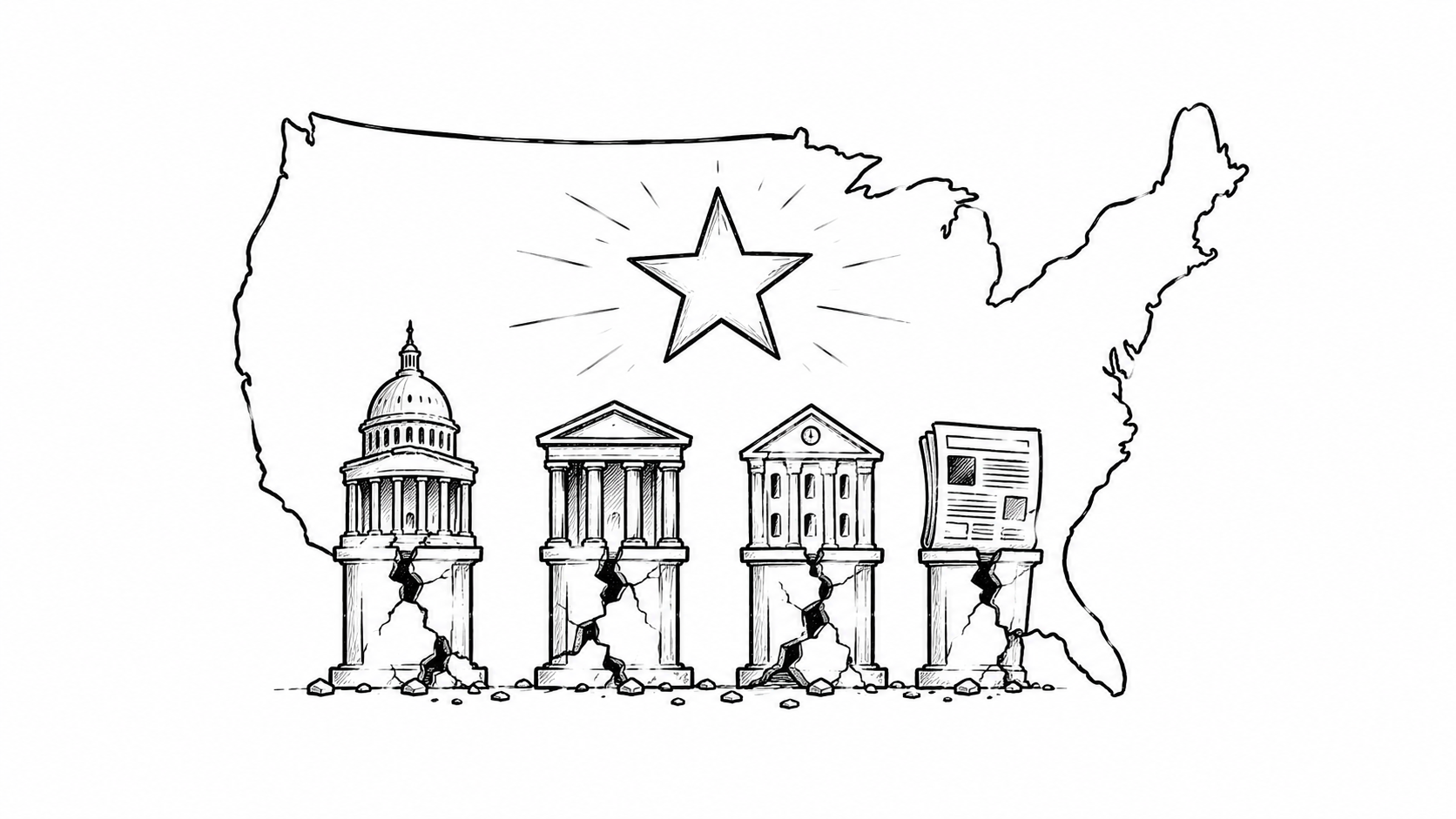
A Quinnipiac University Poll released June 4, 2026, and reported by CT Insider journalist Jordan Nathaniel Fenster, finds a country wrestling with a fundamental contradiction as it approaches its 250th anniversary. Half of Americans say the nation’s best days are behind it, while 61 percent believe the country is not living up to its founding ideals. The survey interviewed 1,316 U.S. adults in May with a margin of error of ±3.4 percentage points. The numbers arrive as civic organizations, museums, governments, and cultural institutions begin planning anniversary celebrations. They also raise a question larger than the commemoration itself: what happens when belief in a country’s ideals becomes disconnected from trust in the institutions meant to deliver them?
The timing matters. Americans have spent much of the past decade navigating overlapping crises of confidence. Trust in Congress remains low. Confidence in media organizations has declined. Faith in higher education, corporations, and public institutions has become increasingly polarized. Economic pressures compound the disconnect. Housing affordability remains out of reach for many households. Student debt continues to shape career and family decisions. Wage growth has improved in recent years, but as SSC documented this week in Stable Jobs. Unstable Workers., many workers still report feeling financially vulnerable even when the headline numbers look encouraging. The result is a public that often distinguishes between the principles America represents and the systems responsible for putting those principles into practice.
The debate is less about whether concepts such as freedom, opportunity, and equality matter. Most Americans continue to express support for those values. The debate centers on whether existing institutions provide equitable access to them. A family struggling to buy a home, a graduate burdened by debt, or a worker questioning long-term economic security may not reject the promise of the American system. They may simply question whether the system is functioning as advertised. SSC’s credentialing series examined exactly this dynamic — the credential economy profits from issuance regardless of outcome, and the workers with the least margin to absorb a credential that doesn’t deliver are the ones taking the most risk on a system that keeps moving the finish line.
Institutional legitimacy has always depended on performance. Governments, schools, courts, corporations, and civic organizations derive authority not only from law or tradition but from public belief that they are operating fairly and effectively. When that belief weakens, institutions often respond with messaging campaigns, public engagement efforts, or symbolic gestures. Those efforts can improve perception temporarily, but legitimacy ultimately depends on outcomes. Trust grows when institutions solve problems people can see and experience. It declines when official narratives and lived realities move in opposite directions.
That challenge sits at the center of the country’s 250th anniversary. The celebration will focus on American achievements, democratic traditions, and national milestones. Yet the Quinnipiac polling suggests many Americans are approaching the anniversary through a different lens — evaluating whether institutions have kept pace with the promises those traditions represent. The question is not whether the ideals remain compelling. The question is whether access to those ideals feels attainable.
The significance of the polling is not that Americans have lost faith in the country. It is that many appear to be separating the country from the institutions that govern it. That distinction may become one of the defining political and cultural dynamics of the next decade. Institutions that once relied on history, reputation, or authority to earn trust are increasingly being judged by measurable outcomes. As the United States enters its next quarter millennium, the organizations best positioned to maintain public confidence may be the ones capable of demonstrating results rather than simply invoking tradition.