
My grocery budget used to run about $200 every two weeks. Same stores, same items, same list. It’s now $350. My gas tank used to cost $40 to fill. It’s now $78 — almost double. I didn’t change my habits. The baseline changed around me. And when I started looking at the data behind what I was feeling at the register and the pump, I realized this wasn’t personal misfortune. It was a pattern — showing up across every essential category at the same time, hitting the same households, in the categories that matter most.
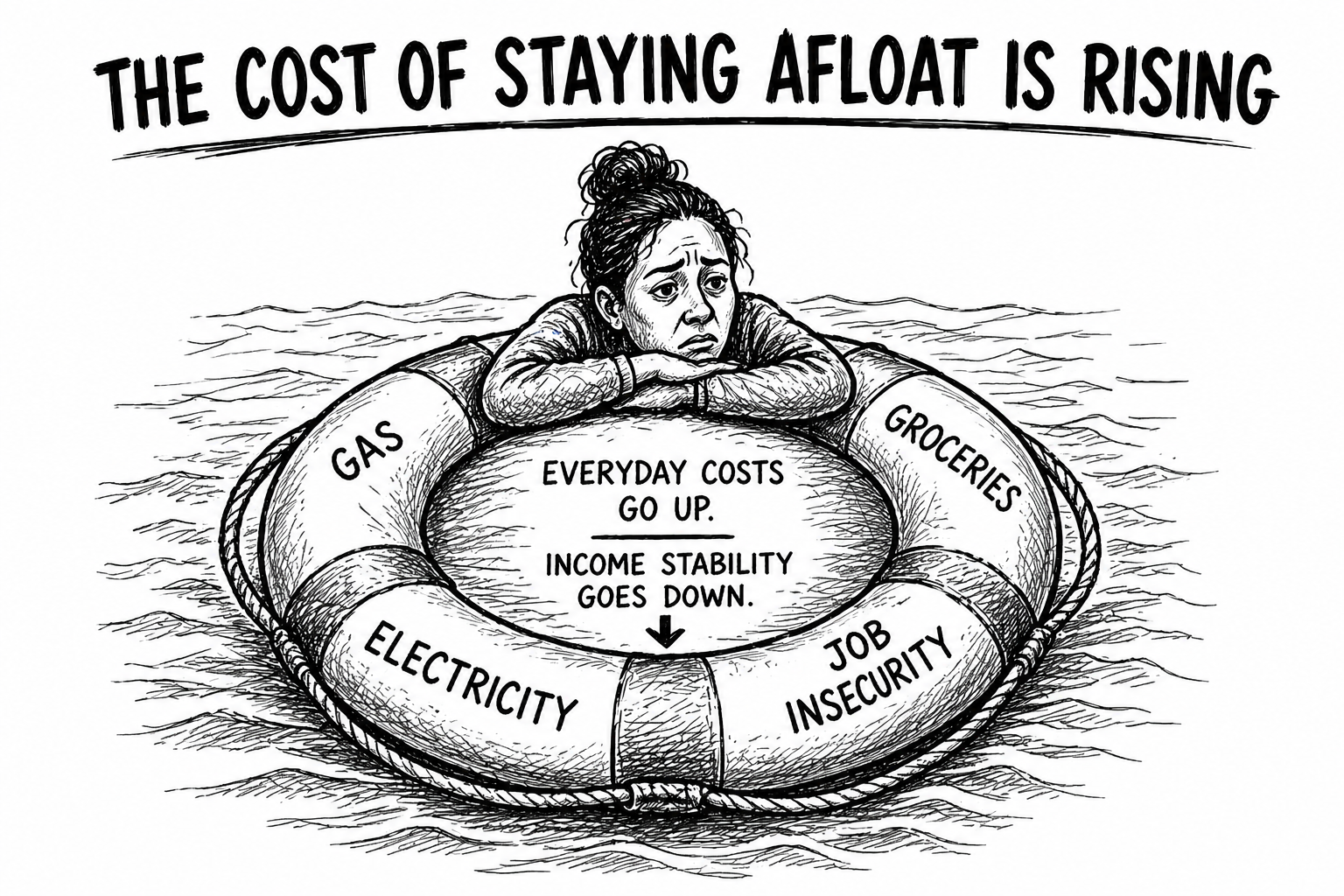
The national average price of gasoline has climbed back above $3.60 per gallon. Electricity costs are up more than 5% from a year ago. Grocery prices are still higher than they were before 2020, even as the headlines say inflation is cooling. And weekly jobless claims — the number of people filing for unemployment for the first time — have been quietly climbing, hovering between 220,000 and 230,000 in recent weeks. None of these numbers, by itself, signals a crisis. But they are not happening in isolation. They are happening at the same time, to the same households, in the categories that cannot be cut, deferred, or substituted away. That convergence is the story.
This is not the kind of inflation that shows up cleanly in official data. It is a compression of essentials. When discretionary spending stabilizes while essential costs keep rising, the overall economic picture can look balanced. It is not. It is balanced at the top and tightening at the bottom, where most people actually live.
Each of these pressures has its own cause. Gas prices are sensitive to geopolitical tension, particularly around Iran and global oil supply. Grocery prices have stabilized in some categories but staples — eggs, meat, processed foods — are still carrying costs that were set during the supply chain disruptions of the past three years and have not come back down. Electricity is rising for different reasons: aging infrastructure, extreme weather demand, and utility rate increases approved quietly at the state level. These are not the same system. But they land on the same monthly budget. My budget. Probably yours too.
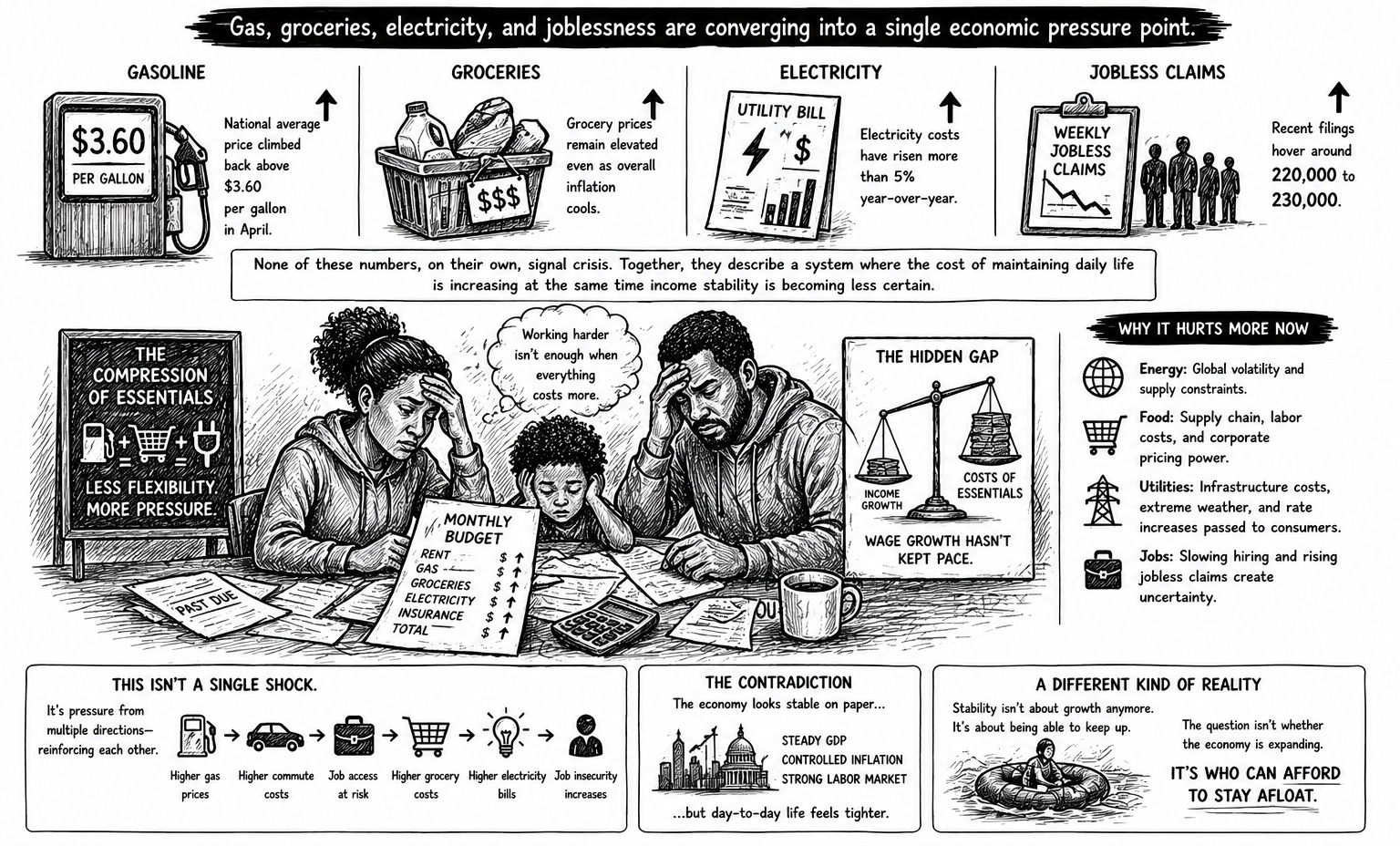
The labor market adds another dimension. Unemployment is still relatively low, but the increase in jobless claims signals softening — particularly in sectors sensitive to interest rates and consumer spending, like tech, media, and parts of retail. Wage growth has not kept pace with the cumulative rise in essential costs since 2020. That gap does not show up in top-line employment numbers. It shows up in what people can and cannot do with what they earn. It shows up in the moment you realize your cart looks exactly the same but the total doesn’t.
What makes this moment different from previous downturns is that there is no single point of failure. In 2008 it was housing. In 2020 it was employment. What is happening now is more diffuse — pressure arriving from multiple directions at once, each one reinforcing the others. Higher gas prices affect how far people can afford to commute, which intersects with what jobs are accessible. Grocery costs determine how far a paycheck stretches week to week. Electricity bills fluctuate with the season, turning a fixed expense into a variable one. Job insecurity, even at the margins, removes the ability to absorb any of it. The system does not need to break to create real strain. It just needs to tighten from enough directions at once.
That is what is happening now. The question is no longer whether the economy is growing. It is whether the people at the bottom of that growth can keep up with the cost of participating in it. For a lot of households — mine included — the answer is becoming harder to find.