
The headline number is what travels: a +34 net favorability rating for Pope Leo XIV in the United States, according to polling cited by Newsweek, against a significantly lower rating for a sitting U.S. president during an active foreign policy moment that includes ongoing conflict involving Iran. On its surface it reads like a simple popularity comparison between two global figures. It is doing more structural work than that. The contrast is not measuring personality. It is revealing which forms of authority Americans are currently more willing to extend trust to — and under what conditions that trust migrates away from elected governance and toward symbolic moral leadership. That migration is not random. It reflects something specific about this moment, and about the populations whose approval is and is not being captured in that gap.
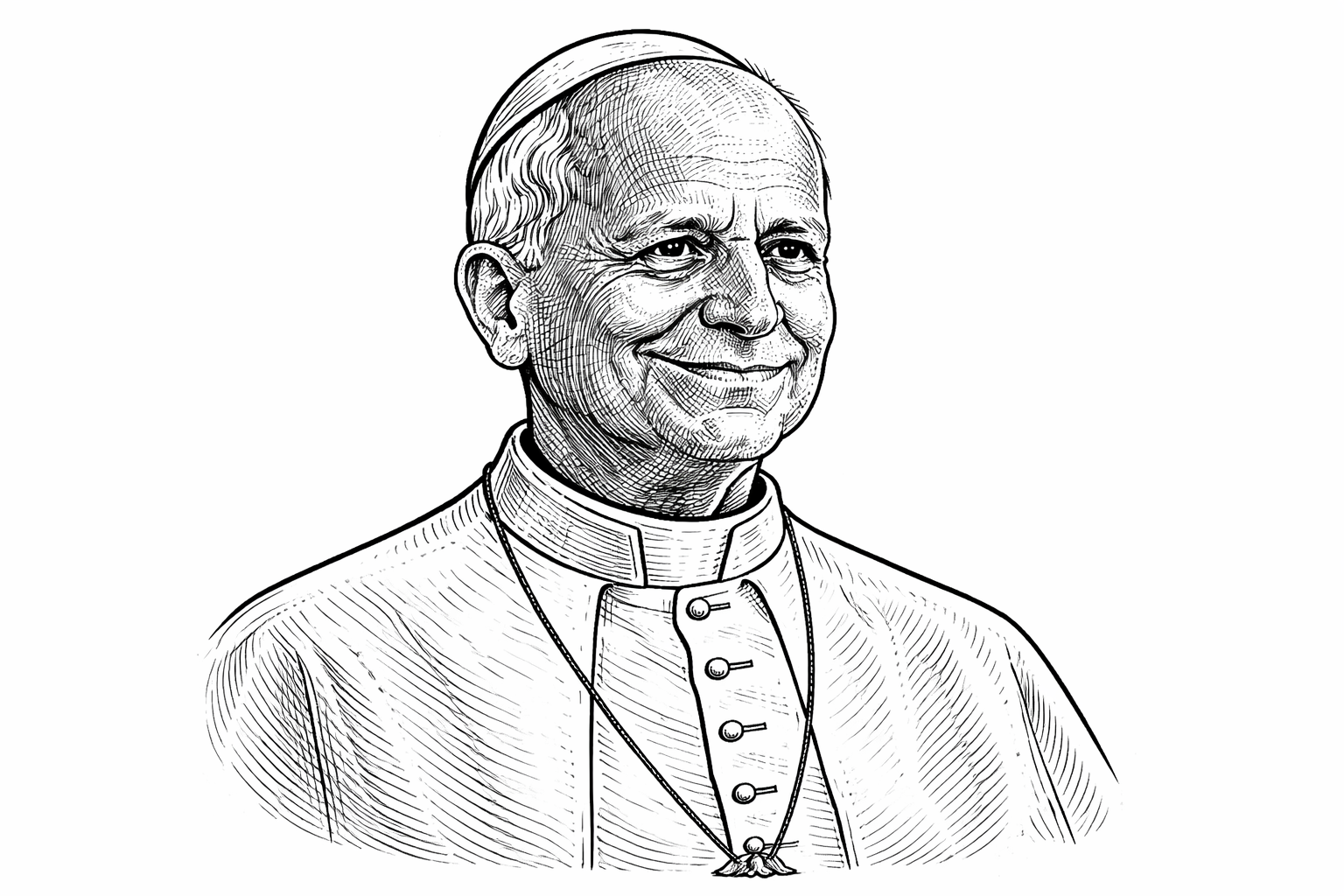
What stands out is not that a pope is viewed favorably in the United States — religious leaders positioned above national politics have historically benefited from a kind of moral insulation that elected officials cannot access. What is different here is the scale of the gap and the timing. Favorability is being measured against a sitting president at a moment of maximum political visibility, when foreign policy decisions are being made in real time and their consequences are immediate and contested. That context makes the comparison less about individual personalities and more about competing models of authority: one grounded in moral framing, symbolic positioning, and the capacity to speak in ideals without bearing operational responsibility for them; the other embedded in governance, constrained by trade-offs, and measured against outcomes that produce real winners and losers. The asymmetry in favorability that results from that structural difference is not surprising. What is worth examining is the specific conditions under which the gap becomes this wide, and whose preferences are producing it.
The demographic and political composition of that favorability gap is the part the headline number flattens. Pope Leo XIV’s approval is likely concentrated among Catholic Americans — a constituency that cuts across racial and political lines in ways that are not uniform — as well as among Americans who are not Catholic but who are responding to what the papacy represents symbolically at a moment of geopolitical instability. At the same time, the populations most favorable to the current administration — and most skeptical of Vatican moral authority — are not absent from these polls. They are simply outnumbered in the net favorability calculation by a coalition that includes Latino Catholics, Black Catholics, progressive white voters, and Americans across denominations who are experiencing the current political moment as one requiring a different vocabulary than the one governance is currently providing. The +34 is not a uniform national sentiment. It is the aggregate of a specific alignment of communities whose trust in political authority is currently low and whose appetite for moral framing is currently high — a combination that a new pope, unencumbered by any American policy position, is uniquely positioned to satisfy.
The media layer shaping how this comparison is being interpreted deserves examination alongside the polling itself. The framing of most popular public figure simplifies a more complex reality about what favorability ratings actually measure. They are snapshots of perception influenced by visibility, narrative, and question construction — not stable measures of trust, effectiveness, or the depth of approval they appear to quantify. A +34 rating reflects broad approval at a specific moment. It does not capture how that approval would hold under scrutiny, whether it would translate into institutional influence, or whether the same respondents would maintain their assessment if the pope were required to make the kinds of consequential, contested decisions that political leadership demands. What favorability polling captures most reliably is directional signal — where public sentiment is clustering and away from what it is moving. In this case the signal is consistent with a broader pattern of declining institutional trust in which figures who can plausibly position themselves as outside or above the systems generating public anxiety consistently benefit, regardless of whether their actual capacity to address that anxiety is meaningful.
The comparison between Pope Leo XIV and Donald Trump is ultimately less about either individual and more about the conditions producing the gap between them. One represents a form of authority that speaks in ideals and bears no direct accountability for the consequences of conflict, economic policy, or geopolitical decision-making. The other represents a form of authority that must act within constraints, absorb friction, and be evaluated against outcomes in real time. In a moment defined by conflict and uncertainty, the polling reflects something that goes beyond approval of any individual: a public appetite for moral clarity that the existing political architecture is not satisfying, and a willingness to extend that appetite toward figures who offer its vocabulary without its obligations. Whether that appetite translates into anything beyond a favorability number — into political realignment, institutional reckoning, or changed expectations of governance — is the harder question the poll raises and does not answer.