
Part of The Access Shift — an ongoing series examining how access is being quietly reshaped across American life.
NEWS DESK | SOCIAL STORYTELLERS COLLECTIVE
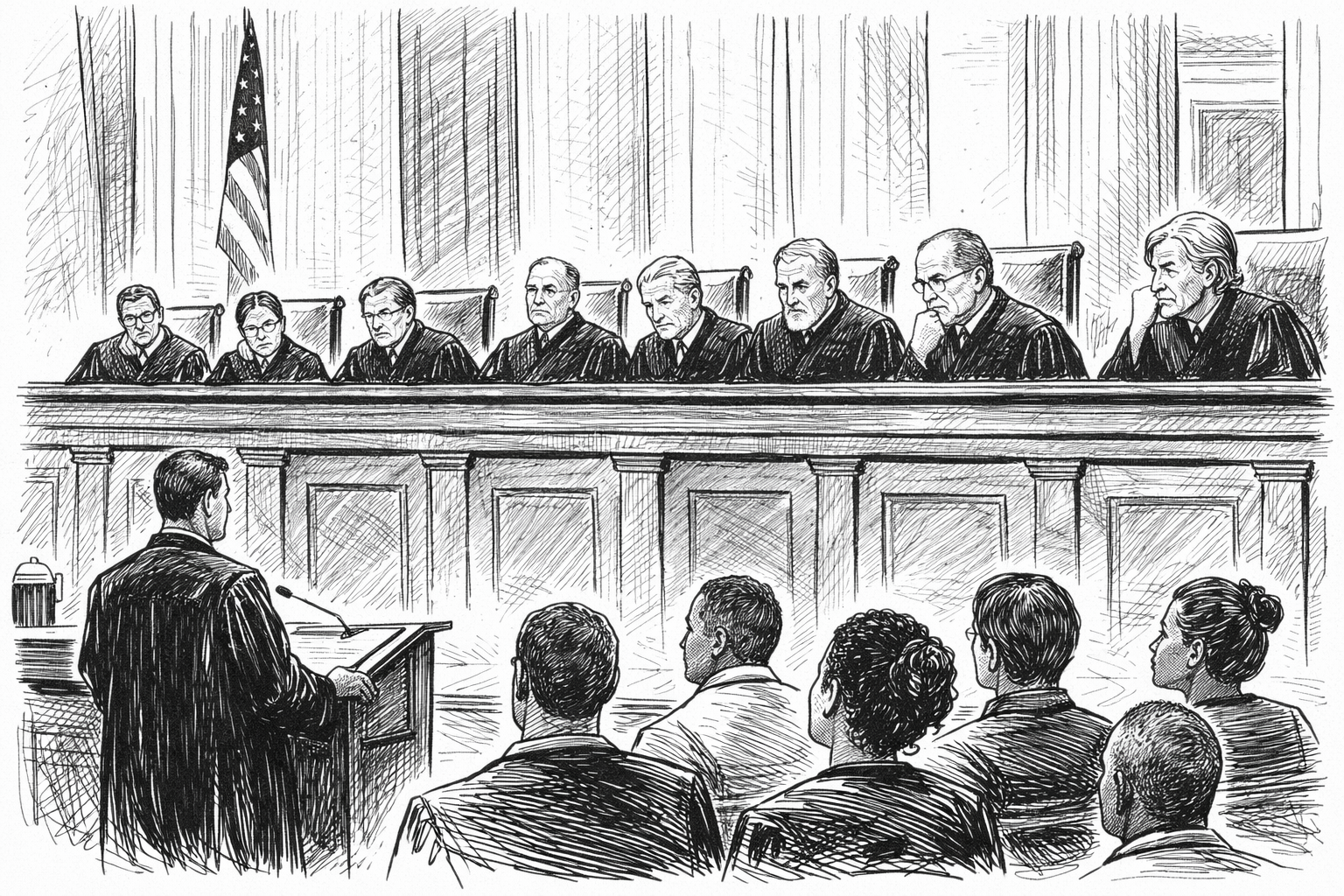
On April 1, the Supreme Court will hear oral arguments in Trump v. Barbara — the challenge to Donald Trump’s executive order that would bar automatic citizenship for babies born in the United States if their parents are in the country either illegally or on temporary visas. A ruling is expected by late June or early July. The decision will determine whether birthright citizenship — a right enshrined in the 14th Amendment since 1868 — can be narrowed by executive order.
The administration’s argument rests on a specific interpretation of the phrase “subject to the jurisdiction thereof” in the 14th Amendment’s citizenship clause, claiming it was intended only to grant citizenship to the children of freed slaves — not to the children of immigrants. Critics counter that the 14th Amendment was designed to change the meaning of citizenship from a concept tied to parentage to one tied to geography — and that attempting to reverse that through executive order, rather than constitutional amendment, has no legal basis.
What makes this case particularly significant for SSC’s coverage is the historical thread that runs directly through it. The case is a direct rejection of the Supreme Court’s 1857 Dred Scott decision, which held that Black Americans could not become citizens and had “no rights which the white man was bound to respect.” The 14th Amendment was written specifically to overturn that ruling. The administration’s argument — that the citizenship clause was always narrower in scope than courts have recognized — is not simply an immigration argument. It is a challenge to the constitutional architecture that made Black citizenship legally enforceable in the first place.
If the executive order is upheld, it would apply to children born on or after February 20, 2025. The nonpartisan Migration Policy Institute projects that could result in approximately 255,000 U.S.-born children beginning life without U.S. citizenship each year. Those children would not disappear. They would exist in a legal gray zone — born on American soil, educated in American schools, and denied the foundational legal status that the country has extended to virtually everyone born here for over a century.
Why This Matters
The birthright citizenship case is being covered primarily as an immigration story. It is also a civil rights story — one that sits at the intersection of the 14th Amendment’s original purpose, the legal status of Black Americans, and the question of what citizenship actually means in a country still navigating those questions. A ruling narrowing the citizenship clause does not affect only the children of undocumented immigrants. It affects the legal foundation on which generations of Americans have built claims to equal protection, due process, and full civic participation. As SSC has tracked across The Access Shift series and The Federal Government Just Redefined DEI as Discrimination, the erosion of structural protections rarely stops with the group initially targeted
The Access Shift
The gradual redefinition of who systems are designed to serve.
Across sectors—from public infrastructure to healthcare to everyday spaces—access is no longer assumed. As costs rise and systems face increasing pressure, services once built for broad reach are becoming more selective, more conditional, and less universal. The Access Shift explores how these changes are unfolding in real time—and what they reveal about who is included, who is left out, and how the structure of everyday life is quietly being reshaped.