
Part of The Access Shift — an ongoing series examining how access is being quietly reshaped across American life.
For months, economists debated whether a Black recession was coming. The Joint Center for Political and Economic Studies’ March report settles the question: it arrived.
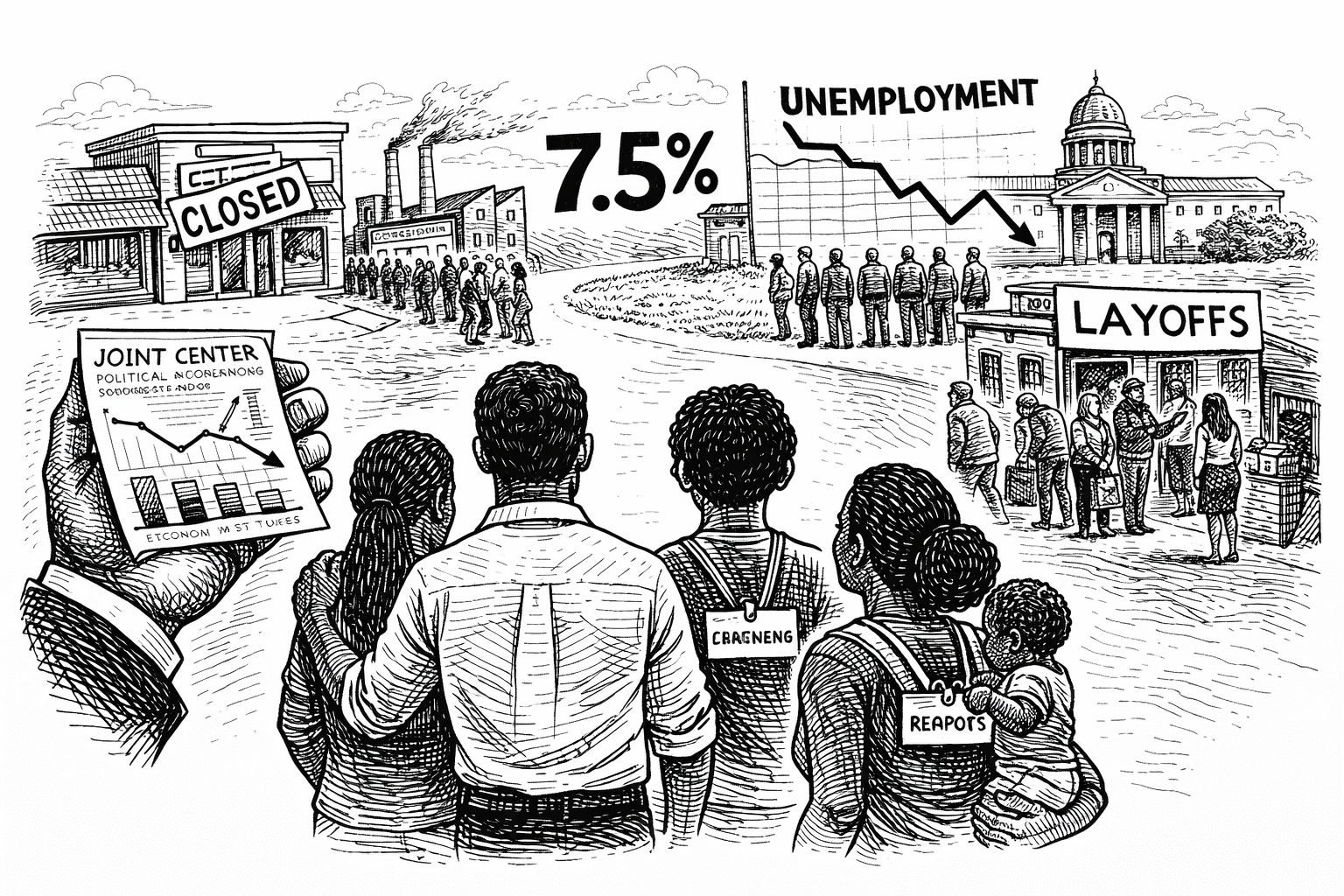
Black unemployment reached 7.5% by December 2025 — a number that carries more weight when you understand what’s underneath it. The Joint Center estimates that roughly 260,000 Black adults would have been working last year if employment rates had simply held where they were in 2024. They didn’t. Policy moved. Jobs disappeared. The gap between those two numbers is not an abstraction — it represents a quarter of a million people.
The federal workforce is a significant part of the story. Black workers have historically been overrepresented in government employment — not because of preference, but because federal jobs offered something the private sector often didn’t: stability, benefits, and a hiring process that was at least nominally shielded from the informal networks that advantage other applicants. The gutting of federal agencies in 2025 hit that pipeline directly.
What the numbers don’t fully capture is the compounding. As we reported in Tariff Whiplash and the Rising Black Recession, the economic pressure on Black households was already building before the employment data moved — through small business contraction, supply chain disruption, and the cascading effect of tariffs on communities with less margin to absorb cost increases. And as Equal Pay Day Was Yesterday, documented, Black women were carrying a wage gap that had already widened for the second consecutive year before this recession arrived.
The recession didn’t begin in December. December is just when the data caught up to it.
The gradual redefinition of who systems are designed to serve.
Across sectors—from public infrastructure to healthcare to everyday spaces—access is no longer assumed. As costs rise and systems face increasing pressure, services once built for broad reach are becoming more selective, more conditional, and less universal. The Access Shift explores how these changes are unfolding in real time—and what they reveal about who is included, who is left out, and how the structure of everyday life is quietly being reshaped.