
Part of Culture in Motion — an ongoing series examining who defines culture, how it moves, and what it reveals about the moment.
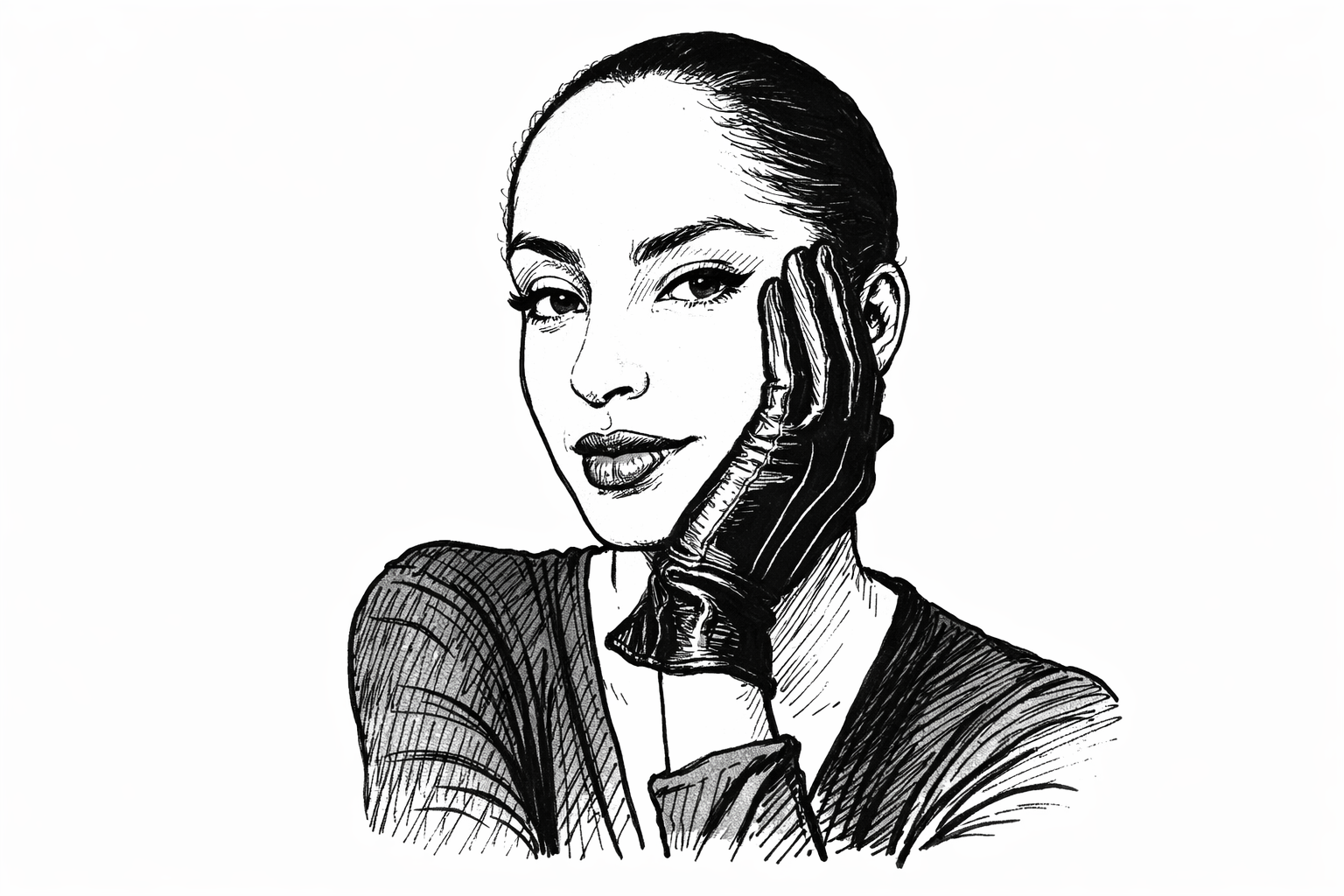
On the surface, it looked like a simple post. Lalah Delia wrote that the world needs a new album from Sade — and maybe an NPR Tiny Desk appearance to go with it. The responses told a different story. They weren’t just excited. They were specific. People described Sade’s music as “healing frequencies,” framing it as something that does more than sound good. One person called it a “global nervous system reset.” Another joked that a Tiny Desk performance could solve “40% of global problems.” The language leaned exaggerated, but the underlying sentiment felt grounded in something real — fatigue, overstimulation, and a constant sense of input without relief.
The Tiny Desk detail is not incidental. The new host of the series has publicly named Sade as one of the artists he most wants to get behind the desk — placing her alongside Beyoncé, Bruce Springsteen, and Kendrick Lamar as a cultural white whale the show has yet to land. That the same name appears on a wish list from one of music’s most respected live performance platforms and in the collective longing of thousands of listeners at the same moment is not a coincidence. It is a signal.
What those responses reveal is a shift in how music is being used. For a growing segment of listeners, it is no longer just background or entertainment. It is functional. It regulates mood, creates space, and slows things down in a way the rest of life increasingly does not. In that context, the call for Sade reads less like nostalgia and more like a request for something missing — and something that the current landscape, for all its abundance, is not providing.
Sade has always occupied that space, whether intentionally or not. The band’s sound — minimal, controlled, emotionally precise — creates room rather than filling it. The arrangements don’t overwhelm, and the vocals don’t chase attention. There is a steadiness to it that feels increasingly rare in a music ecosystem built around immediacy, repetition, and constant engagement. Streaming has optimized music for access and volume, where songs are shorter, hooks arrive faster, and algorithms reward consistency and frequency. The result is a landscape where music is always available, but not always absorbing. It fills time, but it doesn’t always change how that time feels or how people move through it.
The response to Sade points to a quiet countercurrent within that system. Listeners aren’t rejecting modern music altogether — they’re asking for something alongside it. Something that restores a sense of control over their attention and emotional pace. Music that doesn’t demand, but holds. As Nothingmaxxing Is Being Framed as Modern Meditation explored, the practices that actually help people recover from overstimulation require the one thing the current environment is least willing to provide — genuine permission to be still. Sade’s music has always offered that permission without asking for anything in return.
This also reframes where R&B sits today. For years, the genre has been discussed in terms of decline — its chart performance, its visibility, its crossover reach. But those metrics don’t fully capture what’s happening here. As R&B Is Having a Moment — and Three Women Are Leading It examined, the artists doing the most meaningful work in the genre right now — Kehlani, Teyana Taylor, Alex Isley — share a commitment to emotional honesty over spectacle, restraint over volume, and the voice as the primary instrument. Sade didn’t invent that approach. But she defined it for a generation, and the longing for her return is partly a longing for the standard she set.
The reaction to Sade is not about a comeback as much as it is about a gap. It reflects the recognition that very few artists currently operate in that same space — where restraint, clarity, and emotional precision are central rather than incidental. That absence is what people are responding to, even if they don’t always articulate it directly. What started as a single post quickly turned into a collective expression of something larger. In a moment defined by noise, speed, and constant engagement, the desire for something quieter and more deliberate is becoming more visible.
Not that people miss Sade — but that they need what Sade represents. And in a culture that has optimized almost everything for speed and volume, that need is only growing louder.