
ADDENDUM | March 25, 2026
Today’s verdict in Los Angeles makes this piece more urgent than when it was written.
A jury found Meta and Google liable in a landmark social media addiction case — the first of its kind to reach a jury verdict — awarding $3 million in compensatory damages and an additional $3 million in punitive damages to a 20-year-old woman known as K.G.M., who testified that she became addicted to Instagram and YouTube as a child and that the experience exacerbated her depression and anxiety. Meta bears 70% of the responsibility, Google 30%. Both companies said they plan to appeal.
Separately, a New Mexico jury also ordered Meta to pay $375 million in a different case — finding the company misled users about platform safety and enabled child sexual exploitation on its platforms. Two verdicts, one week, one signal: the legal system is catching up to what the culture has been naming for years.
The Los Angeles case is a bellwether — tied to approximately 2,000 other pending lawsuits brought by parents, school districts, and state attorneys general. The companies have maintained throughout that there is no scientific proof social media causes mental health issues. The jury disagreed. That disagreement now has legal weight, and its implications extend well beyond this single plaintiff.
What today’s ruling does is legitimize the argument that design itself can be scrutinized — not just content, not just time spent, but the architecture that governs both. For years, platforms have positioned themselves as neutral intermediaries rather than active environments. Today’s decision begins to narrow that distance. The frame has shifted from user behavior to system design — and that shift is unlikely to reverse.
The following piece was written before today’s ruling. It examines the case and the broader questions it raises about platform design, self-perception, and harm.
A lawsuit against Meta and Google is not, at its core, about screen time. It is about design — and what happens to a person when a system is built to be difficult to leave.
The case centers on a young woman who describes extended, hard-to-interrupt social media use alongside anxiety and shifts in how she sees herself. She uses the word addiction. The clinical definition doesn’t fully support that framing — social media use doesn’t meet that threshold in most cases. But the gap between the medical definition and what people actually report experiencing is significant, and the lawsuit is living in that gap.
The platforms named in the suit — Meta and Google — are not accused of something accidental. The features at the center of the case are structural: infinite scrolling, algorithmic recommendations, notifications engineered to interrupt and re-engage. These are not byproducts of a platform trying to be useful. They are mechanisms designed to keep users inside the system. The design works. That is the problem. As The Algorithm Followed Me to Bed examined from a creator’s perspective, the awareness of what the system is doing doesn’t protect you from it — the economic logic and the design pull in the same direction, and opting out is rarely as simple as it sounds.
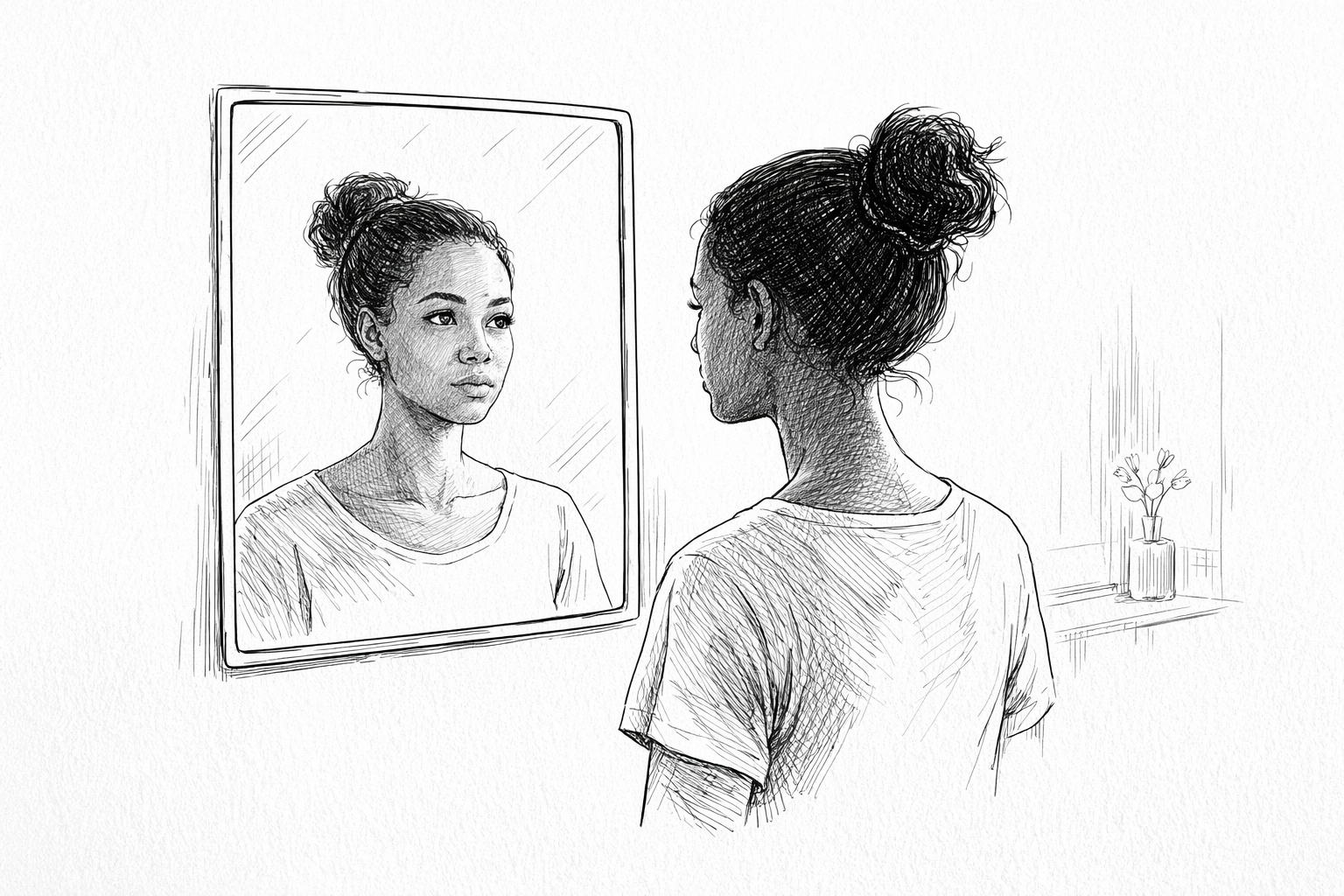
Filters introduce a subtler dimension. They do not simply change how a photo looks — they establish a version of the self that is consistently polished, consistently refined, and over time, consistently reinforced. The filtered version becomes familiar. The unfiltered version starts to feel like the deviation. Self-perception, in that process, stops being purely internal. It gets shaped in ongoing dialogue with a system that rewards certain presentations over others, and the feedback is relentless and personalized.
This is where the argument moves beyond any individual case. The question the lawsuit is really asking is not whether one person was harmed by too much time online. It is whether platforms designed to be always on, always personalized, and always responsive bear responsibility for the cumulative effects of that design on how users come to see themselves. As The AI Resume Screen Won’t See You Coming documented, algorithmic systems don’t just shape how we see ourselves — they shape how institutions see us too, often in ways that are invisible until the damage is already done.
The legal outcome is no longer open. The jury has spoken. But the shift in focus the case represents goes further than any single verdict — from what users see to how the system is built, from isolated moments of use to the architecture of engagement itself. Today’s ruling doesn’t end that conversation. It opens it wider.
Social media may not be addiction in the clinical sense. The more unsettling question may be whether it needs to be. When the version of yourself that receives the most consistent reinforcement is not the one you experience in your own life — when that gap quietly normalizes over months and years — the distinction between what is real and what is performed starts to soften.
And by the time most people notice it, the line has already been moving for a while.