
NEWS DESK | SOCIAL STORYTELLERS COLLECTIVE
Part of The Access Shift — an ongoing series examining how access is being quietly reshaped across American life.
Benny used to spend about $200 every two weeks at the grocery store. Same items, same store, same routine. Today, that same cart costs him between $315 and $350. That’s not a rounding error. That’s more than fifty percent — on groceries, one of the most basic and non-negotiable parts of household spending.
To offset it, he’s made cuts elsewhere. A streaming service gone. A wellness membership paused. What once felt like ordinary, manageable expenses have become things he actively reconsiders. Some aren’t being reduced. They’re being removed entirely.
Benny is a communications consultant — not someone on the margins of financial stability. Which is part of what makes his experience worth paying attention to.
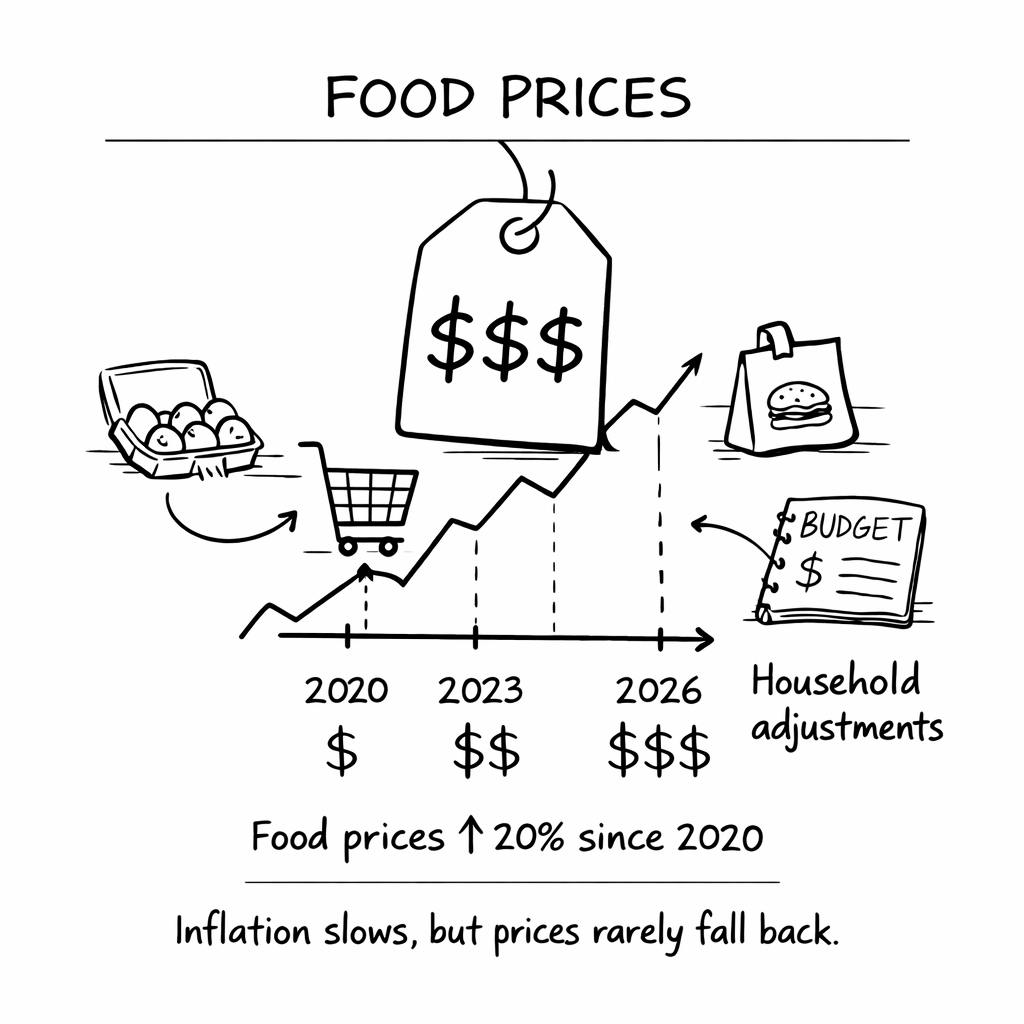
This is what inflation actually looks like once it settles in. Not the rate, not the index, not the percentage points economists debate — but the permanent reset of what everyday life costs. According to U.S. government data, food prices increased more than 20 percent between 2020 and 2024. That increase didn’t reverse when inflation slowed. It stayed. Slowing inflation means prices are rising more slowly — not that they are falling. The new floor is the floor.
Over the same period, average wages have not kept pace. The margin between what people earn and what everyday life costs has tightened — quietly, without announcement, in ways that show up not in headlines but in grocery carts and subscription cancellations and the small recalculations people make without quite naming them.
The adjustments are becoming widespread. Households are cooking at home more often, reconsidering impulse purchases, postponing travel and entertainment. Restaurants have raised menu prices or quietly reduced portion sizes. Grocery stores are expanding store-brand options as consumers search for ways to stretch budgets that haven’t grown as fast as the bills inside them. As we’ve explored in our coverage of the shifting job market, these pressures aren’t arriving in isolation — they’re compounding against a hiring landscape that is itself becoming more competitive and uncertain.
What makes this moment distinct from previous economic cycles isn’t the existence of pressure. It’s the permanence of it. Prices reset at higher levels and stayed there. And as they did, participation in what once felt like ordinary parts of life became more conditional. The question facing many households is no longer what things cost in an abstract sense. It’s what they can no longer afford to take for granted.
Benny still goes to the grocery store. He just does the math differently now. So does everyone else.
The Access Shift
The gradual redefinition of who systems are designed to serve.
Across sectors—from public infrastructure to healthcare to everyday spaces—access is no longer assumed. As costs rise and systems face increasing pressure, services once built for broad reach are becoming more selective, more conditional, and less universal. The Access Shift explores how these changes are unfolding in real time—and what they reveal about who is included, who is left out, and how the structure of everyday life is quietly being reshaped.