Capital is moving. Institutions are restructuring. And the communities with the least alternative access are absorbing the cost of both.
Thursday’s stories are not about isolated decisions. They are about a single directional shift happening simultaneously across every system SSC covers. The infrastructure communities depend on — for information, economic participation, creative opportunity, healthcare stability — is being redirected. Not eliminated. Redirected. Toward entertainment product, premium markets, and the upper tiers of every system being restructured. What gets left behind is the story Thursday is telling.
Start in West Africa. West Africa’s digital economy — estimated at $100 to $150 billion in annual activity — is being built on infrastructure that cannot yet hold the weight being placed on it. Nigeria alone absorbs over 4,000 cyberattacks weekly — roughly 45 percent of all incidents on the continent — while energy constraints continue to limit the data center scaling that digital growth requires. The region’s fintech expansion has become the primary banking access point for populations historically excluded from formal financial systems. When that infrastructure goes down, it is not institutional investors who lose access first. It is the unbanked populations the expansion was supposed to serve. The investment needed to match the ambition is not arriving at the pace the growth demands.
Dubai is watching that gap and making a different calculation. The emirate’s Dhs1 billion creative sector portfolio is a direct play to become the global capital of creative economy — built precisely as American institutions are contracting the infrastructure that supported creative work here. The displacement is real: DEI rollbacks, federal arts funding cuts, shrinking institutional support. The offer Dubai is making to displaced creative professionals is also real. But the terms are complicated — no citizenship pathway, a kafala system that ties worker status to employer relationships, and a social framework with its own unresolved relationship with race and belonging. Dubai is building infrastructure for creative work. Whether it is building community for the people doing that work is a different question the Dhs1 billion announcement does not answer.
The Daily Wire layoffs this week are being framed as strategic redirection — fewer journalists, more entertainment programming, an expanded Washington bureau. Take that framing seriously, and then zoom out. Vice collapsed. BuzzFeed News shut down. CNN — the network Ted Turner built as a global public information infrastructure, whose passing yesterday is worth pausing on — has restructured repeatedly. Local newsrooms are hollowing out across the country. The through line is not political. It is economic: advertising models broke, audiences fragmented, and organizations across the spectrum made the same call — less editorial, more content product. The communities absorbing the most cost are the ones with the least alternative access to credible information when local coverage contracts. That is a structural problem, not a partisan one.
Healthcare is automating itself while calling it progress. Sixty percent of healthcare organizations already use AI in administrative functions — the roles held disproportionately by women and workers of color. The efficiency gains flow upward. The displacement flows down.
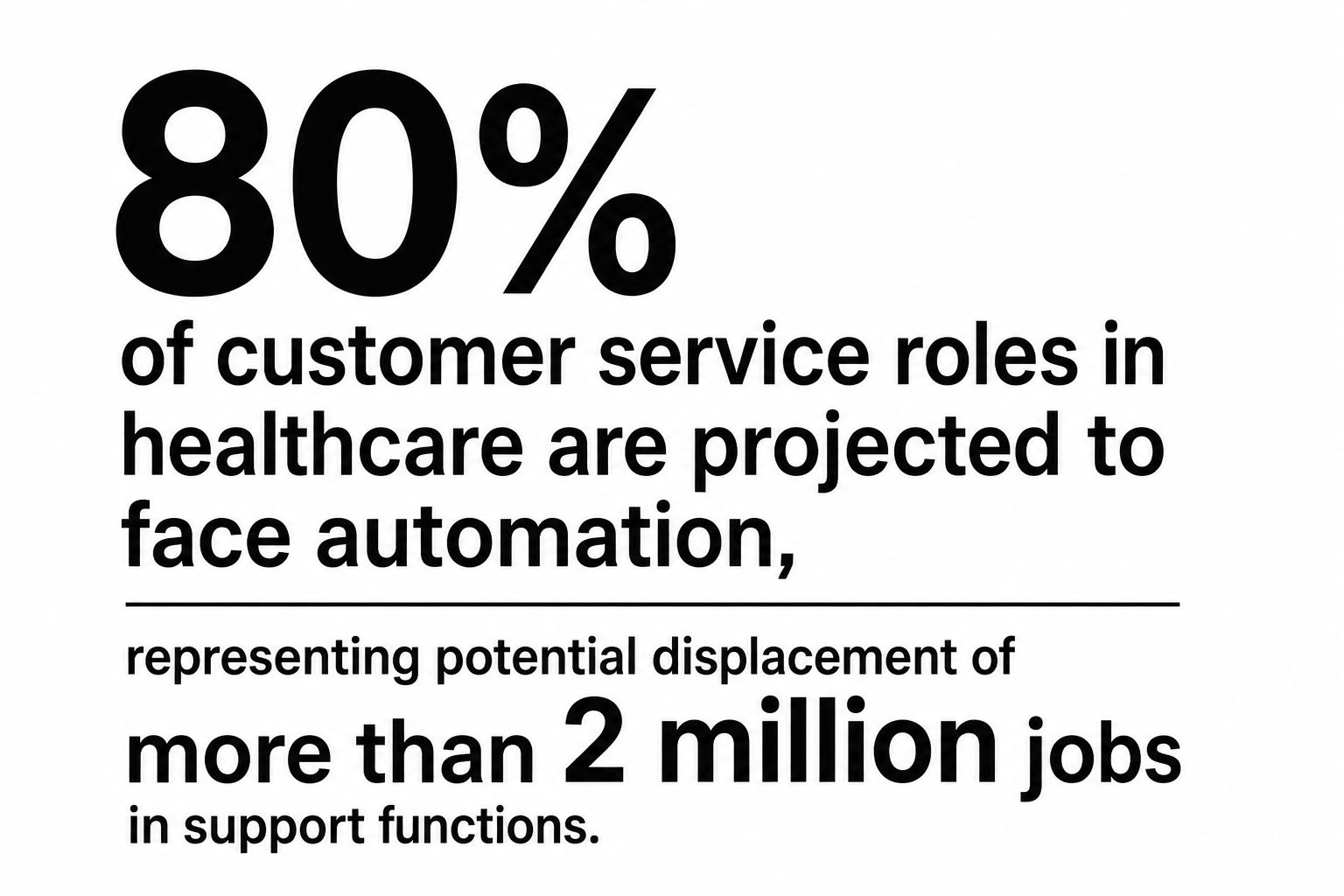
As the data above shows, 80 percent of customer service roles in healthcare are projected to face automation — representing potential displacement of more than 2 million jobs in support functions. Two in five healthcare workers say their jobs feel unsustainable in 2026. The workforce being asked to absorb that is not the physician tier. It is billing staff, medical coders, schedulers, transcriptionists — the administrative layer that has historically provided stable, benefits-eligible employment in communities where hospital systems are among the largest employers. The efficiency is real. The distribution of its cost is not neutral.
City Signals | Boston: Growth Without Access Is Just Gentrification With Better PR makes it concrete. The economy is generating opportunity. It is also quietly filtering who can stay long enough to convert that opportunity into stability. Growth metrics and livability metrics are moving in opposite directions. Boston is not an outlier. It is a local expression of the same pattern playing out at every scale Thursday is tracking.
And underneath all of it, the cost of living data from May Day rallies across American cities makes the ground-level stakes legible in a single number: 55 percent of Americans say their financial situation is worsening — the highest share recorded in 25 years. Groceries, gas, housing, healthcare — not discretionary categories, not lifestyle choices, but the floor of economic participation. The floor is rising. The infrastructure that was supposed to help people reach it — media that covers their communities, creative economies that resource their work, healthcare systems that employ their neighbors, digital platforms that expand their financial access — is being redirected toward markets that don’t include them.
That is the pattern Thursday is closing on. Not collapse. Redirection. And the distance between where the infrastructure is going and where it is needed is the gap SSC will keep measuring.
We will be watching.
The Daily Visual Signal
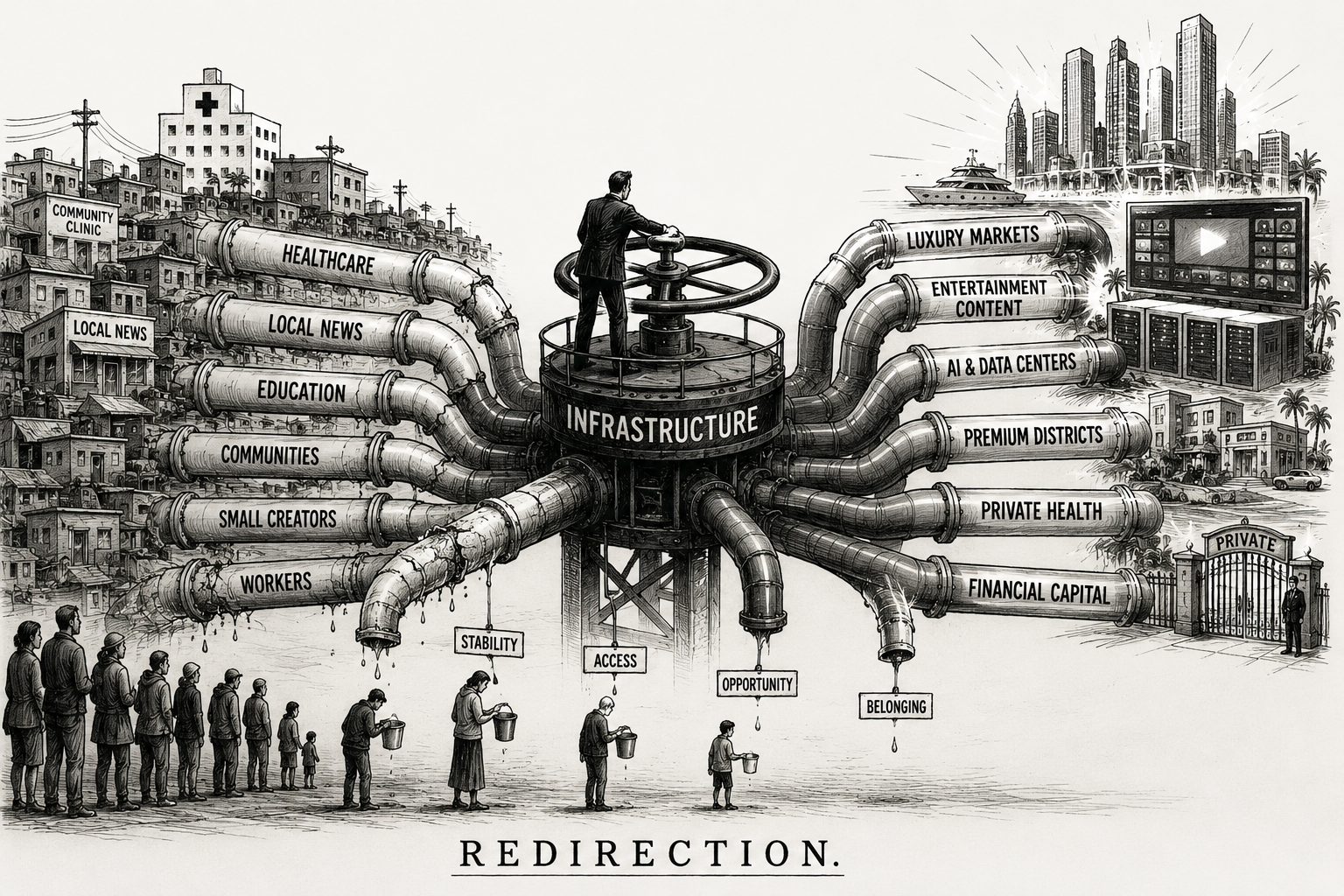
REDIRECTION.
The systems did not disappear. The support simply moved somewhere else.
Featured Story
Instagram’s Encryption Rollback Is Reframing What “Private” Means Online
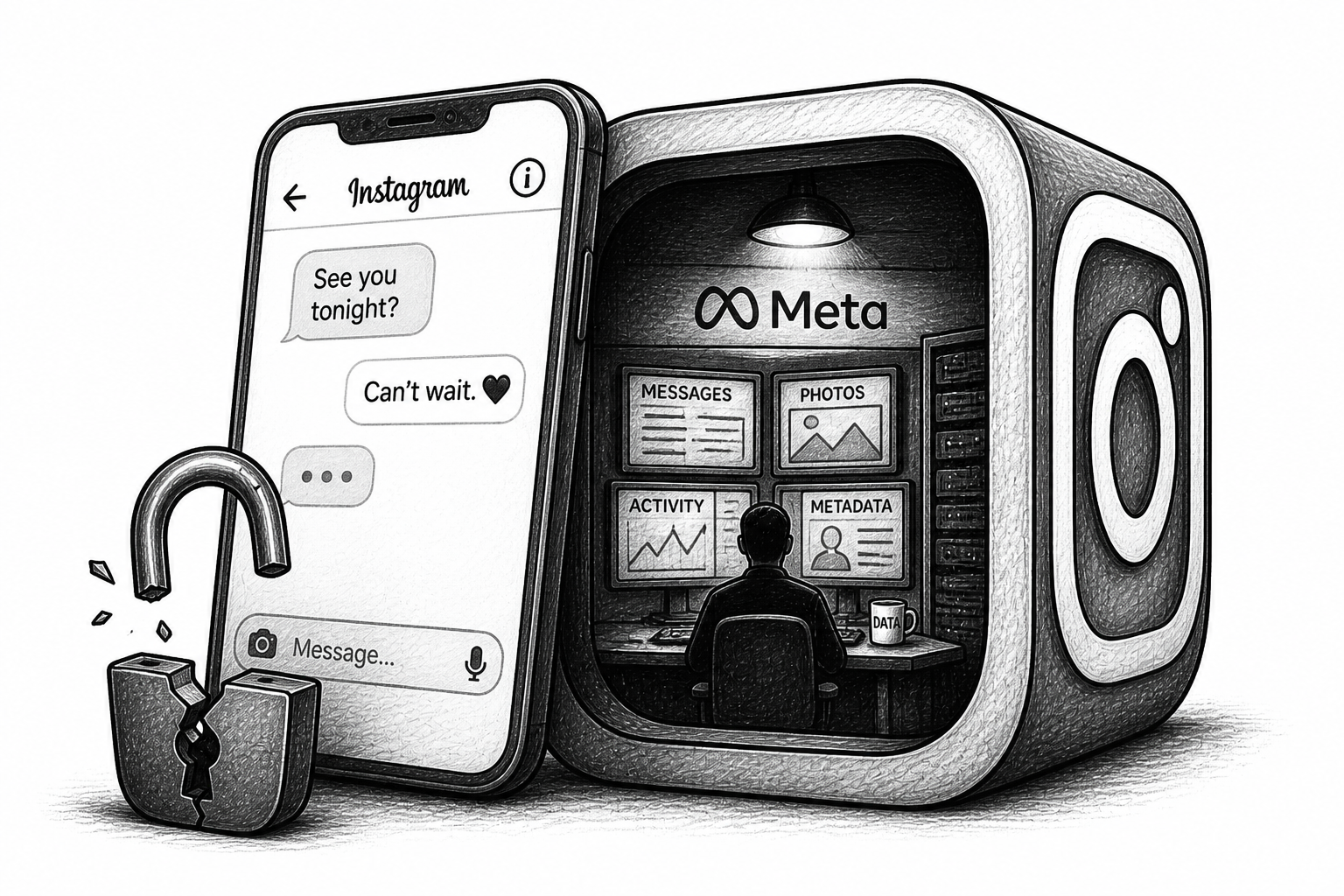
Meta is ending support for end-to-end encrypted messaging on Instagram beginning tomorrow, May 8. The announcement has triggered viral backlash — but many of the posts circulating online exaggerate the mechanics of what is actually changing. The core development is real: Instagram will no longer support the encryption layer that previously prevented Meta from accessing message contents at all. What that means for users, for trust, and for the broader question of who controls what “private” means on platforms built around social connection is what this piece examines.
Read the full piece on Social Storytellers Collective.