
The meeting was not about soccer.
I sat in a City of Houston 2026 Collaboration Meeting alongside leaders from Museum District institutions and representatives from the Harris County Sports & Convention Corporation, and what I heard was a city mapping out how to move a global audience through its streets. The conversation centered on a planned “green corridor” — a network designed to connect parks, cultural institutions, and major event zones into a seamless pathway for visitors. The level of coordination in that room made one thing clear: the FIFA World Cup 2026 may still be months away, but the reshaping of Houston is already well underway.
That transformation is not symbolic. It is structural. It is happening through budget decisions, infrastructure investments, and the quiet alignment of public and private priorities — in planning rooms, before it ever appears on the street. The tournament will last weeks. The changes being made in its name will extend far beyond it.
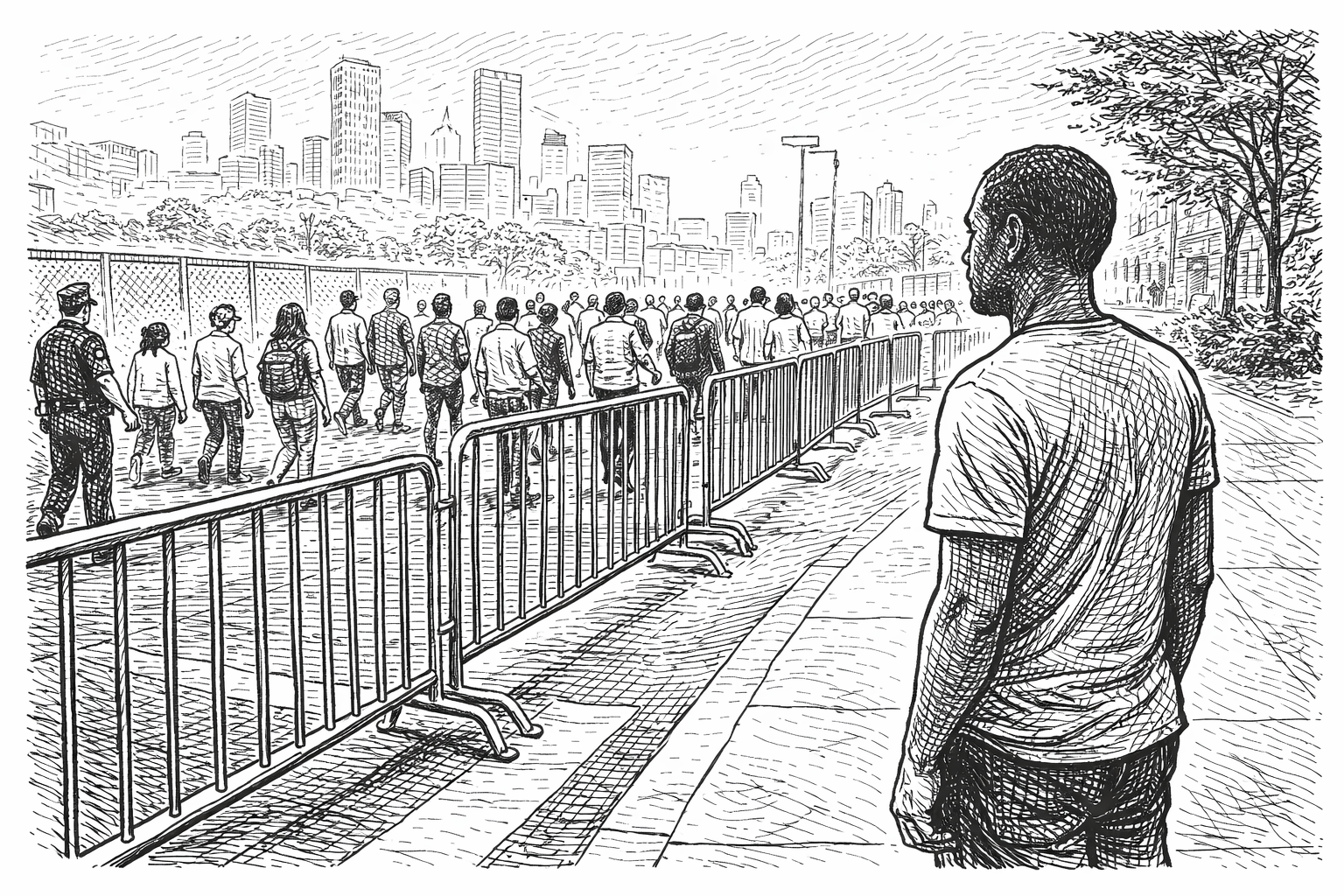
What moments like this reveal is how cities redefine themselves under pressure. Transit routes get optimized around stadium access. Public spaces become controlled gathering zones. Entire corridors get redesigned to move people efficiently between curated destinations. These decisions are rarely presented as tradeoffs. But they are. Every investment made in the name of global visibility carries an implicit question about what — and who — is being deprioritized in the process.
As SSC reported in World Cup Demand Falls Short of Expectations, early signals suggest the anticipated economic return may not materialize — with hotel bookings in host markets already trailing prior-year levels even before the tournament begins. Yet cities are spending at scale regardless. Large-scale events are framed as engines of growth, promising tourism, revenue, and international attention. But the distribution of that growth is rarely even. Short-term rental markets tighten. Hotel prices rise. Neighborhoods near key venues face increased pressure — not only from visitors, but from speculative investment that arrives well in advance of them. Small businesses get pushed to the margins while corporate partners, positioned closest to the event infrastructure, capture most of the upside. The event is temporary. The market shifts it triggers are not.
The numbers make the scale visible. Across eleven U.S. host cities, the federal government has allocated $625 million through FEMA alone to support World Cup security preparations — with Texas receiving $116 million split between Dallas and Houston. In Dallas, where nine matches will be held and the city is simultaneously undertaking a $182 million stadium renovation, police leadership has already confirmed that drone surveillance technology purchased for the World Cup is intended to remain part of standard department operations afterward. In Massachusetts, where seven matches are scheduled at Gillette Stadium, total hosting costs are projected to exceed $100 million — with nearly $86 million committed in federal and state funds — even as a state report acknowledges no additional funding sources have been identified to cover what remains. Cities are spending at scale. The demand that was supposed to justify that spending is not arriving at the same scale.
There is also a control dimension that rarely makes it into the public-facing narrative. Hosting a global event requires predictability, and predictability requires managing how people move, gather, and occupy space. That leads to expanded security measures, surveillance systems, and restricted access zones — introduced as temporary necessities that rarely disappear entirely. What begins as event preparation becomes civic precedent.
This is how mega-events fit into a larger pattern. Across American cities, access is increasingly organized around mobility, capital, and visibility. The compressed timelines of events like the World Cup accelerate decisions that might otherwise face more scrutiny — and in that compression, priorities become clear. Cities reveal not just what they are building, but who they are building for.
Why This Matters
The World Cup will be remembered for what happens on the field. But its most lasting impact will be embedded in the cities that hosted it long after the final match. Public dollars will have been spent. Infrastructure will have been permanently reshaped. Systems of access will have been adjusted — some expanded, most quietly restricted. This is the pattern mega-events produce across American cities: compressed timelines that accelerate decisions, speculative markets that arrive before visitors do, and civic changes introduced as temporary that become permanent. For residents in Houston, Dallas, Boston, and every host city in between, the question is the same — whether their city became more accessible because of the event, or simply more optimized for a global audience that was always the real priority. That answer will not come from what officials say in planning meetings. It will come from who can still afford to be there when it’s over.