
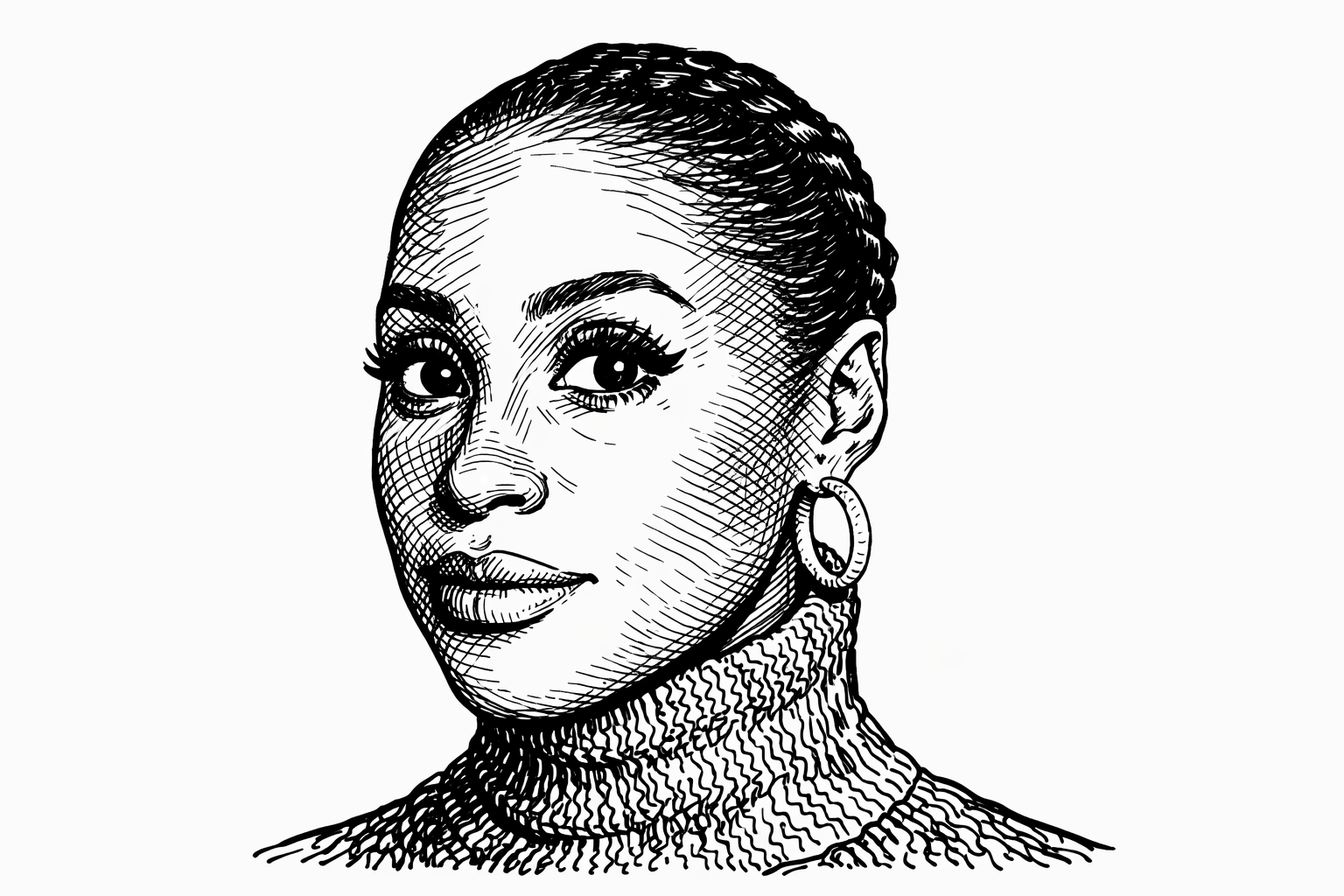
The quote lands because it sounds like compromise but functions as translation. When Issa Rae says you sell a show as being “about class” instead of “about a Black woman,” I recognize what she is describing immediately — not as an abstract industry observation, but as a decision architecture I have watched shape what gets made, what gets seen, and what gets explained away when it doesn’t. She is not describing a creative pivot. She is describing a market condition. The story itself does not change. What changes is the language used to make it legible to the people who control financing, distribution, and scale. In that sense the shift is not artistic. It is structural — a recalibration of how creative work must present itself in order to move through an institutional system that has changed its risk calculus without changing its dependence on the communities whose stories it is recalibrating around.
For most of the past decade Hollywood operated under a different set of incentives. Following the racial reckoning of 2020, studios and streamers made public commitments to diversity, equity, and inclusion, pouring billions into content pipelines that centered underrepresented voices. That moment has since collided with a new economic reality. Streaming growth has slowed. Wall Street is demanding profitability. Political backlash has reframed DEI from a corporate virtue into a perceived liability. The result is not a clean rollback of diverse storytelling but a recalibration of how risk is assessed — projects are no longer rejected for what they are but filtered through how they are framed, which is a subtler form of gatekeeping and a harder one to contest.
That distinction matters because it reveals where power actually sits. Executives are not just funding stories. They are funding narratives about what audiences will accept. And increasingly, universality is being used as a proxy for safety. A show framed around race can be interpreted as targeted, political, or limiting. The same show framed around class, relationships, or ambition can be positioned as broadly relatable, even if the lived reality of the characters remains unchanged. The content does not become less specific. It becomes differently described — and that redescription is the condition of its survival. Major media companies have cut billions in content spending over the past two years, with some estimates placing industry-wide reductions above $10 billion as studios pull back from peak streaming-era output. Yet research from McKinsey has consistently shown that films and series with diverse casts perform as well as or better than their peers at the box office and in audience engagement. The contradiction is legible: the demand has not disappeared, the hesitation is not about audience appetite, and the pullback is not about what audiences will watch. It is about executive exposure to risk — financial and political — in a moment when naming race has become more costly than profiting from it.
What Rae describes is a form of navigation within that contradiction — creators learning to separate the essence of their work from the language used to sell it, building projects that retain cultural specificity while adopting framing that travels more easily through institutional filters. It is a pragmatic response to a system that has not closed access entirely but has made access conditional on presentation. In this environment storytelling becomes a two-step process: what the work is, and how the work is introduced. The consequence of that split is subtle but significant. When framing becomes strategy, it shifts where negotiation happens — from the content itself to the perimeter around it. The question is no longer just what story are you telling, but how are you positioning that story so it can exist. That is a different kind of creative labor, and it is not distributed evenly across creators.
The burden of this translation work falls most heavily on Black creators and creators of color — the people whose stories require the most repackaging to pass through institutional filters that were not built with them in mind. A white creator whose work centers white experience does not need to perform universality. That universality is assumed. A Black creator whose work centers Black experience must actively construct a version of their story that travels without losing what makes it true. I think about this every time I watch a Black show get praised for being “relatable” in a way that quietly requires it to be less specific about what it actually is. That construction takes time, takes strategic intelligence, and takes a form of emotional labor that does not appear in any line item of a production budget. It is the invisible tax of making work that the system simultaneously wants and requires to be legible in terms the system is comfortable funding. When Rae describes selling a show about class instead of a Black woman, she is describing something that sounds like savvy. She is also describing something that should not be necessary — and the fact that it is necessary is the structural story underneath the strategic one.
What this moment signals is not the end of diverse storytelling but the evolution of how it survives — access not revoked but rerouted through language, through framing, through the careful calibration of what is said out loud versus what is understood beneath it. That rerouting comes at a cost. And the people paying it are not the executives who changed the conditions, or the audiences who never stopped wanting the work. They are the creators who built careers on telling specific truths and are now required to wrap those truths in language designed to make the people funding them more comfortable. In that gap — between story and strategy, between what the work is and how it must be sold — you can see both the system’s continued appetite for Black creative production and its continued resistance to the full terms of what that production actually is.