
The White House Correspondents’ Dinner has always been a curated space — where politics, media, and celebrity converge to signal proximity to power. This year, that signal shifts. Nicki Minaj is expected to attend, aligning publicly with Donald Trump in a way that extends beyond commentary into sustained presence. The moment is not just about attendance. It is about what happens when celebrity endorsement moves from something episodic to something structural.
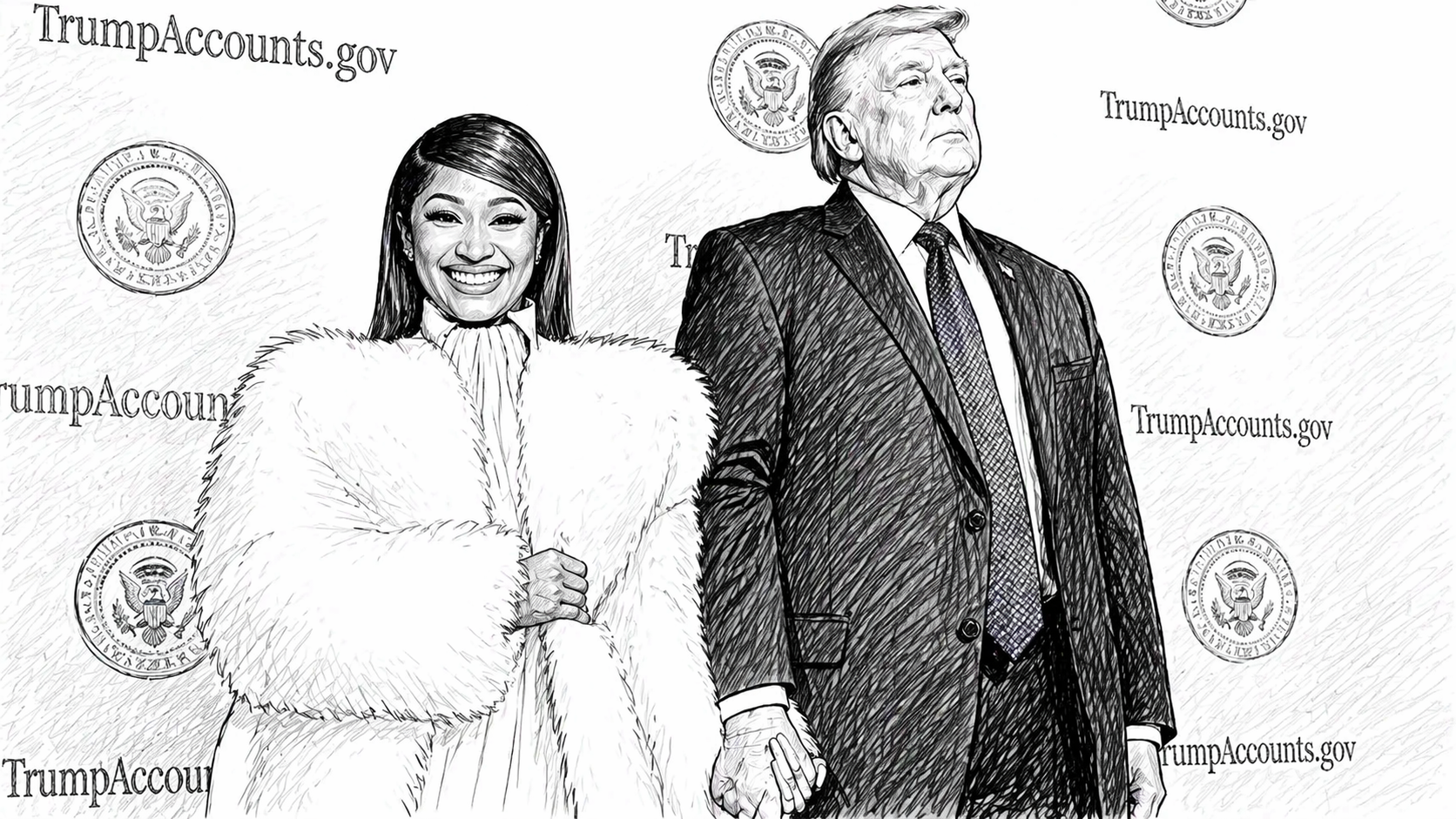
Endorsement has never been neutral. It operates on transfer — the movement of trust, familiarity, and emotional connection from a public figure to a product, platform, or ideology. That transfer is powerful because audiences form parasocial relationships, where repeated exposure creates a sense of alignment that feels personal. What shifts in this moment is not the existence of endorsement, but its repetition. Once alignment becomes consistent, it stops reading as a moment and starts functioning as a pattern.
Minaj’s positioning reflects that transition. What may have once been interpreted as isolated political commentary now reads as accumulation: repeated signals, increased visibility, and participation in institutional spaces. The Correspondents’ Dinner is not incidental. It is a legitimizing environment. Reporting indicates she will attend as a guest connected to conservative media circles, continuing a series of public appearances aligned with Trump-world figures. To be present there is to be seen not just as adjacent to power, but as operating within its orbit. That distinction raises the stakes. Endorsement becomes less about expression and more about association.
The gamble emerges in what is being exchanged. Celebrity endorsement traditionally operates as a brand strategy — increasing visibility, credibility, and engagement. But when applied to politics, the dynamics intensify. The celebrity is no longer just lending image. They are lending audience. And audiences are not passive. They carry identity, culture, and expectation. When those audiences are introduced into a political alignment that may not reflect their baseline orientation, endorsement becomes a site of tension rather than simple influence.
That tension is where the logic of endorsement begins to shift. The same mechanism that builds trust can erode it. Alignment can increase legitimacy, but it can also trigger skepticism when involvement feels sustained rather than incidental. What was once interpreted as commentary becomes interpreted as positioning. And positioning invites scrutiny.
There is also a deeper structural layer at play. Political movements increasingly operate like brands, competing for attention, loyalty, and cultural relevance. In that environment, celebrity is no longer just amplification. It is infrastructure — a distribution channel for narrative and identity. Minaj’s presence in spaces like the Correspondents’ Dinner signals not just support, but integration into that system. Influence is no longer adjacent to politics. It is embedded within it.
The tension, then, is not whether celebrities should engage politically. That boundary has already collapsed. The question is what happens when audiences do not follow. Because endorsement is not a one-way transfer. It is a negotiation between the celebrity’s identity and the audience’s expectations. When those fall out of alignment, the endorsement does not disappear. It destabilizes.
That is the core of the gamble. Not all endorsements convert. Some reframe. Some fracture. And some reveal the limits of influence itself.
What this moment ultimately surfaces is a shift in how power is signaled and shared. The White House Correspondents’ Dinner becomes less about optics and more about alignment — not who is invited, but what that presence represents. Not just proximity to power, but participation in its cultural translation.
And in that translation, celebrity is no longer just a messenger. It is part of the message.