
Part of Culture in Motion — an ongoing series examining who defines culture, how race is interpreted, and how both are reshaped over time.
What used to be marketing is now curriculum.
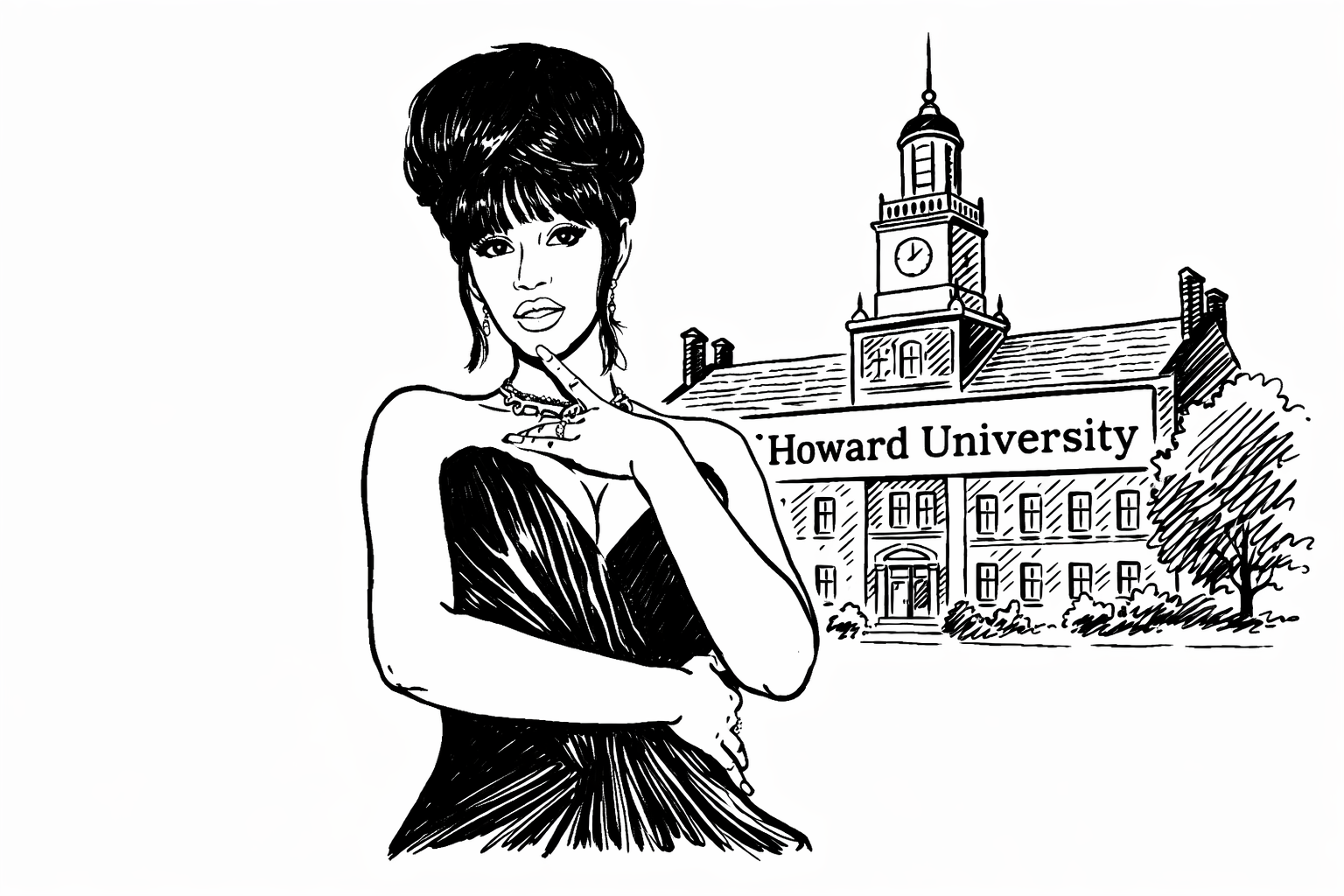
At Howard University’s music business programming, a module built around Cardi B’s “Am I The Drama?” rollout is being studied not as promotion, but as strategy — less about personality, more about system. The distinction matters. It marks a shift in how cultural output is understood: less as art to be consumed, more as architecture to be analyzed.
For years, album rollouts were treated as extensions of the music itself — trailers to the main event. Teasers, interviews, appearances, and controversy all fed attention toward a release date. But in the current environment, the rollout is no longer secondary. It is part of the product itself, shaping how attention is captured, sustained, and converted into cultural and commercial momentum.
Cardi B’s approach makes that shift visible. Her rollout was not confined to digital teasing or conventional promo appearances. She took the campaign into public space — moving through the city on a bus tour, selling her album directly on the street, and turning distribution itself into performance. These weren’t side moments; they were the strategy. By staging access in real time and in physical space, she created scenes that people could witness, participate in, and then circulate online. The result was a feedback loop where marketing, distribution, and content collapsed into a single system. As this piece publishes, she is performing her 20th sold-out show in New York City as part of her national tour — reinforcing the connection between rollout strategy and sustained demand.
That combination is what makes the campaign teachable. Cardi did not rely on mystique or distance. She collapsed the gap between artist and audience, turning proximity into infrastructure. Selling albums on sidewalks, interacting directly with fans, and allowing those moments to live online reframed what a rollout can be. The campaign wasn’t just about driving attention — it was about designing moments that could sustain it.
The exaggeration online — that Cardi B now has a full course dedicated to her — misses the point. The reality is more precise, and more important. She is part of a module, a case study embedded within a broader program. But that’s exactly how modern influence works: not as a singular moment, but as a repeatable framework others can study, adapt, and apply. As When The Artist Isn’t Human examined, the music industry is already grappling with what happens when the system behind the output matters more than the artist producing it — whether that system is an algorithm or a rollout blueprint. The classroom is just starting to catch up.
What’s happening here isn’t about one artist. It’s about a shift in what is considered expertise. Musicians are no longer evaluated solely on output — they are evaluated on their ability to engineer attention, to design moments, and to sustain relevance across cycles that are shorter and more volatile than ever before. The question isn’t whether this belongs in a classroom. It’s why it took this long to get there.