
Part of The Access Shift — an ongoing series examining how access is being quietly reshaped across American life.
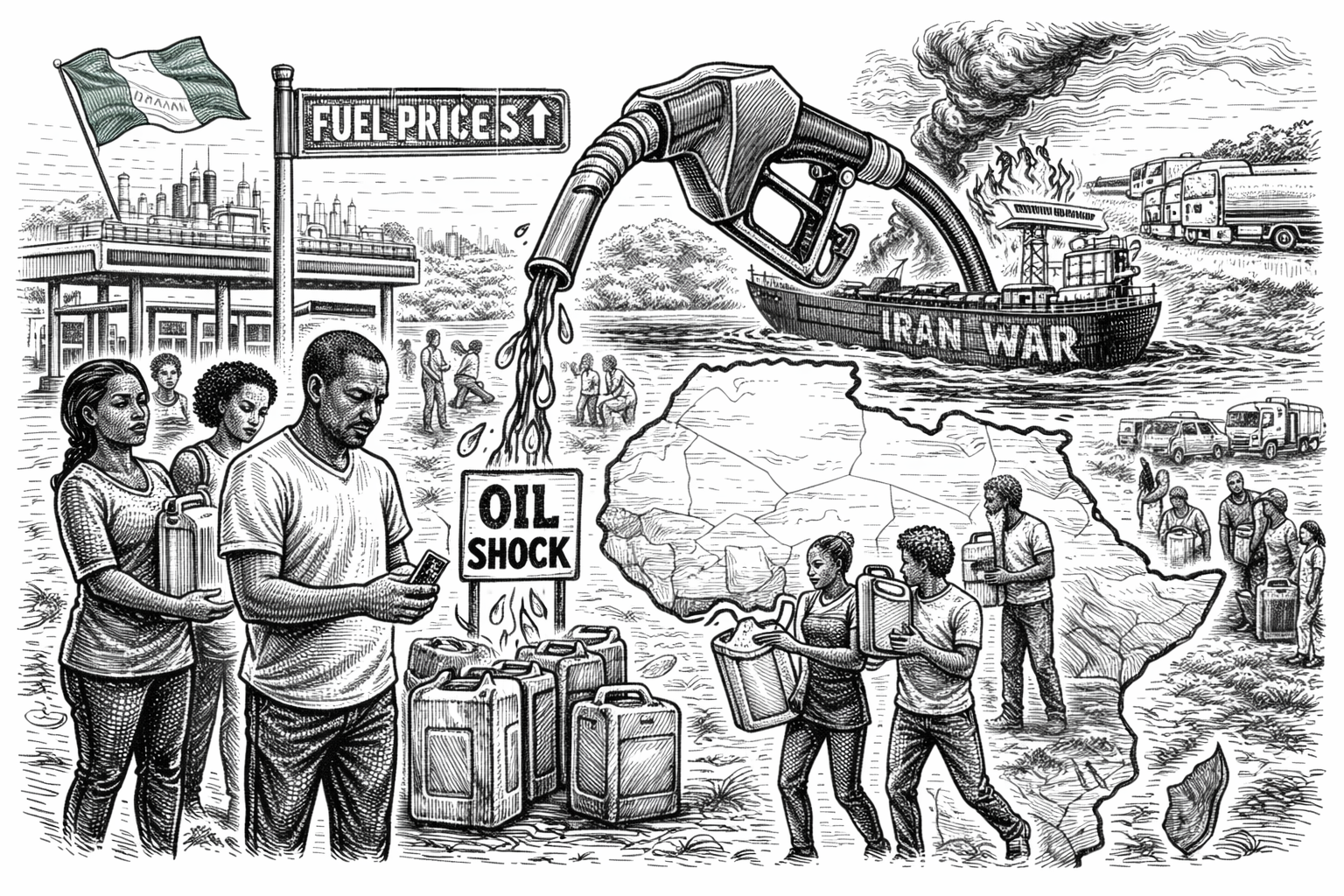
The Iran war’s economic reach does not stop at American borders. Across West Africa this week, the same oil price shock SSC documented in The Iran War Is a Gas Pump Problem is hitting economies with far less capacity to absorb it — and governments with far fewer policy tools to respond.
Ghana has increased petrol prices by approximately 15% and diesel by 19% as global oil costs rise. Governments across the region are weighing relief measures, from wage increases and cash transfers in Mauritania to potential fuel margin cuts and supply agreements tied to Nigeria’s Dangote refinery. At the same time, disruptions to global shipping routes are driving up costs, squeezing exporters, and threatening key sectors like Kenya’s tea industry, where millions of kilograms remain stranded.
The compounding effect is significant. West Africa remains heavily dependent on imported fuel. Despite Nigeria’s position as a major oil producer, it has long relied on imported refined petroleum due to gaps in refinery infrastructure. Ghana lacks sufficient domestic production to buffer against global price swings. When oil prices rise because of a conflict thousands of miles away, the cost is transmitted quickly and almost entirely to consumers, small businesses, and the agricultural sector — the same communities already navigating currency depreciation, post-pandemic debt burdens, and declining foreign investment.
The political vulnerability is just as acute. Economies carrying high debt service burdens — Nigeria’s debt service is projected to reach roughly 45% of government revenue in 2026 — have limited fiscal space to absorb subsidies or deploy meaningful relief. The populations most affected are also those with the least formal safety nets, the greatest reliance on informal work, and the highest exposure to food price inflation that typically follows fuel increases.
As SSC covered in The Iran War Is a Gas Pump Problem and The Black Recession Is Already Here, the economic consequences of the Iran war are being distributed along existing fault lines of inequality — in American cities and across the African continent simultaneously. The $740 average household gas cost increase projected for American families and the 15% fuel price increase in Ghana are not separate stories. They are the same oil shock landing on different communities at different distances from the conflict, with different tools to respond and different margins to absorb the cost.
Why This Matters
Global economic shocks are not neutral. They move through the same infrastructure as inequality, concentrating their impact on the communities with the least margin, the least institutional support, and the least ability to wait out disruption.
The Iran war’s fuel price shock reaching Black families in Houston and Accra simultaneously is not a coincidence. It is the architecture of a global economy in which the communities farthest from the decisions absorb the most concentrated consequences of them.